


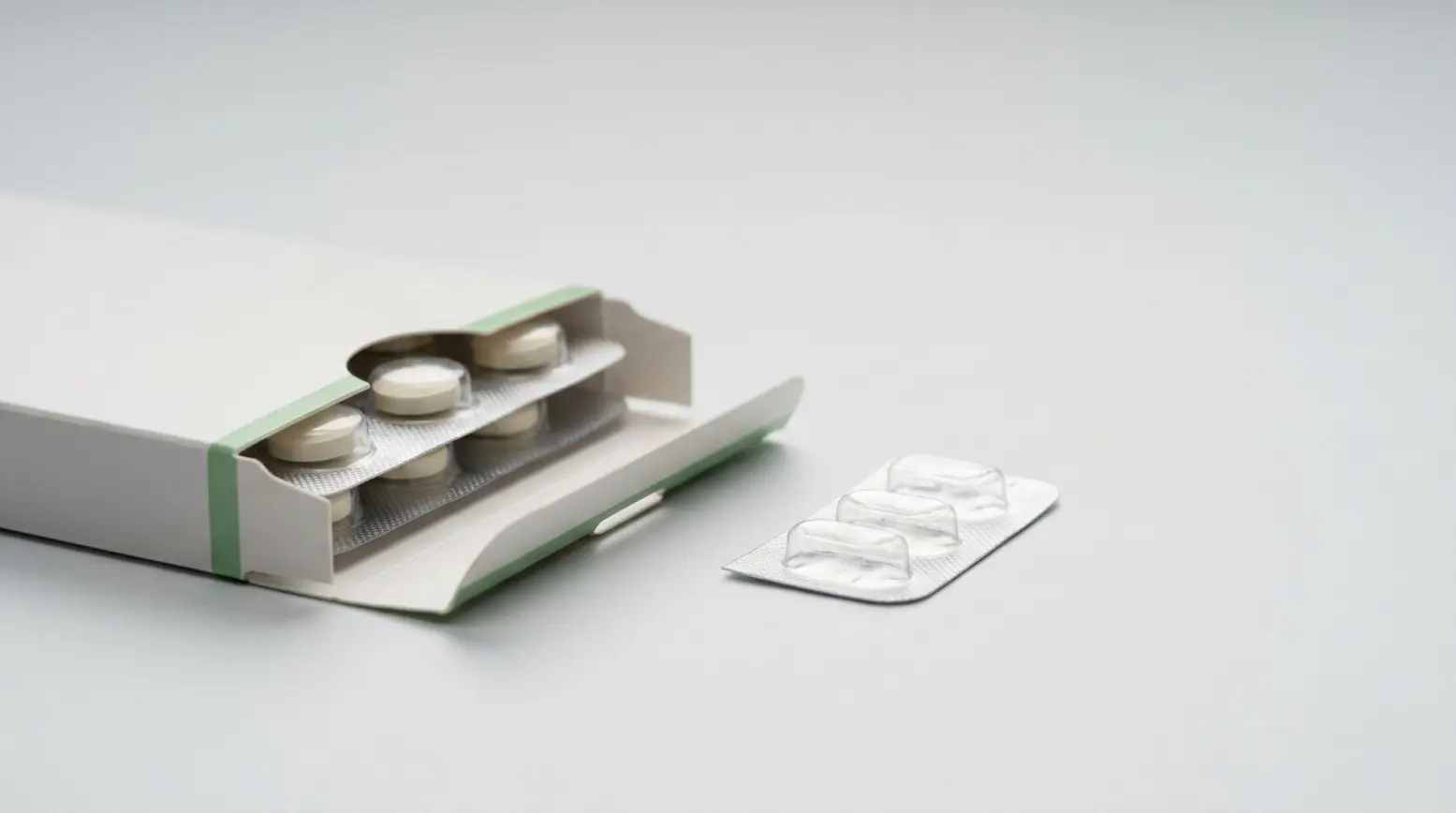

Older users do not necessarily fare better with peelable lidding, nor do they always find push-through blister packs easier to manage. The right choice depends entirely on actual hand mechanics, such as operating force, grip size, pinch control, support behind the blister, and whether the opening requires one step or two. In many projects, the most effective solution is to retain the existing blister that already protects the medicine while shifting the child-resistant function to the outer packaging. This strategy helps teams avoid an unnecessary blister redesign and prioritizes senior accessibility right from the start.
• There is no single blister format that is universally easiest for older adults.
• The first vital decision is determining where the access problem lies: in the primary blister lidding or in the outer carton.
• Peel-push blister formats can support child resistance, but only a fully tested, finished package can legally make that claim.
• Altering a blister's lidding foil, tab shape, or structure can instantly trigger extensive retesting and additional project work.
• In certain scenarios, a tested outer package allows you to keep the current blister while still seamlessly adding child resistance.
Why peel-or-push blister lidding for seniors starts with the packaging layer
Project teams often conflate two distinct questions: how the blister opens for the adult user, and where the child-resistant function should be located. When these issues blur together, teams might try to redesign the primary blister even if the core challenge actually lies within the surrounding carton. For broader context, our comprehensive child-resistant blister packaging guide explains exactly how these packaging layers work together in a finalized design.
This is why designing peel-or-push blister lidding for seniors should start by looking at the broader packaging layer. If the medicine is already well-protected by the current blister, it is often better to leave that pharmaceutical blister lidding structure in place and incorporate child resistance into the secondary packaging. Doing so can save valuable time, reduce costly validation efforts, and maintain production line continuity since the primary blister remains unchanged.
How peel-or-push blister lidding for seniors works in real use
What is a push-through blister?
A push-through blister opens when a user presses the medication dose through the foil backing. While the action sounds simple, the actual user experience relies heavily on localized pressure and hand support. Individuals need adequate finger strength to apply pressure to a small surface area, and the blister itself requires counter-support from the opposite hand or underlying fingers. If the required opening force is low, this format can work quite well for some older adults. However, if the required force is high, the task can quickly become unmanageable.
What is a peel-off blister?
A peel-off blister opens when a user grips a designated tab and pulls the lidding away. This type of peelable lidding can feel virtually effortless, but only if the tab is large enough to grasp firmly and the surface is not overly slippery. The user must first exert pinch control, followed by a steady pull. For some older adults, this sequence feels far more natural than applying downward pressure. For others, gripping the tab itself proves problematic, making a peel-off blister significantly harder to use than anticipated.
What is a peel-push blister?
A peel-push blister requires two distinct steps: first, the user peels a layer of the lidding away, and then they push the dose through the remaining barrier. This deliberate sequence can effectively support child-resistant design in unit-dose packaging by introducing a complex secondary action. U.S. regulatory guidance recognizes peel-push and puncture-resistant mechanisms as valid approaches for child-resistant unit-dose packs. Even so, simply using this format does not guarantee compliance; the fully assembled, finished pack must still undergo rigorous formal testing.
When teams review peel-or-push blister lidding for seniors, they must evaluate the actual hand mechanics involved rather than relying solely on the format's name. The central question is whether the end user can complete the required sequence without experiencing physical strain or cognitive confusion. Focusing on usability is far more productive than making broad claims about easy-open blister foil or child-resistant blister materials, as ultimately, user success depends on the complete packaging design.
Comparing peel-or-push blister lidding for seniors by hand action
The best way to evaluate different blister opening types is to observe actual hand movements. One individual might lack pinch control but still be able to press firmly with their thumb. Another might struggle to apply pushing force yet have no difficulty pulling a large tab. Furthermore, a two-step blister can create usability hurdles during the first attempt if the required opening sequence is unintuitive. Therefore, effective decisions regarding senior-friendly blister lidding stem from observing real-world use rather than relying on technical labels alone. Evaluating senior-friendly packaging reveals exactly why geometry, operational force, and user testing matter far more than initial design assumptions.
| Opening type | Hand action | Likely barrier for older users | Child-resistant role | Project impact if changed |
|---|---|---|---|---|
| Push-through | Press dose through backing | High localized force and lack of support behind the blister | Can support child resistance in specific, tested designs | May impact lidding materials, tooling, testing, and line setups |
| Peel-off | Grip the tab and peel the backing away | Small tabs, weak pinch control, and slippery grip surfaces | Typically focused on adult accessibility unless integrated into a tested design | May require adjustments to materials, processing, and barrier properties |
| Peel-push | Peel the lidding first, then push the dose through | Complex two-step sequences, tab accessibility, and initial user comprehension | Can support child resistance in specifically tested designs | May necessitate extensive blister redesigns and additional testing |
A simple visualization can be highly beneficial here. One concept might display the three primary blister opening types side by side: thumb pressure for a push-through blister, a designated tab for a peel-off blister, and the sequential two-step method for a peel-push blister. A second concept can clearly illustrate the packaging layer choices, showcasing the primary blister on one side and the secondary outer carton on the other.
When peel-or-push blister lidding for seniors should not carry child resistance alone
This distinction is critical because it directly impacts regulatory compliance, testing protocols, and overall project scope. While a peel-push blister can indeed support child resistance, its format alone does not guarantee it. Similarly, integrating puncture-resistant or child-resistant blister foil structures can be part of an effective strategy. Nevertheless, no single blister lidding format is inherently child-resistant by name alone. A valid child-resistant claim applies exclusively to a specific, finished package that has been formally tested exactly as it is sold. Exploring certified child-resistant packaging demonstrates why formal certification must always remain securely linked to the exact design tested.
When developing peel-or-push blister lidding for seniors, the appropriate testing route also depends heavily on the target market. In the United States, child-resistant requirements for covered special packaging, alongside adult-use testing protocols, are strictly governed by 16 CFR 1700.20. Conversely, in Europe, compliance requires adherence to the ISO or EN 8317 standards. Because these are entirely separate regulatory systems, project teams must keep their U.S. and European validation strategies distinct from the very beginning.
Maintaining this separation is crucial, as even minor design modifications can trigger mandatory retesting. Introducing a new blister lidding foil, altering a tab's shape, revising a peelable lidding structure, or changing the overall pack geometry can drastically alter how adults open the package and how children might interact with it. Therefore, development teams must treat any adjustments to blister opening mechanisms as comprehensive design changes, rather than simple, interchangeable material swaps.
A better route for peel-or-push blister lidding for seniors: keep the blister and move child resistance to the carton
Often, the optimal route is to leave the primary blister focused purely on medicine protection and effortless adult access, while shifting the child-resistant mechanics to the surrounding packaging. This approach proves especially useful when the existing blister already meets all necessary barrier and production requirements; in such scenarios, a lidding change would only introduce unnecessary complexity. A highly effective child-resistant carton for blister strips serves as an excellent example. Because the safety mechanism is integrated directly into the carton and internal tray system, the package opens only when two diagonal push points are pressed simultaneously.
We can also seamlessly integrate child-resistant packaging for an existing blister via our dedicated service route. In practice, this allows customers to retain their current blister unchanged, provided the design is fully compatible. We offer two officially certified formats tailored for blister strips: the standard Carton and the all-paper Wallet Box. The Wallet Box accommodates up to three blister strips and fits approximately 95% of blister formats currently on the market. Both formats are fully certified to ISO or EN 8317 standards for the European market and achieve an F=1 rating under U.S. 16 CFR 1700.20. Furthermore, both solutions run efficiently on standard cartoning and pharmaceutical packaging lines at normal production speeds.
Senior accessibility remains paramount in this approach, as any child-resistant solution must still be comfortably usable for older adults. During rigorous testing, fewer than 1% of 300 children managed to open the package, whereas 100% of participating seniors successfully opened it within five minutes. The design also qualifies as primary packaging because all integrated components remain securely connected after every opening, fulfilling strict U.S. regulatory requirements. As Locked4Kids is a part of the Ecobliss Packaging Group, the robust network behind us can continuously support the broader packaging supply chain wherever needed. By leveraging this strategy, the necessary child resistance can reside entirely outside the blister itself, allowing the main blister format to remain completely unchanged.
How to choose the right route for your product
Start with product protection and validated blister needs
Always evaluate the medication first. Crucial factors such as barrier needs, dose stability, and the physical requirements of the current blister must guide the final decision. If the existing blister already protects the product perfectly, redesigning it solely to add child resistance often creates extensive extra work without actually addressing the underlying usability problem.
Map the adult opening action
Carefully map out every action the adult user must successfully complete. This analysis should include pinching, pressing, pulling, hand support, and any specific sequential steps. When evaluating peel-or-push blister lidding for seniors, this method is typically the clearest way to identify where the actual accessibility barriers exist. A specific format might appear straightforward on paper yet prove incredibly difficult in practice simply because the designated grip area is too small or the required opening force is excessively high.
Map the child-resistant requirements by market
Establish the intended target market clearly from the outset. Because U.S. child-resistant regulations and European safety standards differ significantly, testing plans must remain strictly separate. Maintaining this distinct separation avoids costly false assumptions later in development and firmly guides teams down the correct validation path.
Check what a blister change would trigger
Any modification to a primary blister can heavily impact machine tooling, line behavior, validation efforts, regulatory reviews, supplier setups, and user testing. Consequently, development teams must ask themselves what modifying an easy-open blister foil, a peelable lidding, or any other pharmaceutical blister lidding structure genuinely means for the overall project timeline. In some scenarios, this extra work is entirely justified; in others, it is highly avoidable.
Compare a tested secondary mechanism
Finally, objectively compare the alternatives. If a thoroughly tested secondary package can reliably deliver the required child-resistant function, the existing blister can simply stay in place, preserving its current manufacturing setup. This often proves to be the most practical route when senior accessibility, regulatory compliance, and production line continuity are all simultaneous priorities.
Common questions about blister lidding and older users
Is peel-off always easier for seniors?
No. Its ease of use depends heavily on tab size, grip texture, the required pull force, and the user’s overall hand control. A peel-off blister equipped with a minuscule tab can easily be more difficult to open than a low-force, push-through blister.
Is push-through always harder?
No. The required force level and underlying hand support matter immensely. If the foil backing breaks under moderate pressure and the blister itself is easy to manually support, a push-through design can work exceptionally well for some older adults.
Is every peel-push blister child-resistant?
No. While a peel-push blister can effectively support child resistance, only a fully tested, finished package can legally make that claim. Relying on the format name alone is never sufficient.
Can we keep our current blister and still add child resistance?
In many cases, yes. If a validated surrounding package inherently provides the necessary child-resistant function, the existing primary blister may simply remain in place, provided the designs are physically compatible.
What should we test first?
Always start by evaluating actual user actions, specific market requirements, and overall project impacts. Determine whether a fundamental blister change will generate excessive tooling, prolonged testing, or burdensome regulatory work. Then, compare those projected burdens directly against implementing a tested, child-resistant outer packaging solution.
If you want to physically see how a reliable child-resistant function can sit entirely outside the primary blister itself, please request a free sample.
Request a free sample now!


