



The Poison Prevention Packaging Act is the federal law behind many US child-resistant packaging rules. If your product is covered, your finished pack must meet the legal standard, and you must keep proof for the exact package sold to the consumer. In practice, teams usually need to check the scope under 16 CFR 1700.14, confirm performance and testing rules, and then choose a pack design that matches the tested evidence.
• The Poison Prevention Packaging Act does not apply to all medicines, so the product scope must be checked against current regulations.
• A child-resistant component claim is not enough, because the finished package must be supported by evidence for the exact design sold on the market.
• 16 CFR 1700.14 helps define the scope, 16 CFR 1700.15 covers performance, and 16 CFR 1700.20 details the test method used for CPSC child-resistant packaging.
• For blister products, teams often try to keep the blister unchanged, as this can reduce tooling, validation, and supply disruption.
• After the scope is confirmed, the next step is to review a certified design, check fit and line use, and request a sample for physical evaluation.
What the Poison Prevention Packaging Act means for US packaging
The Poison Prevention Packaging Act was enacted on December 30, 1970, and it remains the legal foundation for many child-resistant packaging regulations that US teams deal with today. The Consumer Product Safety Commission, or CPSC, now administers the law. This distinction matters because the law creates the framework, while day-to-day packaging decisions rely on current rules and the proof behind the finished pack.
Special packaging in plain words
Under this law, special packaging means packaging that is significantly difficult for children under five to open within a reasonable time, while normal adults can still use it properly. This is why special packaging requirements address two things at once: child resistance and adult usability. In practical terms, a package must protect children, but it also needs to function effectively in real-world scenarios for adults and seniors.
How the Poison Prevention Packaging Act decides whether your product is in scope
The Poison Prevention Packaging Act does not mean every medicine or supplement needs child-resistant packaging. Scope depends on current regulations, so teams should avoid broad assumptions. In practice, 16 CFR 1700.14 identifies covered substances and product categories, 16 CFR 1700.15 provides performance requirements, and 16 CFR 1700.20 outlines the testing procedure. This structure helps translate the Poison Prevention Packaging Act into a tangible packaging project.
Relevant examples for pharma and nutraceutical teams
Examples can include oral prescription drugs, certain over-the-counter products, and specific iron-containing preparations. These are only examples, because thresholds, limits, and child-resistant packaging exemptions can apply. As a result, a label review alone is not enough for PPPA compliance. A product-specific check against 16 CFR 1700.14 is a safer starting point, especially for prescription drug child-resistant packaging and for products entering the US market for the first time.
Why product scope is a regulatory task
This article provides practical guidance, but it is not legal advice. Scope under US child-resistant packaging laws should be confirmed by the team responsible for regulatory review. Once the scope is clear, teams can move on to package feasibility and explore US child-resistant packaging options for blister products that may require a compliant finished pack.
What the Poison Prevention Packaging Act means for finished pack responsibility
A packaging supplier may claim that one component is child-resistant. While that can be useful, it does not replace finished pack responsibility. The company that introduces the regulated product into the finished package, often the importer or domestic packer, must provide conformity documentation for the final market pack. Therefore, PPPA packaging decisions should always connect a packaging claim directly to evidence for the exact pack sold to consumers.
Component claims versus finished pack evidence
This difference is important because a component claim tells you about one part only. Finished pack evidence must support the exact tested system placed on the market. If the opening method, structure, size, or materials change, the evidence may no longer match. This is a common risk in CPSC child-resistant packaging projects, especially when teams assume that a certified element automatically covers all versions of a package.
What evidence a packaging engineer should ask for
A packaging engineer should ask for test protocols, test reports, and proof that the tested design matches the proposed package. This documentation should cover structure, dimensions, materials, opening action, and pack configuration. If you are reviewing certified child-resistant packaging, make sure the file clearly links the tested design to the delivered design and the relevant standard, including F=1 under US 16 CFR 1700.20 where applicable.
Enforcement also matters. Noncompliant packaging can lead to CPSC reporting and corrective action. Reporting does not automatically mean a recall, as the CPSC reviews the facts before deciding what response fits the case. There is also a distinction for pharmacies. Bulk drug packs that a pharmacist will repackage are treated differently from a manufacturer pack that reaches the consumer unchanged. In some cases, a prescription drug may be dispensed in non-child-resistant packaging if the patient or prescriber requests it and the rules allow it.
How the Poison Prevention Packaging Act affects blister packaging decisions
For blister-based products, one of the first project questions is simple: can the child-resistant function be added while the existing blister stays unchanged? This matters because a blister redesign can affect tooling, validation, supply planning, artwork timing, and line speed. Consequently, many teams first evaluate whether a secondary pack can provide the required child resistance while keeping the original blister format in place.
Why keeping the blister unchanged matters
If the blister can stay the same, the project becomes much easier to manage. The existing cavity design, product fit, and line settings may remain usable, allowing the team to focus on finished pack requirements instead of launching a much larger redevelopment program. In this way, the chosen packaging route can reduce disruption while still supporting PPPA requirements for the final consumer pack.
Choosing child-resistant packaging for a blister product
After the product scope is confirmed, format choice becomes the next practical step. Some teams need a broader view of available formats before deciding, so it can be helpful to review guidance on choosing child-resistant packaging for blister products. This process helps connect the child-resistant packaging regulations that US teams face with day-to-day decisions about line fit, usability, and package design.
How the Poison Prevention Packaging Act connects to certified pack design
Certification belongs to the exact tested design. It does not automatically apply to every size, structure, or variation of that package. If a key feature changes, the evidence must be checked again. This is where many teams move from general PPPA requirements to a design-specific review, as compliance depends on the actual delivered pack rather than a broad category claim.
Child resistance and senior friendliness must work together
Adult usability is a crucial part of the intended result. A package that children cannot open but adults also struggle to use does not serve its purpose well. In the test results for our certified designs, fewer than 1 percent of 300 children could open the pack, whereas 100 percent of seniors opened it within five minutes. This clearly shows why special packaging requirements are linked to senior access as well as child resistance.
Child-resistant carton for blister strips
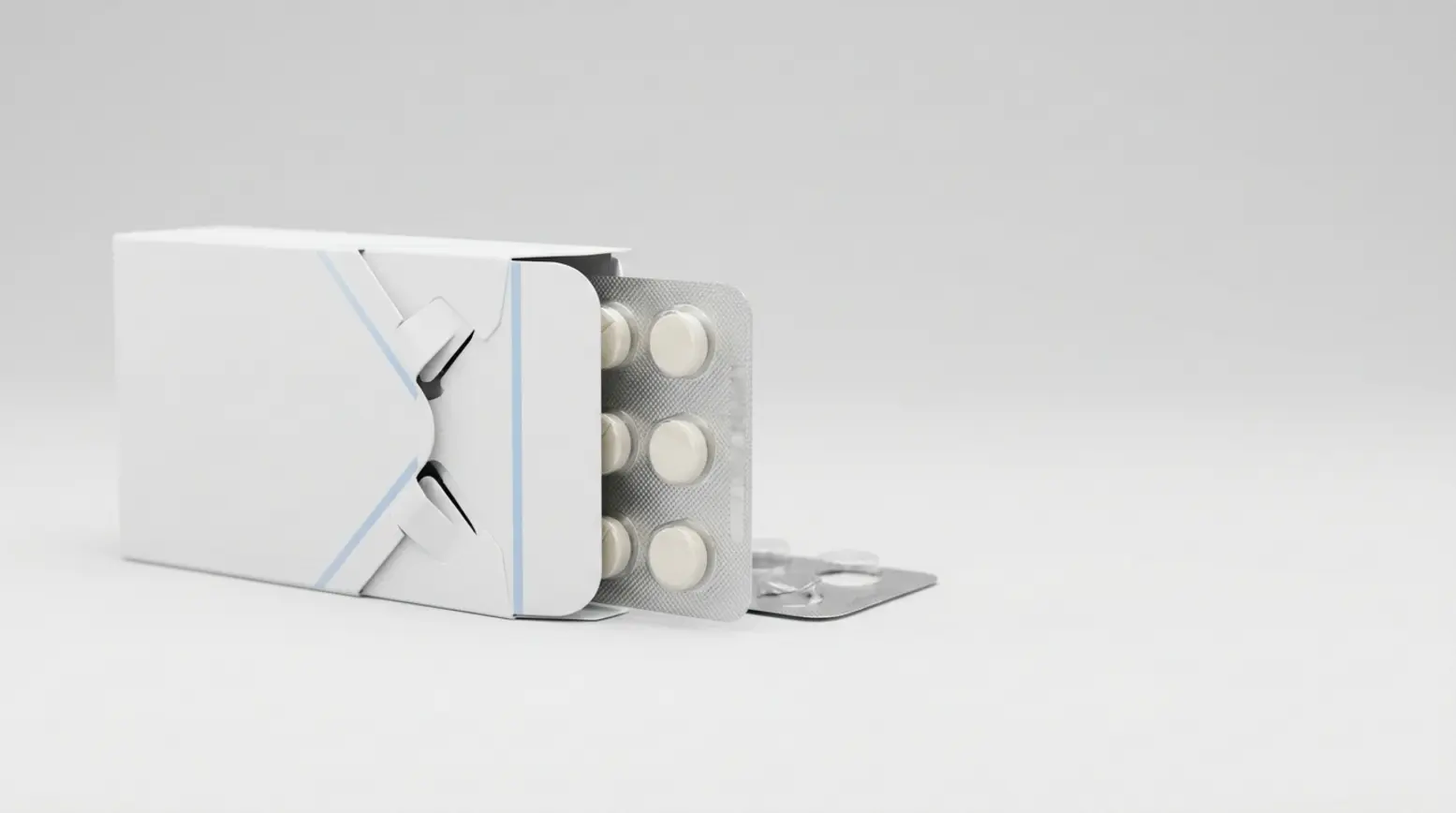
For blister strips, we offer a child-resistant carton for blister strips that is designed around an existing blister. The carton opens only when two diagonal push points are pressed at the same time, supporting a child-resistant route without forcing a blister redesign, provided the product is in scope and the tested design matches the final pack. We also offer the Wallet Box, an all-paper format that holds up to three blister strips and fits about 95 percent of blisters already on the market. Both of our blister solutions are certified to F=1 under US 16 CFR 1700.20 and to ISO/EN 8317 in Europe. Both can run on standard cartoning and pharmaceutical packaging lines at normal production speeds, and all parts stay connected after opening.
Questions teams should answer before launch under the Poison Prevention Packaging Act
Before launch, teams should answer a short set of practical questions. This makes the packaging review clearer and helps prevent delays later in the project.
• Is the product in scope under current regulations, including 16 CFR 1700.14?
• Does a threshold, limit, or one of the child-resistant packaging exemptions apply?
• Will the manufacturer pack reach the consumer unchanged?
• Who keeps the finished pack conformity file and supporting evidence?
• Does the proposed design match the exact tested certified design?
• Can the blister stay unchanged, allowing the project to avoid a full blister redevelopment?
• Will the pack run on standard equipment at normal speeds?
• Is adult and senior usability supported by evidence rather than assumption?
FAQ on the Poison Prevention Packaging Act and child-resistant packaging
Does the PPPA apply to all medicines? No. The Poison Prevention Packaging Act does not automatically apply to all medicines. Current regulation is the right source for determining scope, and 16 CFR 1700.14 is usually the first place to check for covered categories, limits, and exemptions.
What is special packaging? It is packaging that is significantly difficult for children under five to open within a reasonable time, while still being usable for normal adults. That is why both adult usability and child resistance matter.
Where do I check if my product is covered? Start with the current regulations. In practice, 16 CFR 1700.14 helps define the scope, 16 CFR 1700.15 covers performance, and 16 CFR 1700.20 details testing.
Can a supplier claim prove finished pack compliance? No. A supplier claim or component test can support your file, but it does not replace the required evidence for the finished package placed on the market.
Are there child-resistant packaging exemptions? Yes. Certain exemptions, limits, and thresholds exist, so teams should confirm the scope carefully instead of assuming every product is covered.
Can a pharmacist dispense a prescription drug in non-child-resistant packaging? Yes, if the rules allow it and the patient or prescriber requests it. This is different from a manufacturer pack that reaches the consumer unchanged.
Does a tested design stay certified if we change the structure or dimensions? Not automatically. Certification applies to the exact tested design, so any design changes must be checked against the evidence again.
Next step for scope review and pack evaluation
Start by confirming whether your product is in scope under current US rules. Then, evaluate whether a suitable certified design can meet the need while keeping the blister unchanged. If you want an early-stage review of pack fit, line use, and evidence points, you can book a free strategy session and request a complimentary sample for physical review.
If your project later needs wider support, we can also help through our group structure. Through Ecobliss Pharma, broader packaging work can include design for manufacturability, contract packing, serialization, and packaging machinery when the project requires more than just a pack format review.
Request a free sample now!


