



The F1 protocol for child-resistant packaging means that a single unit can count as a failure in a U.S. child-resistant test. It does not mean a 1 percent failure rate. In plain terms, you should read the F-value, the child panel result, the adult use result, and the exact tested pack details together, because a passing claim only makes sense when all four parts match the pack you plan to buy.
• F=1 packaging means one unit can count as a failure, making it a strict rule for unit dose packs.
• The F-value is separate from the child panel pass result because they measure different things.
• A child-resistant test report should also include adult use data, especially for senior-friendly use.
• Evidence applies strictly to the tested pack design, so material or lock changes may affect whether the report is still valid.
• For blister formats already in use, buyers should compare the exact strip setup and outer pack structure before final approval.
What the F1 protocol for child-resistant packaging means
Many buyers search for information on F1-protocol child-resistant packaging because they want a quick answer. The key point is simple: F=1 does not mean 1 percent of children failed. Under 16 CFR 1700.20 F1, the F-value dictates the failure threshold for unit packaging. It tells the lab how much access to the product counts as a failure during testing.
In plain language, the regulation sets the limit at the amount that may cause serious injury or illness, or more than eight units, whichever is lower. It uses a 25-pound child as the baseline. Therefore, when the F-value is 1, access to just one unit counts as a failure. This is why the F-value rule for child-resistant packaging is so strict regarding unit dose formats and blister-based packs.
Why the F1 protocol for child-resistant packaging is different from the child test result
The next point is where many supplier claims become unclear. The F1 protocol for child-resistant packaging describes the exact failure threshold, whereas the child panel result measures how many children could actually open the pack during the test. These concepts are connected, but they do not mean the same thing.
How the child test works
The child panel test consists of two five-minute segments. First, children try to open the package without help. Then, they watch a demonstration and try again for another five minutes. This process is a key part of unit dose child-resistant testing under the U.S. method, and it clearly shows why a single F-value statement does not tell the full story.
What counts as a pass
The pass criteria for child-resistant packaging are based on overall effectiveness. At least 85 percent of children must fail to open the package before the demonstration, and at least 80 percent must still fail afterward. These percentages describe panel performance. They are distinct from the F-value, which defines the exact amount of product access that constitutes a failure.
Why the number of children can change
The U.S. protocol can begin with 50 children. If the initial results fall into a "continue" range, the test can proceed with more participants. In some cases, this sequential method involves up to 200 children. As a result, a single fixed panel size should not be treated as the only legal rule. Some suppliers may share extra brand evidence beyond the statutory minimum, but that data should remain separate from the strict regulatory requirements.
How we present evidence clearly
When discussing our own results, we separate brand evidence from legal requirements. Our reported test data shows that fewer than 1 percent of 300 children successfully opened the packaging in our tested designs. You can review our certified child-resistant packaging evidence to see exactly how those tested formats are presented. While this offers useful proof for those specific designs, it does not mean the law mandates a 300-child panel.
How to evaluate F1 protocol child-resistant packaging alongside adult use data
A child-resistant pack must also work effectively for adults. This matters even more when the end user is older or requires regular daily access to their medication. Because of this, a child testing result alone is never enough to make a sound buying decision.
Why adult use matters
While special packaging should strictly limit child access, it must remain usable by adults. If adults struggle too much to open it, the package can create significant practical problems in everyday life. Therefore, buyers should always review the F-value, the child panel result, and the adult use result together.
What adults are tested on
For reclosable packs, adults are tested on whether they can open the package and securely close it again. For unit packs, the focus remains on whether the adult can successfully open the required unit. This constitutes a vital part of any child-resistant test report because safety and usability must go hand in hand.
What this means for report review
Do not stop at an F=1 statement by itself. Always review the adult use section alongside the child panel data and the exact pack description. By doing so, F-value reports for child-resistant packaging become much easier to judge, and weak supplier claims become easier to spot.
What to check in an F1-protocol child-resistant packaging report
A child-resistant certification report is only useful when the tested configuration is crystal clear. Buyers should inspect the report line by line, as even small design details can determine whether the evidence truly matches the final commercial pack.
Core report details
Carefully check the package photos, model name, materials, locking components, opening instructions, preparation method, failure definition, and test results. These are the main fields that will help you read a child-resistant test report with confidence. If even one key detail is missing, always ask for clarification before giving your approval.
It helps to ask four direct questions during any report review. What is the F-value? What was the child panel result? What was the adult use result? And exactly which pack version was tested? If any answer feels vague, the evidence may be too broad to support a reliable packaging specification decision.
• Report review checklist: Package photos must match the real design.
• The model name should perfectly match the quote and technical drawing.
• Materials and locking mechanisms must match the planned build.
• Opening instructions should remain identical to the tested version.
• The preparation method must mirror the final commercial pack.
• The failure definition should be clear and easy to trace.
• Both child and adult results must be prominently present in the report.
Why exact pack identification matters
Evidence applies exclusively to the configuration that was tested. It is never a blanket approval for every later version of the same packaging concept. If the board grade changes, the locking part is modified, the strip count is altered, or the opening action shifts, the report may no longer reflect the actual product you plan to launch.
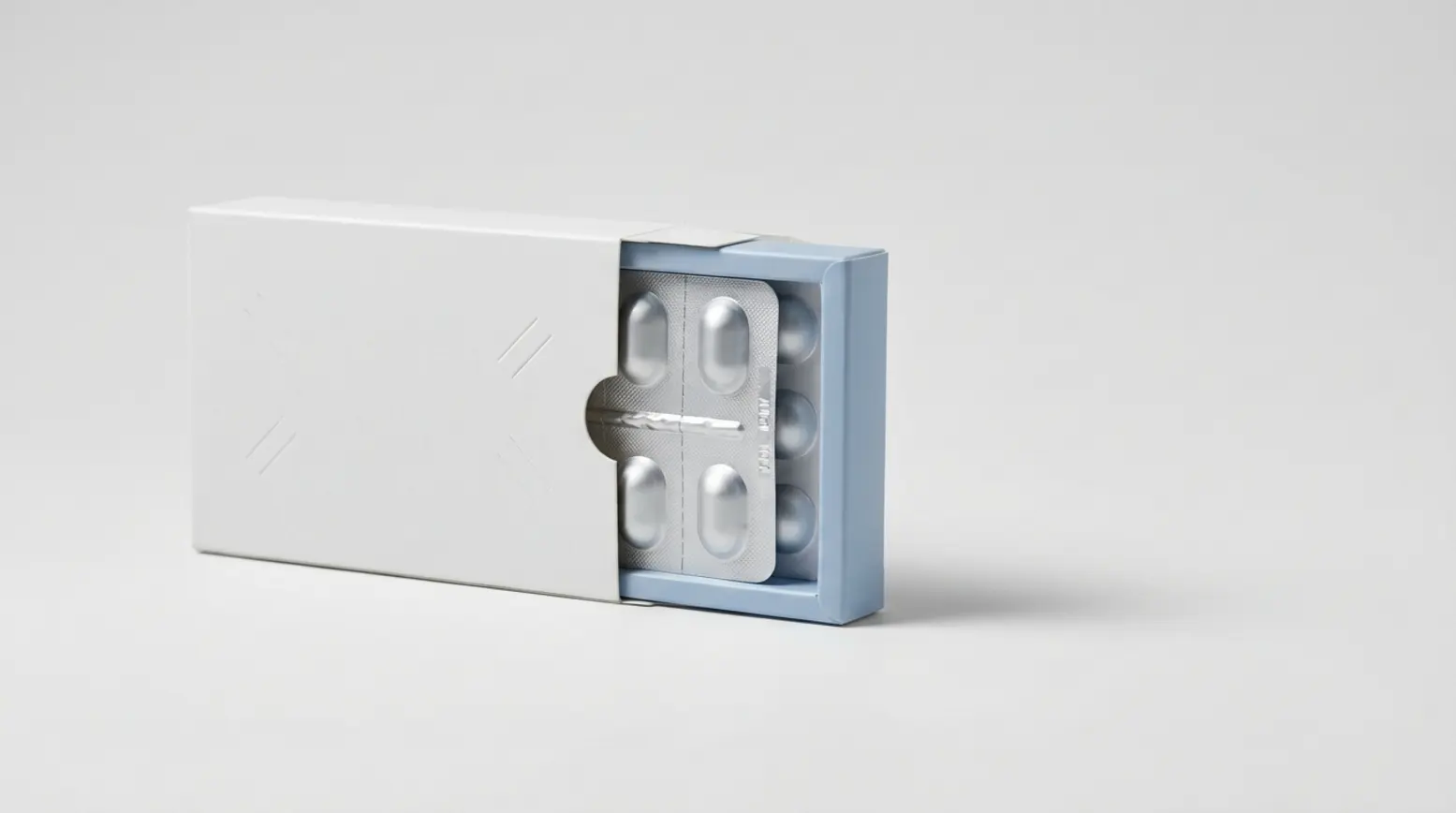
This is precisely why a physical reference matters so much. Our F1 child-resistant carton shows the tray, carton, and two diagonal push points used for existing blister strips. Even with a well-known format, buyers still need to carefully compare the tested design against the final shipped pack.
When design changes may require a new check
Our rule is straightforward: certification belongs to one specific pack design. If that design changes, the need for retesting or further assessment should be thoroughly reviewed against the actual pack. Older CPSC protocol data can still be useful when there are no material changes and the key design features remain identical; however, the final approval should always rely on exact pack details.
How the F1 protocol for child-resistant packaging applies to blister packs already in use
This issue often arises when the blister format is already fixed. In many pharmaceutical projects, the goal is to build child resistance around an existing blister strip rather than redesigning the blister itself. As a result, buyers need F1 blister packaging evidence that matches both the outer pack structure and the exact strip setup they intend to run.
For many existing blister strips, the carton format serves as a highly relevant U.S. example because it is built around the blister and runs smoothly on standard cartoning lines at normal speeds. It is certified to ISO 8317 as well as U.S. 16 CFR 1700.20 F1, and it remains senior-friendly thanks to its two dedicated push points. If you want a broader technical context, our child-resistant blister packaging guide explains how child resistance can be seamlessly added around many blister formats already in use.
We also offer the Wallet Box, an all-paper format that holds up to three blister strips and accommodates many blister sizes currently on the market. However, this article remains focused on the carton because the primary topic here is U.S. F1 evidence for existing strips. Keeping this focus helps buyers compare a test report with a physical blister pack much more clearly.
A practical buyer checklist for specifications and supplier claims
Before granting approval, always match the report to the exact pack you plan to buy. Double-check the package model, materials, locking parts, opening action, intended unit configuration, and the number and format of the blister strips. If even one of these details differs, ask your supplier whether the current evidence still legitimately applies to the final version.
• Before approval, ask: Does the test report describe the exact packaging structure?
• Was the opening method identical to that of the planned pack?
• Was the tested preparation the same as the final commercial product?
• Are there any material or locking mechanism changes?
• Is the adult use result fully included and clear?
It also helps to place the U.S. result into a broader compliance context. F=1 evidence is just one part of the picture, and a separate ISO 8317 certification may also matter depending on your target market. If you want a comprehensive overview, our page covering child-resistant packaging certifications explains how these different standards fit together. Should your project need more support after format selection, the corporate group behind us can also facilitate pack design, production setup, and contract packing through Ecobliss Pharma.
Questions buyers often ask
Does an F=1 statement cover every version of a package?
No. It strictly belongs to the tested package version. If the design, materials, lock, instructions, or unit setup happen to change, you must check whether the existing report still accurately matches the real pack.
Can older CPSC protocol data still be useful?
Yes, sometimes. Older CPSC protocol data can remain helpful when there are no material changes and the tested design stays the same across all key points. A careful comparison is still absolutely necessary because the report must fit the final commercial pack.
Does a passing child test prove adults can use the pack well?
No. The child panel result and the adult use result represent very different parts of the evidence. You should review both together, especially for packs intended for older users or meant for regular daily dosing.
Is a U.S. test result the same as ISO 8317 certification?
No. They are entirely separate standards featuring different test methods and distinct pass rules. A U.S. result does not replace ISO 8317 certification, and ISO 8317 does not replace the U.S. testing result.
What is the safest way to review a supplier claim?
Ask for the full, exact report, and then compare it directly with the specific pack you want to buy. Carefully check the photos, model name, materials, locking parts, opening action, strip format, failure definition, child panel result, and adult use result. Taking this meticulous approach vastly reduces the risk of applying one tested result far too broadly.
Next step: compare the exact pack, then ask for a sample
The best next step is purely practical. Ask for the specific report that covers the exact pack version you want, then compare it directly against your planned configuration, checking the model, materials, opening action, and blister setup. If you want specialized support during that review, you can check your exact packaging configuration with us.
After that, request a physical sample. A tangible sample helps your team assess the opening mechanism, handling characteristics, and overall line fit before making a final approval. In this way, you can move safely from a broad supplier claim to a confident, risk-reduced packaging decision.
Request a free sample now!


