


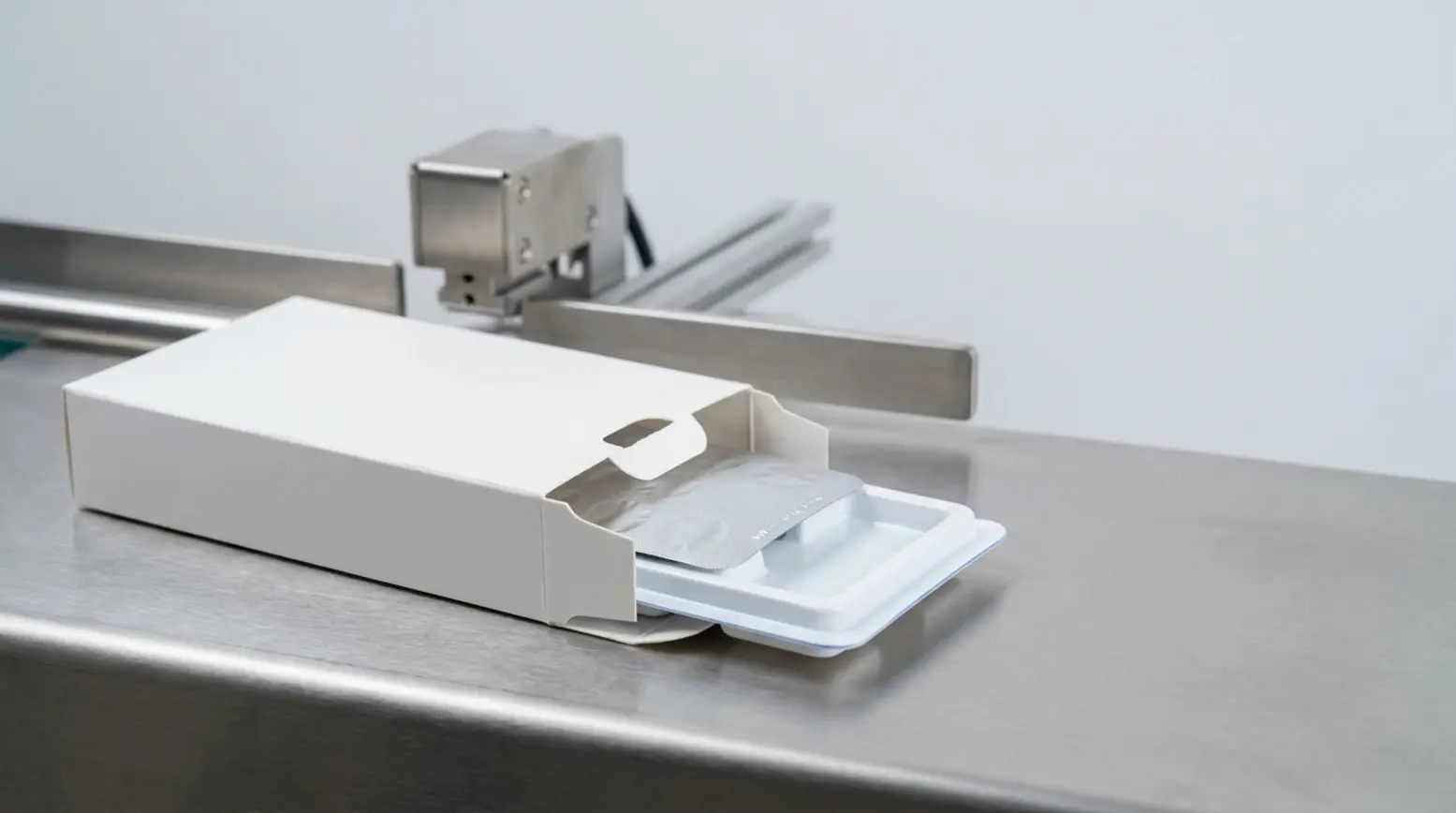

Yes, running a CR carton on a standard cartoner is often possible. A child-resistant carton can usually be processed on standard cartoning equipment as long as the pack fits within the machine's range and the line is tested using the actual equipment. The key point is simple: while the carton may work perfectly on your current pharmaceutical cartoning line, you still need a thorough machine review and a controlled trial before approving any tooling, speed adjustments, or validation work.
• A child-resistant carton can often run on a standard cartoner without requiring a completely new line.
• The existing blister may stay the same if it fits the certified pack design.
• The most critical checks involve feeding, carton opening, insertion, closing, inspection, and reject handling.
• A successful trial proves that the line can handle the pack on that specific machine, but it does not replace official packaging certification.
• Reviewing machine data early helps avoid costly changes after tooling is ordered.
Why running a CR carton on a standard cartoner matters
Many teams assume that a child-resistant cartoning format requires highly specialized equipment. In many cases, however, this simply is not true. If your current line can handle the carton size, board grade, and closing method, the format can likely run on your existing pharmaceutical packaging equipment. This matters because any format decision directly affects cost, timing, supply planning, and line qualification. It also impacts procurement and quality reviews, meaning teams need a clear answer before committing to new change parts or extensive validation work.
We designed this pack as a certified child-resistant carton and tray format specifically for blister strips. Because the child-resistant function is built into the finished secondary pack, there is no need for an extra child-resistant blister forming or lidding step. As a result, the existing blister can often remain entirely unchanged as long as it fits the certified design. This significantly reduces disruption to primary packaging operations, although compatibility remains machine-specific and must always be verified on the actual line.
What a CR carton on a standard cartoner changes, and what stays the same
The format functions as a cohesive carton and tray system. The blister strips sit securely in the tray, and the opening mechanism is driven by the final pack geometry. If you would like to see the physical layout, our child-resistant carton and tray design page explains exactly how the pack is built and how the blister is positioned inside. This is highly useful for engineering, operations, and quality teams who need to understand where the functional areas are located before beginning a trial.
What changes is the carton shape, along with the need to carefully protect the locking areas, crease behavior, and final pack form. What stays the same, however, is the main production route. A standard cartoner still feeds flat cartons, opens them, presents them for loading, inserts the product and leaflet, closes the pack, inspects it, and removes any defectives. In many projects, the blister cartoning machine side of the process remains completely unchanged because the blister itself does not require a redesign if it already matches the selected format.
How a CR carton on a standard cartoner moves through the equipment
The process begins in the carton magazine. Flat cartons are stacked and fed one by one, just as they would be on any typical folding carton equipment line. Clean feeding remains critical because weak separation or unstable board behavior can cause significant problems downstream. The child-resistant format adds a practical concern here: the carton must enter the machine cleanly and retain the shape of its functional areas. As a result, guide settings and overall board quality become increasingly important.
After feeding, the carton moves into the pick-up and opening phase. A carton erecting machine or horizontal cartoner must open the carton squarely, presenting the opening in the exact position required for loading. If the carton fails to open evenly, both insertion and closing can become unstable. This is precisely why suction points, timing, and guide geometry should be reviewed on the actual machine model, rather than relying on general assumptions based on a machine family.
Next comes the carton insertion process. The blister and leaflet move into the opened carton, often utilizing a tray that helps maintain proper orientation. The goal is stable insertion without any crushing, twisting, or pressure on the specific pack areas that create the child resistance. A standard product feed path can often remain in place, but the format parts must support the tray and blister correctly. In child-resistant carton production, this stage deserves close attention since product damage may not be immediately obvious and might only appear during later inspection.
The pack then moves to the carton closing system. The closing mechanism must preserve the crease lines, locking geometry, and the final shape of the pack. Inspection immediately follows. The line should continue to reject any incomplete or damaged packs, but the acceptance criteria must now include features crucial to child resistance, such as a correct closure, intact locking areas, and the proper final form. In this way, the basic automated cartoning sequence feels familiar, while the quality checks become highly specific to the new format.
Since machine layouts vary, the exact sequence can change depending on the builder and the specific model. Some machines present the carton differently, while others use alternate transfer guides or timing points. Because of this, running a CR carton on a standard cartoner should always be reviewed on the real line using the actual production materials.
Machine checks for a CR carton on a standard cartoner before a trial
Start by evaluating the machine's range and the specific carton data. Check the carton dimensions, board thickness, closure style, insertion direction, speed range, and overall line clearances. Next, review the critical handling points: magazine guides, pick-up settings, opening tools, product guides, insertion timing, closing tools, glue or tuck settings (where used), and the sensors that confirm pack presence and position. This provides a practical view of whether the line is likely to run the format with just minor adjustments or if it will require completely new change parts.
Format parts require special care because they must support the carton without pressing on functional push points or deforming the specific areas that drive the opening behavior. Camera and reject logic also need careful review; a successful pack on this line is defined by more than just product presence. The final pack must exhibit the correct shape and closure condition, so your inspection methods must be updated to reflect those requirements.
| Line step | What stays the same | What to verify |
|---|---|---|
| Magazine feeding | Flat cartons feed one by one | Board stiffness, stack behavior, guide settings, clean separation |
| Pick-up | Suction or mechanical pick-up remains the same type | Stable pick-up point, no slipping, no damage to panel areas |
| Opening | Carton opens and squares for loading | Square opening, correct presentation, crease behavior |
| Insertion | Blister and leaflet load into the carton | Tray support, product orientation, no pressure on functional areas |
| Closing | Standard closing motion applies | Locking geometry, flap position, tuck or glue accuracy |
| Inspection | Sensors and cameras check pack quality | CR critical features, final shape, closure completeness |
| Removal | Bad packs are removed from the line | Reliable separation of damaged or incomplete packs |
Before seeking approval, it also helps to gather all core project data in one place. Useful items to collect include the machine make and model, line layout, carton size range, board range, closure style, blister size and orientation, leaflet needs, target speed, current reject data, available format parts, and the existing inspection setup. Doing this makes engineering discussions significantly faster because everyone operates from the same set of facts.
Verifying a CR carton on a standard cartoner for your specific machine
The most critical checks happen before any tooling is committed. You should request the actual machine specifications, current format range, board range, closure options, clearances, insertion direction, and any known limitations in transfer or closing. Then, carefully compare the proposed carton drawing against the true motion of the machine. A format that looks perfectly easy on paper can still struggle on a live line if the opening angle, pocket size, or guide paths are too tight.
This review also reveals whether existing format parts can stay in place or if they require adjustment. In some cases, the line may run the pack with very limited changes. In others, entirely new guides, pockets, or closing tools might be necessary. Therefore, compatibility is always a machine-specific decision rather than a general promise. The exact same pack may perform differently across cartoners from Romaco, Uhlmann, Pentapack, or other builders simply because machine geometry and timing naturally vary.
Running a controlled trial for a CR carton on a standard cartoner
A proper trial should use materials that match the real production run as closely as possible. This includes the actual cartons, trays, blisters, leaflets, and final artwork where available. Be sure to watch each stage separately: feeding, opening, insertion, closing, inspection, and discharge. This careful observation matters because a pack that looks perfectly acceptable at the end of the line might still have required manual intervention or shown weak behavior earlier in the cycle.
Record all stops, misfeeds, damaged cartons, rejected packs, and instances of operator intervention. Afterward, carefully inspect the finished pack following line handling. The child-resistant opening function must still work exactly as intended, as stable machine handling alone is not enough if the pack's shape is compromised during production. It is also helpful to compare these results against your current standard carton baseline under the exact same factory conditions. In this way, target speed and reject expectations will be firmly based on empirical evidence from your own line.
Certification and proof that the line works well
Teams often confuse two different types of proof, making this distinction highly important. Certification belongs to the packaging design itself, whereas line qualification refers to machine handling on a specific production line. Our certified child-resistant packaging page explains the tested design basis and outlines why the tested geometry must remain consistent. If that geometry is altered in any way that affects functionality, the certification status must be reviewed again.
A successful trial simply shows that the pack can be efficiently handled on a particular machine with a specific setup and materials. It does not prove child resistance by itself, nor does it guarantee that every future design change will be acceptable. Therefore, quality and regulatory teams should always treat packaging certification and line qualification as two entirely separate checks that support different ultimate decisions.
When changing the secondary pack is easier than changing the blister
For many teams, keeping the current blister provides a practical advantage because it minimizes changes to the primary packaging. Because the child-resistant function moves entirely into the surrounding secondary pack, the blister can often remain unchanged as long as it fits the selected format. This approach can make project planning significantly easier, especially when the existing blister is already fully validated or widely used across multiple SKUs. For broader context, our child-resistant blister packaging guide explains this specific route in much greater detail.
That being said, a proper fit still matters immensely. Blister size, orientation, and tray layout must all be reviewed with great care. A strong match in both dimensions and movement through the line is exactly what makes this route so practical.
Standard equipment and production speed
We intentionally position this format to support automated cartoning on typical standard pharmaceutical equipment. You can read more about how it successfully runs on standard pharmaceutical equipment on our related page. While this broad design capability explains why the pack fits into many standard line environments, it is not a universal guarantee for every single machine, board grade, or set of worn change parts.
As a result, realistic output expectations should be set only after a thorough technical review and a controlled trial. Some lines may run very close to the baseline speed of a standard carton, while others might require significant work on guides, timing, or inspection logic before stable production becomes possible. The most useful answer always comes directly from testing on the real machine, rather than from making general assumptions about child-resistant formats.
Discuss your cartoner and format before tooling is committed
If your team is getting close to a final packaging decision, the best time to review the project is right before tooling or format parts are ordered. A practical review of the machine specifications, carton drawings, blister orientation, and target speed can clearly show where the line is likely to perform well and where extra work might be needed. If you are ready to move to that next step, you can discuss your machine specification and carton format with us in a structured way before the project is completely locked in.
Want Ecobliss to pack your product into Locked4Kids cartons, including serialization? Ecobliss Pharma handles quotes and contract packing: request a quote from Ecobliss Pharma.
FAQ
Can a child-resistant carton run on a standard cartoner? Yes, often it can. However, the carton still requires a machine-specific review and a controlled trial because line layouts, operational settings, and format parts naturally differ from one machine to another.
Do I need to redesign my blister? Not necessarily. If your current blister fits the selected certified design, it can often remain exactly the same, which greatly reduces required changes in primary packaging.
What machine settings usually need review? Start by evaluating carton size, board thickness, guides, pick-up mechanics, opening sequences, insertion timing, closing tools, sensors, camera checks, and reject logic. All format parts should properly support the carton without deforming any of the functional pack areas.
Does successful line handling prove child resistance? No, it merely proves that the pack can be smoothly handled on that specific line. True child resistance belongs entirely to the packaging design itself and its corresponding certification status.
Can I expect the same speed as my current carton? It is possible, but you should always verify that target with a controlled trial on your own line. A stable production speed depends heavily on the specific machine, the materials used, the physical setup, and the current condition of the change parts.
Request a free sample now!


