


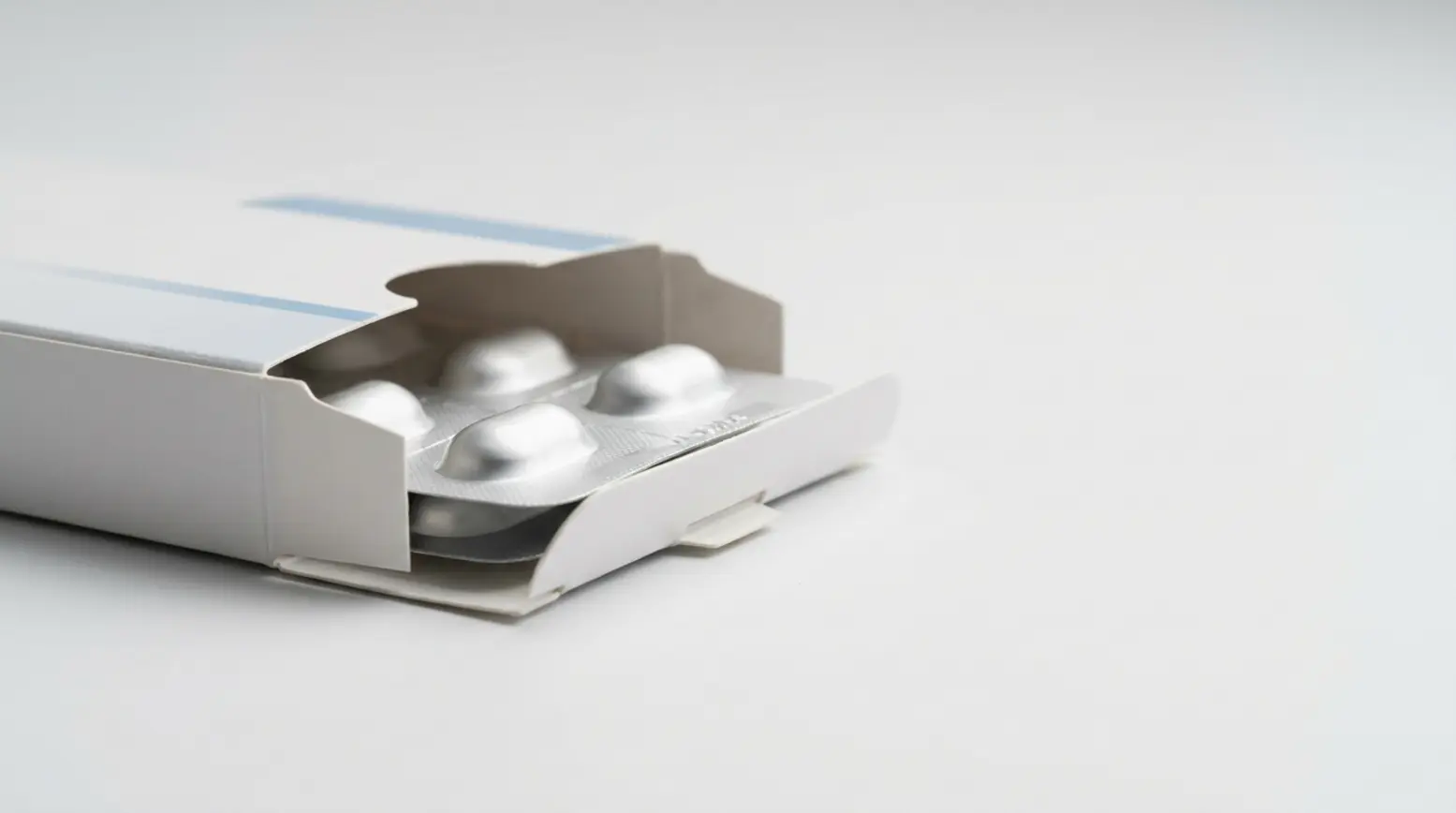

Yes, you can sometimes meet a child-resistant requirement without adding a new production line. This usually works best when the blister pack remains unchanged and the child-resistant function moves into the outer carton. You will still need machine checks, line trials, quality reviews, and market confirmation before launch, as the pack must run smoothly and maintain its safety performance on the existing cartoning line.
• A child-resistant pack does not always require a new machine project.
• A secondary carton route can reduce packaging line investments if the blister and the cartoner are compatible.
• The existing cartoning line will still require a technical review, trials, and packaging line qualification.
• While certification helps, any design change must still be evaluated against market and quality requirements.
• A strong business case should compare packaging compliance CapEx, operating impacts, launch risks, and packaging time to market.
Achieving child-resistant packaging without a new line starts with the right project question
Many teams assume that a child-resistant requirement automatically means new equipment. In practice, the first question is much simpler: where should the child-resistant function sit within the pack? If it can be integrated into the secondary packaging around the blister, the current blister process may remain exactly the same. In some cases, the existing cartoner may also stay in use. This matters because a smaller packaging change can reduce internal workloads, lower compliance packaging investments, and help teams avoid discussions about new packaging lines before they are truly needed.
A new line represents much more than the price of the machine alone. It can impact floor space, utilities, safety reviews, engineering hours, documentation, interfaces with other equipment, and startup planning. Consequently, pharmaceutical packaging CapEx can grow rapidly once a line project begins. A format change should therefore be evaluated first, especially when the goal is child-resistant packaging without new equipment.
Why child-resistant packaging without a new line can reduce project scope
What a new packaging line can affect
When a team considers a new line, the machine cost is only one part of the decision. Layout changes, utility connections, line integration, operator training, documentation, and production planning also factor into the project. As a result, the true packaging line investment is often broader than expected. While procurement may focus on the machinery, the engineering, operations, quality, and regulatory teams usually carry a large portion of the subsequent workload.
You also need change control and qualification. In simple terms, this means you must document the change, approve it, and prove that the line and the pack work correctly every time. That is why it helps to compare a full line project against a child-resistant (CR) packaging conversion on the existing setup, rather than comparing unit prices alone.
Why a carton format change is often a smaller project
If the child-resistant feature can be added to the outer pack, the project often stays much closer to the current process. The blister may remain unchanged, and the same cartoner can continue to run the product. We design formats that run on standard cartoning equipment at normal production speeds. However, each case still requires a machine review because the line must perfectly match the format.
This route can significantly reduce the project scope because fewer parts of the process change. It can also minimize risk when teams want to protect a validated primary pack. For many companies, this approach makes the business case much easier to review across the engineering, operations, quality, and finance departments.
Child-resistant packaging without a new line depends on the packaging route you choose
Route 1: Change the blister
A primary blister redesign can be the right option for some projects, but it often creates a larger overall task. A peel-push blister or a similar concept may change the lidding material, the tooling, and the opening method. Because this directly touches the product-contact pack, it typically increases the validation scope and the amount of review required from quality and regulatory teams. If you want more background on this, our child-resistant blister packaging guide explains the main options in simple language.
This route can also affect your packaging time to market because more of the pack and the process may need to be reviewed. Therefore, the business case must include the workload, risk, and qualification effort, rather than just the material cost.
Route 2: Add the child-resistant function to the carton
Our carton route places the child-resistant mechanism in the secondary pack, directly around the blister strip. The blister can remain unchanged as long as it fits the selected format. This serves as a practical way to meet child-resistant requirements while keeping the current blister process in place. You can view the format here: child-resistant carton for blister strips.
We also offer an all-paper Wallet Box that holds up to three blister strips and fits about 95% of the blister formats on the market. Both the Carton and the Wallet Box are certified to ISO/EN 8317 and achieve F=1 under US 16 CFR 1700.20. This article focuses primarily on the carton route because it is often the better fit when teams want child-resistant packaging without new equipment and prefer to keep the project scope smaller.
What child-resistant packaging without a new line still requires on the existing cartoning line
Machine checks that still matter
Foregoing a new line does not mean there is no engineering work involved. The existing cartoning line still needs to feed and erect the carton correctly. It must handle the tray and the blister accurately during loading and insertion. Finally, it must close the pack without damaging the precise geometry that creates the child resistance. If any of these steps are unstable, the pack may lose its functionality or generate rejects during production.
Your team should carefully review the format range, board range, closing method, inspection system, and any needed change parts. Small details matter greatly, as a format may look perfect on paper but still fail in production. The existing cartoning line must demonstrate stable performance before this route can be treated as low risk.
Why avoiding a new line still requires engineering work
You still need line trials, setup reviews, and documented results. Operators may require new settings, and the engineering team might need to adjust feeding, insertion, or closing points. Therefore, while the project can be lighter than a full line replacement, it still demands genuine technical work.
Packaging line qualification also remains in scope. In simple terms, this means proving that the line can manufacture the new pack in a controlled and repeatable way. Finished packs must then be checked to confirm that the production process did not damage the child-resistant feature. This is a critical part of CapEx packaging compliance decisions because it proves whether the smaller route is truly workable.
Child-resistant packaging without a new line still needs qualification and change control
Quality and regulatory work that remains
Even if the physical line stays in place, the new format still requires clear specifications, approved materials, updated artwork, new tooling, precise machine settings, and comprehensive trial records. Your internal quality system will dictate the exact change control route. Furthermore, regulatory teams need to confirm that the selected design fits the target markets and the overall launch plan.
Line qualification work typically includes trial plans, setup records, inspection checks, and finished pack reviews. The underlying purpose is simple: to show that the pack works exactly as designed and that production does not compromise the opening method. Because of this, while the route is often lighter than a brand-new line project, it remains a strictly managed packaging change.
Certification and design control
We offer designs certified to ISO 8317 and F=1 under US 16 CFR 1700.20. This is highly beneficial because you can start from an existing certified design instead of having to create an entirely new concept. However, since certification applies to a highly specific design, any geometric changes may require additional testing.
For U.S. requirements, the packaging must keep its parts securely connected after opening. Our design meets this criteria by ensuring all parts stay connected after each use. This feature can streamline the regulatory review process and prevent late-stage design changes that add unnecessary work.
Building the business case for child-resistant packaging without a new production line
Compare the project in three ways
Start with the capital investment. Compare the equipment changes, tooling, format parts, validation workloads, and internal engineering efforts. A new line project can quickly become larger than initially expected because its effects often spread into utilities, safety reviews, documentation, and machine interfaces. This is exactly why pharmaceutical packaging CapEx should be reviewed as a comprehensive project, not merely as a machine purchase.
Next, compare the recurring operating effects. Look at line behavior after startup, supply needs, changeover impacts, and potential production disruptions. While the unit cost certainly matters, it should not be the only measure; long-term line stability fundamentally affects your real compliance packaging investment.
Finally, compare the implementation risks and your packaging time to market. Ask yourself which route is more likely to delay the launch, create extra testing work, or negatively affect the primary pack. In many cases, a secondary pack route drastically reduces risk because the blister stays the same, though each project will still necessitate a thorough machine and format review.
Simple comparison table
| Topic | Primary blister redesign | Secondary carton route |
| Line impact | May affect the blister process and tooling | May utilize the current blister and current cartoner |
| Qualification impact | Often broader because the primary pack changes | Usually narrower, though trials and checks still apply |
| Risk to launch | Can rise if the product-contact pack changes | Can be lower once machine fit and a certified design are confirmed |
Usability within child-resistant packaging
Child resistance is only one part of good packaging design. Adults, including seniors, still need to be able to open the pack safely and intuitively. That is precisely why we focus on providing certified child-resistant packaging for blister strips that seniors can still open easily, such as our Carton design featuring two diagonal push points.
Usability also matters in the business case because a hard-to-open pack can lead to patient complaints and practical issues post-launch. In testing, fewer than 1% of 300 children managed to open the pack, while 100% of seniors successfully opened it within five minutes. We also offer the Wallet Box as an all-paper option, enabling teams to support their sustainability goals while maintaining top-tier safety performance.
Questions to align across teams
• Packaging engineering: Is the blister compatible with the selected format, can the current cartoner run it reliably, and what specific change parts are needed?
• Regulatory and quality: Which certified design fits the target markets, and what change control routes, trials, and finished pack checks are required?
• Procurement and finance: What tooling, format parts, and support are needed, and what is the true investment beyond the carton price alone?
• Operations and project management: What trial conditions are necessary, and how could startup risks, line behavior, and production planning be affected?
• Product and brand: Does the artwork properly fit the new format, and does patient use remain clear and easy?
Checklist before CapEx approval
• 1. Confirm the current blister size and layout, as format fit serves as the first filter.
• 2. Check whether the selected certified format successfully fits the product and the target markets.
• 3. Review the cartoner format range, board range, closing method, and inspection system.
• 4. Define the required tooling, change parts, and the trial setup.
• 5. Plan the specifications, artwork, machine settings, and documented trials.
• 6. Agree on the qualification and change control route across all teams.
• 7. Compare the launch risk, validation effort, and time to market before requesting capital.
FAQ
Can child-resistant packaging be added without new equipment? Sometimes, yes. This works best if the current blister fits a certified secondary packaging format and the cartoner can handle the new pack reliably. The child-resistant feature then sits in the outer pack, allowing the blister process to remain completely unchanged.
Does an existing cartoning line always work? No. The machine range, board grade, closing method, inspection system, and change parts must all be thoroughly checked. Trials are still necessary because the pack must run perfectly without any damage to the child-resistant structure.
What still needs qualification if the line stays the same? You still need controlled specifications, approved materials, artwork updates, correct machine settings, documented trials, change control, and finished pack checks. The exact route will depend on your quality system and the specific markets you supply.
What if we do not have our own packaging line? We provide the certified child-resistant packaging itself. If outsourced packing is needed, Ecobliss Pharma or the wider group behind us can support that work, including related packaging services, while we remain completely focused on the packaging format.
The next step before a capital request
Before anyone asks for a new line budget, map out the current blister, the current cartoner, the required markets, and the target launch conditions. The first decision is quite simple: can the compliance needs be met by changing the secondary packaging route instead of altering the primary blister process? Answering that question often gives teams a much clearer view of the project's scope, risk, and launch timing.
If you want to test that route using your own pack and line conditions, you can request a strategy session with our team. We use this step as a thorough engineering and feasibility check, ensuring your team can make decisions based on solid facts before a larger capital project simply becomes the default choice.
Want Ecobliss to pack your product into Locked4Kids cartons, including serialization? Ecobliss Pharma handles quotes and contract packing: request a quote from Ecobliss Pharma.
Request a free sample now!


