


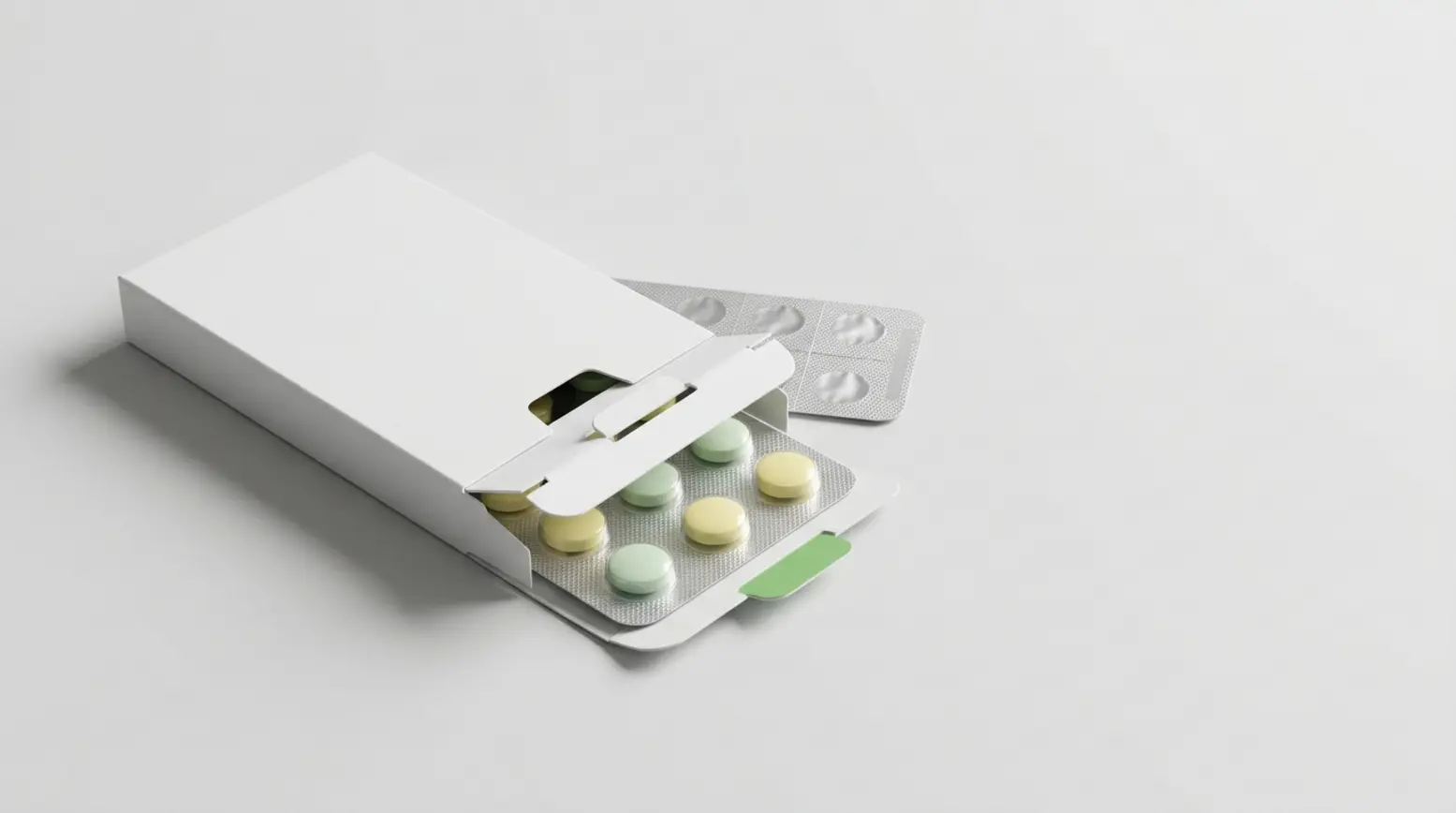

Yes, child-resistant and easy-to-open packaging is possible. This is achievable when a pack uses a smart opening action rather than relying primarily on force. As a result, the packaging can remain highly challenging for young children while still being manageable for adults, including many seniors. This core concept is what buyers, engineers, and compliance teams should keep in mind when reviewing a package design or writing a specification.
• Child resistance and adult usability belong in the same packaging brief, as both are essential components of real-world package performance.
• Force-based designs often create difficulties for adults, leading to a false trade-off between safety and accessibility.
• Superior mechanism design can effectively separate child and adult performance through sequence, spacing, reach, and coordination.
• Test evidence is critical because certification applies exclusively to the exact tested version of a pack, including its specific instructions and format details.
• Requesting a free sample helps teams evaluate the opening mechanism directly before moving forward with a project.
Why child-resistant and easy-to-open packaging is possible
Many people assume that stronger child resistance inherently means a more difficult opening process for adults. This belief is common because, in daily use, some packaging truly functions that way. However, this is typically a sign of weak design logic rather than a universal rule. A well-designed package should protect children while remaining highly practical for its intended adult users. Therefore, safety and usability should be treated as a single, unified design task from the very beginning.
Child-resistant and easy-to-open is a single design brief
When teams separate child safety and adult accessibility into two distinct goals, the resulting priorities often become muddled. One group may push for increased resistance, while another advocates for an easier opening experience. A supplier might then respond by introducing heavier board strength, tighter seals, or a higher required opening force. This approach frequently yields poor results because the exact same physical barrier affects all users. Instead, it is much better to define a single, unified goal: child-resistant and easy-to-open performance that functions reliably in real-world scenarios and is backed by solid evidence.
What the U.S. regulations are really asking for
In the United States, the legal framework already integrates both of these needs. Under the PPPA and 16 CFR 1700.20, special packaging must be significantly difficult for young children to open, yet not difficult for adults to use properly. This means the true target is balanced performance. The regulation does not demand the hardest possible packaging; rather, it requires the right barrier for the right user.
What ISO 8317 adds to the discussion
In Europe, the ISO 8317 standard also incorporates adult usability into its core performance metrics. This is highly relevant because child resistance alone fulfills only a portion of the requirement. If adults cannot use the package correctly, it simply fails to serve its intended purpose. Consequently, child-resistant accessibility must be an integral part of every serious packaging review.
Why child-resistant and easy-to-open feels impossible when force is the main barrier
Problems frequently arise when a package depends too heavily on physical force. A tighter closure, a stronger seal, or a harder peel mechanism might slow down a child, but that same barrier will also impede the intended adult. This is exactly where the balance between child-resistant and accessible packaging often goes wrong. If force serves as the primary barrier, all users face the exact same challenge, meaning the design fails to separate performance capabilities effectively.
This issue is even more critical for individuals with lower grip or pinch strength. Many adults live with chronic pain, reduced hand mobility, or diminished hand strength. In these situations, force-heavy packaging can quickly become an incredibly frustrating experience. For further context on adult usability, our guide to senior-friendly child-resistant packaging explains why senior-friendly child resistance must remain in the design brief right from the start.
Why understanding instructions does not remove physical barriers
While instructions are certainly helpful, they cannot fix a package that requires excessive force. A person may perfectly understand the necessary steps and still be physically unable to complete them. Therefore, while clear text, icons, and visible cues should support the opening action, they can never replace a fundamentally sound mechanism. In accessible child-resistant packaging, the physical task must remain entirely realistic for the intended adult user.
Where child-resistant vs. accessible packaging goes wrong in requirements
Weak specifications inevitably lead to weak outcomes. If a design brief merely asks to make a product more child-resistant, suppliers may naturally gravitate toward thicker materials, tighter seals, or other force-based modifications. A vastly superior brief asks how the packaging will create varying levels of difficulty for different types of users. By taking this approach, procurement teams, engineers, and compliance managers can actively guide development toward an easy-open, child-resistant mechanism rather than settling for a simplistic force barrier.
How child-resistant and easy-to-open can work through mechanism design
The better design question is quite simple: how can the opening process be difficult for children while remaining easily manageable for adults? Intelligent mechanism design achieves this by leveraging sequence, spacing, reach, coordination, and hand size. Because these factors affect users quite differently, they separate child and adult performance far more effectively than sheer force. This distinction is especially relevant in child-resistant blister packaging, where the opening path can be shaped with a much higher degree of control.
Design variables that can effectively separate child and adult performance
Some packaging requires two simultaneous actions. Other designs depend on the distance between specific push points, the precise sequence of steps, or the physical reach required across the package. Hand size plays a vital role as well. A movement that is entirely manageable for an adult may prove nearly impossible for a small child simply because the required action is too difficult to coordinate and complete correctly. This is the core concept behind child-resistant, easy-open packaging. The design does not need to be harder for everyone; it merely needs to create a barrier that operates differently depending on the user.
Why visible cues matter in child-resistant and easy-to-open packaging
Visible cues actively help adults use the packaging correctly. Clear push points, arrows, concise instructions, and a simple overall layout can significantly reduce confusion and facilitate proper opening. This is incredibly important in adult-friendly, child-resistant packaging because better guidance directly improves the likelihood that the intended user will perform the correct action. However, these visual cues must always support the underlying mechanism without weakening its security.
What to ask for when a supplier claims child-resistant and easy-to-open performance
Buyers should always ask for solid evidence, as packaging claims absolutely require proof. If a supplier states that a package is child-resistant and easy-to-open, or simply describes it as senior-friendly and child-resistant, you must ask what specific test data supports those statements. Formal proof matters far more than persuasive sales language. We explore this topic in greater detail in our guide covering child-resistant certification and testing, which highlights the critical role of protocols and properly tested configurations.
• Ask which testing protocol was used: For the U.S. market, inquire whether the packaging was tested according to 16 CFR 1700.20 and if it achieved an F=1 rating. For the European market, ask specifically about ISO 8317. One result does not automatically substitute for the other, as they represent distinct regulatory standards.
• Ask for adult and senior opening results: Data regarding children alone is simply not enough. Adult and senior test results demonstrate whether the package actually works for intended users in daily life, which is a crucial factor for CR/SF (child-resistant/senior-friendly) packaging and accessible medicine formats.
• Ask whether the tested package matches the commercial version: Certification legally belongs to the specific tested design. The structure, format, physical mechanism, and relevant instructions must exactly match the final commercial version, otherwise the prior test results may no longer apply.
• Ask what specific changes would trigger a need for retesting: Alterations in material, graphical layout, the opening mechanism, or even printed instructions can make a significant difference. Furthermore, packaging certification is entirely separate from medicine registration or market authorization, so development teams must keep those respective approval paths distinct.
A tested example of child-resistant and easy-to-open in blister packaging
One highly practical proof point is our child-resistant Wallet Box. We use it here purely as a tested example rather than presenting it as a blanket guarantee for every future iteration. Its value is straightforward: it clearly demonstrates that robust child resistance and seamless adult usability can easily coexist within the same design when the mechanism is clearly defined and properly tested.
Child test outcome for the Wallet Box
During the official testing of the Wallet Box design, not a single child successfully opened the package within the first five minutes. It is important to note that this result applies exclusively to that specific tested version. It should be interpreted as an objective test outcome, rather than a broad promise covering any future modified packaging.
Senior test outcome for the Wallet Box
In the same tested Wallet Box design, 100 percent of participating seniors successfully opened it within five minutes. Again, this particular result applies strictly to that specific tested version. However, it excellently demonstrates adult usability in practice, which is a foundational element of true child-resistant and easy-to-open performance.
Why the combination of both outcomes matters
While each individual result matters, the true value lies in their combination. Child resistance without adult usability can create tremendous frustration and even medical risk. Conversely, easy opening without adequate child resistance completely misses the essential safety requirement. Together, these combined outcomes perfectly illustrate why this dual design goal makes sense and why any supporting evidence must explicitly include both sides.
Where child-resistant and easy-to-open fits in real production
For professional buyers, a brilliant concept still has to function smoothly on the production line. While test success is crucial, manufacturing fit is equally important. That is exactly why any practical review must include an assessment of blister compatibility, assembly line feasibility, and overall supply chain impact. By taking this comprehensive approach, teams can avoid selecting a package that easily passes compliance testing but creates entirely new problems during normal operational workflows.
Why blister compatibility matters
The Wallet Box can securely hold up to three blister strips and accommodates approximately 95% of the blister formats currently available on the market. This broad compatibility significantly reduces development friction, as many existing blister dimensions can be utilized without requiring a full structural redesign. For both packaging engineers and procurement teams, this versatility makes the technical review process far more efficient.
Why line fit matters for procurement and contract packing
Our Carton and Wallet Box solutions are specifically engineered to run on standard cartoning lines at normal production speeds. This is critical because certified safety packaging must still remain highly practical in a real-world manufacturing environment. If a complex mechanism works beautifully in testing but drastically slows down routine packaging operations, it simply creates a completely different set of business problems.
Wider packaging support from the group, where relevant
When broader project support is required, Ecobliss Pharma, part of the Ecobliss Packaging Group, can expertly assist with related packaging needs, including custom design, contract packing with advanced tracking codes, component production, and supplying packaging equipment. We mention this purely for context, as the primary focus of this article remains firmly on tested opening mechanisms and how to evaluate them correctly.
If you need a broader background on easy-open, child-resistant formats
This article focuses heavily on design logic, key supplier questions, and one thoroughly tested proof example. If you would prefer a wider overview of available format types and early-stage development options, exploring our easy-open child-resistant packaging guide will provide broader context without repeating the specific points covered here.
FAQ
Can a child-resistant package also be easy for adults to open? Yes. This is entirely possible when the packaging leverages sequence, spacing, reach, or coordination rather than relying primarily on brute force.
Does child-resistant mean child-proof? No. Child-resistant simply means the package has been formally tested and proven to be significantly difficult for young children to open. It should never be inaccurately described as child-proof.
Why should I ask for senior results? Senior testing results clearly demonstrate whether the intended users can actually open the package properly. This supports real-world usability and helps effectively evaluate both senior-friendly medicine packaging and general adult accessibility.
Do design changes affect certification? Yes. Because certification belongs strictly to the specific tested design, any changes in physical structure, opening mechanism, format, or written instructions will typically require formal retesting.
What is the main mistake in child-resistant vs. accessible packaging? A remarkably common mistake is relying far too much on force. That approach can make the package harder for both children and adults simultaneously, thereby failing to create a smart, functional separation between the two distinct user groups.
Request a free sample today to judge the opening mechanism directly for yourself.
Request a free sample now!


