


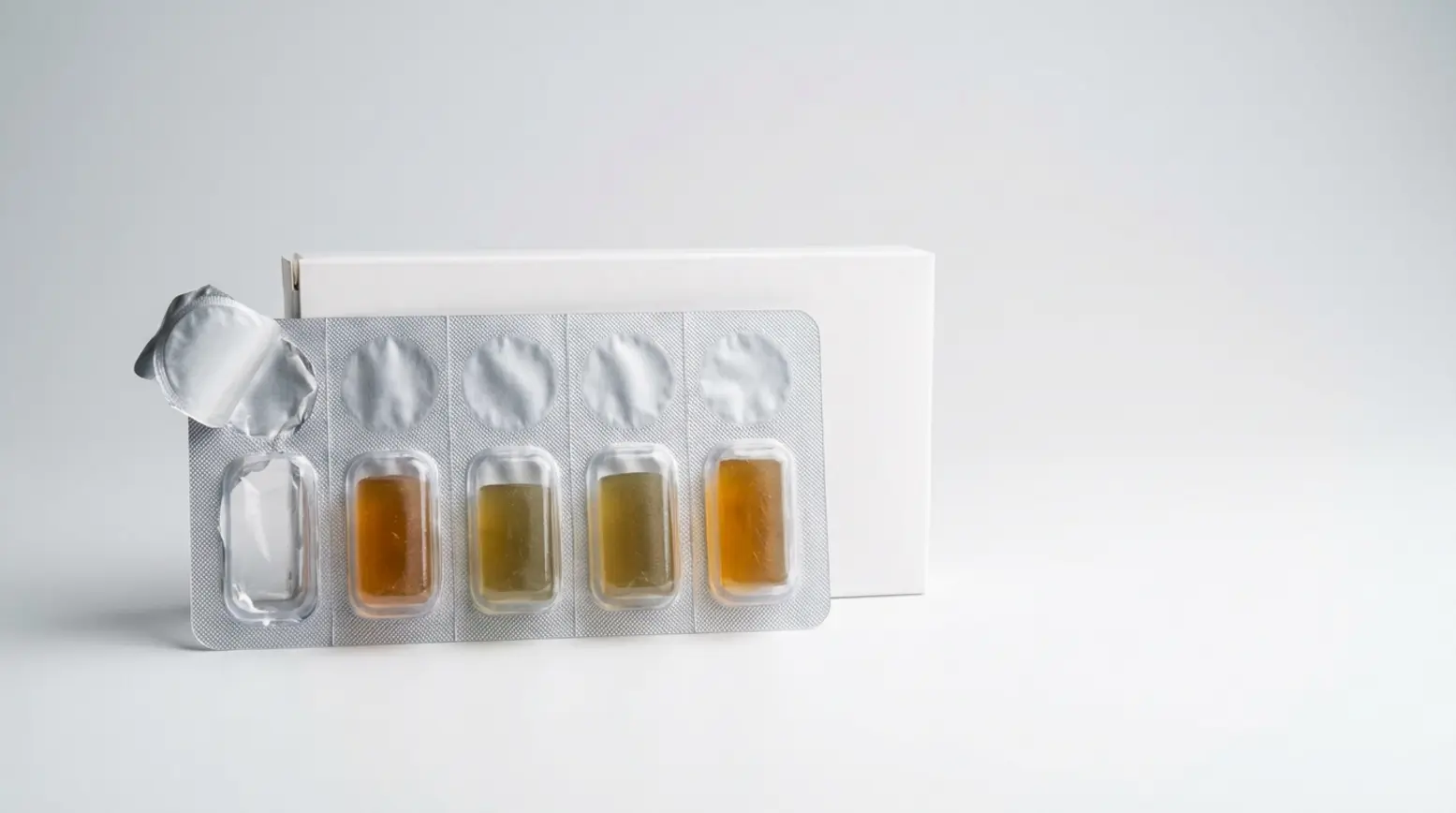

Cannabis gummies are increasingly moving into blisters for selected products because this format provides a fixed unit count, keeps unopened pieces sealed, and clearly shows visible unit-opening status. This can significantly help with pack control, handling, and access control when used alongside a certified outer pack. However, this does not mean every gummy should transition out of a jar or pouch. Soft, sticky, and moisture-sensitive gummies still require thorough product testing before a blister format makes sense.
• Blisters can be highly beneficial when a product needs a fixed count, sealed remaining units, and a clearly visible unit-opening status.
• Jars and pouches still work well for many gummy products, especially when the individual units vary in shape or size.
• Gummies require product-specific trials because cavity fit, sticking, seal quality, and barrier performance all directly impact pack success.
• Child resistance and gummy protection can be handled as separate functions, allowing the blister and the outer pack to each do what they do best.
• A pilot review should cover technical, regulatory, and artwork considerations before a team officially changes its packaging format.
Blister packaging for cannabis gummies is becoming a real option for selected gummy products
Cannabis gummy blister packaging is an emerging option for some gummy products, and the reasoning is highly practical. A blister can fix the unit count, keep unopened units sealed, and make it easy to see exactly which cavity was opened. For teams reviewing cannabis gummy packaging, this fundamentally changes how the pack functions in daily use. It can also support edible unit dose packaging when a loose-fill format does not provide enough structure.
This does not represent a full market shift. Jars and pouches still play an important role in cannabis packaging formats because they are simple, flexible, and widely used. Even so, some teams are now reviewing gummies in blister packs because they desire more control over the unit count, clearer handling, or a completely different shelf format. In certain THC gummies packaging projects, the unit layout also assists with printed instructions and overall pack organization.
We see interest from product teams, engineers, compliance teams, contract packers, and procurement teams because each group evaluates a different aspect of the decision. Engineering asks whether the gummy blister pack can protect the product and run efficiently on the packaging line. Compliance checks child-resistant gummy packaging requirements. Procurement reviews tooling, material supply, and format complexity. As a result, the best decisions usually come from a comprehensive pack review rather than focusing on one packaging feature alone.
Why cannabis gummy blister packaging changes the pack experience
What jars and pouches do well
Jars and pouches are common because they are easy to fill and work exceptionally well with loose units. They can also handle gummies that vary slightly in size, shape, or surface texture. For many products, this makes them a highly practical choice. In cannabis packaging formats where speed and flexibility matter most, jars and pouches typically remain ahead of the curve.
However, they also have their limits. Once opened, the full quantity of product can be exposed. If the format utilizes a reclosable child-resistant closure, ongoing protection ultimately depends on the user closing the pack correctly each time. This does not mean jars or pouches are weak formats; rather, they function in a different way. That distinction matters significantly when teams compare them against a unit dose gummy pack.
What a blister changes
A blister changes the fundamental pack structure because each gummy sits in its own dedicated cavity. This means the cavity count inherently sets the unit count. When one cavity is opened, the remaining pieces stay completely sealed. This also creates a visible unit-opening status, allowing the user to easily see which unit has already been removed. For selected products, this is a highly useful change in overall pack behavior.
This shift can support teams looking for a much more defined format than loose fill. It is also helpful when the outer pack requires a broad printable area for mandatory information and directions. If you want to explore how the blister and the outer child-resistant format can work together seamlessly, our guide to child-resistant blister packaging explains this functional split in a very simple way.
Where this format can add value
This specific format adds value when the product requires fixed count control, when unopened units must remain sealed after one piece is used, or when a brand desires a more structured shelf format. A blister card paired with a carton or wallet can provide extra room for instructions, compliance text, and branding artwork. This often assists with gummy packaging compliance, as regulated information consistently requires clear placement and excellent readability.
Still, the true value depends on the actual product and the specific user needs. If the gummy changes shape too frequently, if unit separation offers little practical benefit, or if the initial tooling costs become hard to justify, the extra blister step may not be worthwhile. Therefore, the packaging decision should always start with product behavior rather than design preference alone.
Why blister packaging for cannabis gummies requires real product testing
Gummies are different from tablets
Gummies are inherently different from tablets because they can be soft, sticky, and slightly variable in size. They can also react to moisture, which may subsequently change their texture, shape, or how they release from the cavity. Because of this, blister packaging for cannabis gummies should be treated as a serious engineering project. It is not a simple copy-and-paste of a standard tablet blister.
In practice, a gummy may deform when pushed into a cavity, or it might stick to the lidding material. It could also shift during line handling or long-term storage. These variables directly affect gummy barrier packaging, seal performance, and the final user experience, meaning teams must conduct trials with the real product in the actual pack.
What to prove in trials
Start by evaluating dimensions and fit. Check the gummy size range, the cavity shape, and exactly how much pressure the cavity places on the product. The cavity should hold the gummy securely without squeezing it too hard. If the gummy surface is tacky, test the release carefully; a cavity might look perfectly fine during the initial setup but still create significant problems later.
Next, review the forming material, lidding, seal settings, and machine setup. A seal can appear strong at first but still fail after extended storage or transport. Barrier needs also vary widely by formula, meaning one product may require vastly different protection than another. That is precisely why gummy blister pack development must include storage trials, transport reviews, and opening checks after aging.
Stability belongs to the actual gummy and blister
Stability data must come from the actual gummy placed inside the actual blister. Teams should closely monitor storage results, cavity performance, seal integrity, and product behavior over time. If a gummy loses its shape, sticks badly, or changes too much, the pack may require a completely different cavity design, different materials, or an entirely different format. This is one of the primary reasons why certain products successfully move forward with a blister while others remain in jars or pouches.
If a project advances beyond the child-resistant outer pack, wider external support can also be beneficial. Through Ecobliss Pharma, the group can support broader packaging efforts such as structural design, contract packing with product coding, and packaging machine planning. Even so, the fundamental question remains exactly the same: does the gummy actually perform well within the blister system?
How cannabis gummy blister packaging works with child-resistant secondary packaging
Why the blister and outer pack can have separate jobs
It often helps to separate various pack functions. The blister can focus solely on product fit, seal quality, and barrier performance, while the outer pack focuses entirely on access control. This makes the overall development process much easier because gummy protection and child resistance are fundamentally different technical challenges.
For teams new to this area, it helps to fully understand how child-resistant packaging works before diving deeper into specific design choices. Child resistance is ultimately about controlled access, though adult usability is equally important. In this way, the blister can stay optimized for the gummy itself, while the secondary pack successfully handles the complex opening challenge.
What child-resistant means in practice
Child-resistant claims must strictly link back to the exact tested design. The final pack has to perfectly match the certified version in all the parts that affect the opening mechanism. If key design features are changed, new testing may be required. This is a critical part of the child-resistant gummy packaging review, and it should remain completely separate from gummy stability testing since each test answers a distinctly different question.
Our certified formats meet ISO/EN 8317 and F=1 US 16 CFR 1700.20 standards. For more details on design-specific approvals, you can review our certified child-resistant secondary packaging information. The main point is quite simple: certification only confirms the tested opening design. It does not confirm product stability or blister barrier performance.
The role of the Wallet Box around a gummy blister
Once the gummy reliably works in a blister, the very next step is the outer pack. Our all-paper Wallet Box around a gummy blister can hold up to three blister strips and fits about 95% of the blisters currently on the market. It is certified as both child-resistant and senior-friendly, and it can run on standard cartoning lines at normal speeds. Therefore, it serves as a highly practical option for cannabis wallet packaging in selected projects.
The Wallet Box is entirely paper, so it strongly supports plastic reduction at the secondary packaging level. Of course, the full system is only plastic-free if the internal blister is also plastic-free. If you want to look further into material choices, we also share detailed guidance on paper packaging around a blister and the specific points to check during development.
When blister packaging for cannabis gummies is the right fit
Cases where a blister can make sense
A blister makes perfect sense when a product needs fixed count control, sealed remaining units, or a clearly visible unit-opening status. It can also be beneficial when a brand wants a broad printable outer pack, or when both compliance and handling benefit from a more structured format. In those specific cases, cannabis blister packaging may support both technical and commercial goals, provided the product passes real-world trials first.
This approach is exceptionally useful in projects where a defined edible unit dose packaging format helps the user and the business simultaneously. It may also suit teams wanting a clear, organized unit layout instead of a traditional loose-fill pack. If ensuring that unopened units stay completely sealed after first use is important, the blister format certainly deserves a closer review.
Cases where jars or pouches may still be better
Jars or pouches may remain the better choice when the gummy shape changes too much, when the blister stability is noticeably weak, or when frequent pack changes make custom tooling hard to justify financially. They may also stay ahead when physical unit separation simply does not add much value for the end user. In those instances, simpler formats generally support easier filling and much lower operational complexity.
Ultimately, there is no single best answer for every product. The right choice depends heavily on product behavior, line setup, compliance needs, and what the user actually gains from the packaging. Maintaining this balanced view helps teams make better format decisions while avoiding the trap of forcing a product into the wrong system.
Cost and shelf trade-offs
Cost inherently depends on the full packaging system. A blister usually requires forming, sealing, custom tooling, and product-specific setup work. Conversely, a jar or pouch may be much easier to fill, especially for loose units. Because of this, one format is not automatically cheaper than the other, and costs should be carefully reviewed across materials, line time, potential waste risk, and overall supply chain needs.
Shelf impact also changes considerably. A wallet or carton provides a much larger printable surface, which can greatly assist with displaying directions, warnings, and overall brand presentation. At the same time, the added blister process must deliver enough functional value to justify the complex change. That is exactly why teams should look at both the technical fit and the broader market fit before they officially commit.
A pilot checklist for cannabis gummy blister packaging
Before implementing a format change, it helps to review the full system through a simple pilot plan. This keeps the engineering, regulatory, and brand teams perfectly aligned, and it significantly reduces the risk of missing a key issue late in the development cycle.
• Technical checks: Confirm the gummy size range, cavity geometry, deformation risk, sticking risk, barrier needs, lidding choice, seal settings, line handling, storage behavior, transport performance, and final pack count. Test the real gummy inside the real blister to confirm that the remaining units stay perfectly protected after just one cavity is opened.
• Regulatory checks: Confirm all target market requirements, carefully review the child-resistant setup, and verify that the final opening design matches the formally certified version. If any key opening feature changes, review whether new testing is strictly needed. Always keep the certification review separate from the stability review.
• Brand and artwork checks: Confirm there is enough room for required information, specific directions for use, and extremely clear opening instructions. Review whether the new shelf format truly supports the brand and whether the unit structure helps the end user enough to justify the pack change.
• Operations checks: Review tooling lead times, overall supply reliability, machine fit, expected line speeds, and any extra handling steps needed for both the blister and the secondary pack.
If your team wants to review the opening method and physical format before making a larger decision, please feel free to request a complimentary sample.
FAQ about gummies in blister packs
Are gummies in blister packs common now?
No. This remains a developing option designated for selected products. Some brands are actively testing or using it because unit packs can easily offer a fixed count, keep remaining units sealed, and provide a clear, visible unit-opening status.
Does a blister automatically make the pack child-resistant?
No. Child resistance strictly depends on the properly tested design. In many projects, the blister simply holds the product, while the outer carton or wallet is what controls access.
Can any gummy move into a blister easily?
No. Gummies can naturally be soft, sticky, and highly moisture-sensitive. Therefore, cavity fit, material choice, lidding, seal settings, and overall barrier performance all require thorough, product-specific trials.
Is a Wallet Box the same as a fully plastic-free pack?
No. The Wallet Box itself is entirely made of paper. However, the full system is only considered plastic-free if the internal blister component is also plastic-free.
When should we stay with jars or pouches?
You should stay with them when the gummy shape varies quite a bit, blister performance is demonstrably weak, or the added blister step simply does not bring enough value. They remain incredibly useful formats for a vast array of products.
What does visible unit-opening status mean?
It means the pack makes it extremely easy to see which cavity has been opened and which remaining units are still sealed. This term describes pack visibility only. It should never be treated as an official tamper-evident claim unless the exact packaging has been formally assessed and verified for that specific purpose.
Request a free sample now!


