


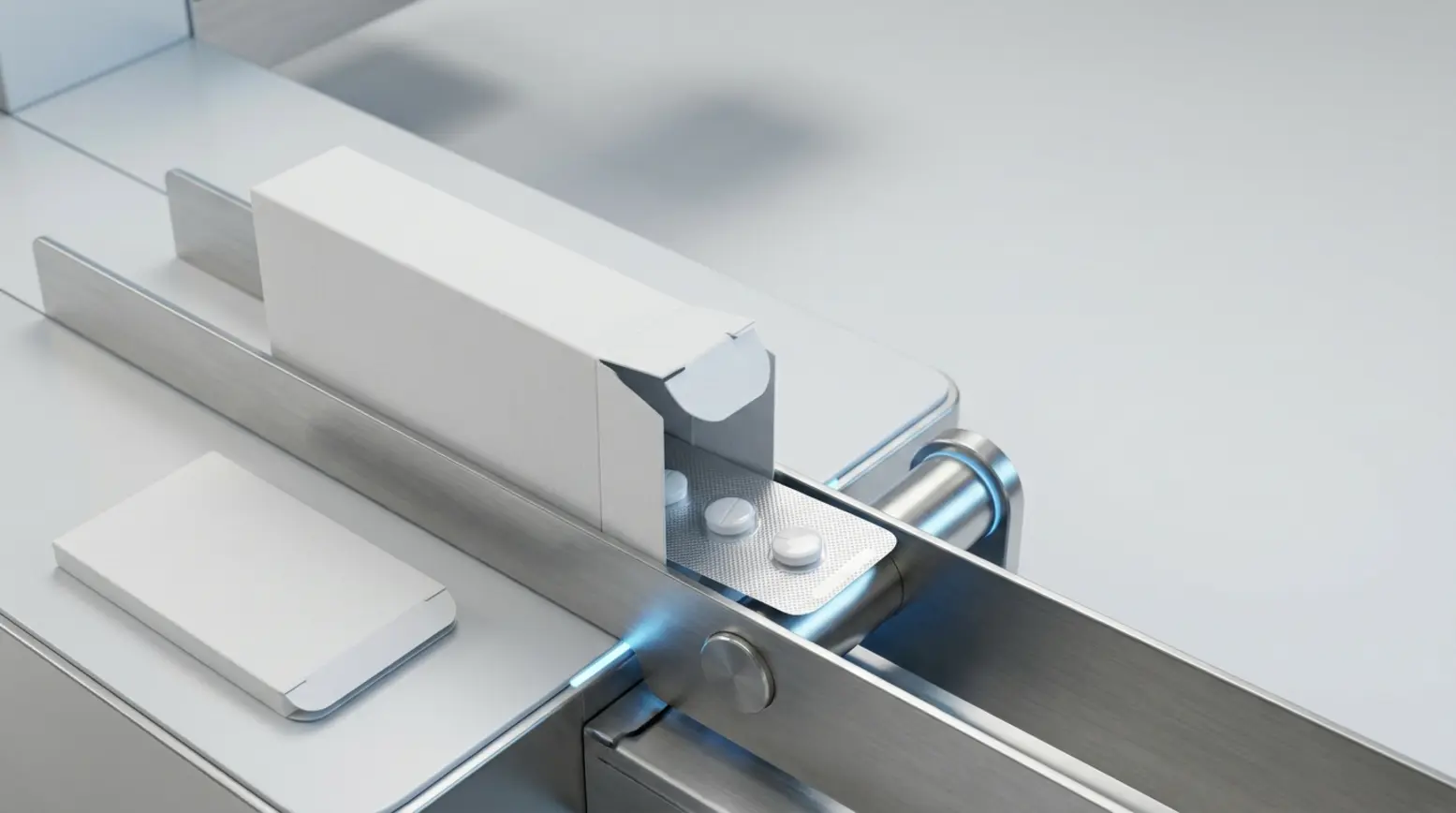

If you are asking your contract packer to run CR cartons, involve them before the format is finalized. This is the fastest way to learn whether the carton can run well on the actual line, what parts may be required, and what the trial needs to prove. Although a child-resistant carton might fit standard equipment, the specific cartoner, sensors, closure steps, and quality checks still demand a thorough, machine-specific review.
• Involve the contract packer before artwork, tooling, and launch schedules are locked in.
• Ask for a real-line review, as a single hand-folded sample does not guarantee stable production.
• Separate carton tooling from machine format parts to keep costs and ownership clear.
• Define the contract packer trial in advance, including settings, materials, quality checks, and final sign-off.
• Keep roles well-defined among the brand owner, packaging supplier, and contract packer to reduce delays and disputes.
Asking your contract packer to run CR cartons starts with early packer involvement
The main rule is simple: bring the contract packer into the project before finalizing the child-resistant format. This is crucial because the packer operates the actual line and handles the production tasks. If this review happens too late, the team might uncover issues only after artwork, tooling, and launch plans are already in motion. Such delays can easily slow down an outsourced pharmaceutical packaging project and create extra work for the packaging, procurement, and quality teams.
We design child-resistant cartons for blister packs, and in many projects, the existing blister can remain unchanged. This reduces the need for redesigns, allowing the project to move much faster at the packaging level. While you can review the basic child-resistant carton format to understand its structure, doing so does not replace a proper line review by the contract packer. The machine still must handle feeding, erection, insertion, closure, and inspection in a consistently repeatable way.
A simple project example illustrates why this matters. A team might choose a child-resistant format, approve the artwork, and then ask the packer to run it. The packer might then discover that the carton magazine needs adjustment, the closure step requires new parts, or the sensors cannot read the finished pack correctly. As a result, the launch schedule can slip even if the carton design itself is perfectly valid.
Why early review matters
Every packaging line has fixed limitations. These include the carton size range, board thickness, feeding behavior, insertion direction, closure method, and connected inspection steps. An early review is highly beneficial because minor changes are much easier to manage before the format is locked. This is especially true for pharmaceutical contract packing, where approval timelines and quality responsibilities are strictly controlled.
Where standard equipment helps
Our carton runs on standard cartoning equipment, meaning implementation is often straightforward on many lines. However, this advantage must be understood in context. While it supports general feasibility, it does not guarantee that every CMO packaging line is immediately ready. The packer still needs to confirm the cartoner model, current setup, available parts, and the precise operating window on their specific line.
What asking your contract packer to run CR cartons means in practice for line feasibility
In practice, asking your contract packer to run CR cartons means conducting a full feasibility check on the actual equipment. The critical question is whether the carton can run in a stable and controlled manner during normal production. A single successful pass on the machine is simply not enough, as CR carton co-packing requires repeatable performance across the entire production run.
During a contract packer's child-resistant review, the machine assessment should cover the cartoner model, configured format range, carton magazine behavior, board caliper, carton erection, blister insertion, and closure method. It must also evaluate sensors, inspection protocols, rejection mechanisms, serialization handling, and any format parts already in place. Furthermore, the packer should identify which change parts can be adjusted and which must be manufactured new. This creates a practical picture of feasibility rather than just a rough estimate.
Many packaging lines involve much more than cartoning alone. There may be code printing, code reading, aggregation, bundled shipping steps, or other connected operations further down the line. These elements should be included in the same assessment, as the pack must move smoothly through the entire process. Good co-packer packaging requirements are highly specific, enabling the packer to judge line fit based on concrete facts rather than mere assumptions.
The machine checks the packer should make
• Packer assessment: cartoner model, active size range, carton magazine, board thickness, erection, insertion, closure, sensors, inspection, rejection, serialization, and format parts.
The review should also look closely at how the carton blank feeds from the magazine, how well the carton opens, how the blister enters the carton, and how the closing action behaves at full operating speed. Sensors matter because they confirm product presence, position, and proper closure. Rejection mechanisms are equally critical, as nonconforming packs must be removed in a controlled manner under the agreed-upon quality process.
What else must be included in the review
The brand owner and the packer should also discuss the expected campaign size, batch patterns, and forecast logic. This is important because short runs and long runs stress the line in entirely different ways. If the packer will run multiple SKUs, the changeover profile must be reviewed early on, ensuring that labor, parts, and potential downtime are fully understood before the project moves forward.
Asking your contract packer to run CR cartons requires clear technical inputs
A thorough review starts with complete information. If you are asking your contract packer to run CR cartons, send technical data early so the packer can assess the project using real numbers. This saves valuable time, transitioning the conversation from guesses to facts. It also helps procurement, engineering, and quality teams prepare the right questions for the final contract packaging agreement.
The packer should receive the pack drawings, external and internal dimensions, product and blister configurations, board information, closure concept, coding needs, market scope, forecast, batch patterns, and the campaign profile. It is also helpful to share the intended approval route and the expected launch timing. When this information is complete, the packer can accurately estimate machine fit, new part requirements, the likely scope of the trial, and essential quality checks.
Even an unchanged blister still demands a machine review. The blister itself may stay the same at the product level, but its feeding, orientation, insertion, and final fit within the carton can significantly impact line performance. Factors like friction, timing, stacking behavior, and insertion direction can completely change the result. For a wider background, our guide to child-resistant blister packaging explains the broader approach, but proving line feasibility ultimately remains the packer's responsibility.
What the brand owner should send to the packer
• Technical inputs: pack drawings, dimensions, blister setup, board data, closure concept, forecast, batch pattern, campaign profile, target markets, code needs, and approval route.
Why unchanged blisters still need a packing review
Keeping the current blister format can be highly beneficial, as it typically reduces redesign work upstream. However, the cartoner must still receive, position, and insert that blister correctly under standard production conditions. Therefore, using unchanged product contact parts does not eliminate the need for a machine-specific review.
Asking your contract packer to run CR cartons must include tooling and agreement terms
Technical fit is only one aspect of the project. Asking your contract packer to run CR cartons should also lead to a clear discussion about tooling, machine parts, ownership, storage, maintenance, and transfer rights. If these details are left open, confusion frequently arises later when orders are placed, parts wear out, or production transitions to another site.
It is important to differentiate folding carton tooling from cartoner format parts. Carton tooling is used to manufacture the carton blank, whereas cartoner format parts are used to run that finished carton on the packer's line. Since these are entirely different assets, they often have different owners, cost structures, storage locations, and maintenance duties. Overlooking this distinction is a common gap in contract packaging agreements, and assuming the same rules apply to both can lead to entirely avoidable disputes.
The agreement must clearly outline who pays for each tool or part, who owns it, who stores it, who maintains it, and who holds the right to transfer it later. It should also establish protocols for artwork approval, deviation handling, change control, and batch release roles. This protects the integrity of pharmaceutical packaging responsibilities by ensuring every party knows exactly where their tasks begin and end.
Keep carton tooling separate from cartoner format parts
When teams speak about tooling in broad terms, they frequently confuse two separate subjects. One is the tooling used by the manufacturer to produce the carton, and the other is the set of line parts used by the packer to run the carton. Keeping these topics distinct makes budget, ownership, and qualification discussions much more straightforward.
What the contract packaging agreement should define
• Agreement points: who pays, who owns, who stores, who maintains, who can transfer later, how artwork is approved, how nonconformities are handled, how changes are controlled, and who gives final release.
How asking your contract packer to run CR cartons should shape the trial
A useful contract packer trial should prove repeatable production, not just basic movement through the machine. The team must define the trial parameters before the materials arrive, ensuring that everyone agrees on what will be tested and exactly what constitutes success. This is a critical element of trial planning; a line's behavior can appear perfectly acceptable during the first few cycles, only to degrade over the course of a longer run.
Always use production-representative materials. Agree on the specific line settings to test, and confirm which existing format parts will be utilized versus which new parts will be introduced. Additionally, clearly define the expected behavior for feeding, erection, insertion, closing, inspection, rejection, and code handling. The ultimate goal is to establish a documented operating window that the packer can reliably recreate during routine production.
The finished packs also require functional checks after machine handling. The child-resistant mechanism must still work exactly as intended, and the carton should display no damage that might impair its use or locking performance. This step is vital because design certification never replaces the need for production proof on the actual operating line. Final sign-off should involve the brand owner, the contract packer, and the designated technical or quality personnel. While we can support the packaging side with all relevant technical details, the packer ultimately signs off on the execution on their own line under the agreed-upon quality system.
Define the trial before material arrives
• Trial definition: production representative materials, agreed settings, tested format parts, expected machine behavior, inspection points, rejection logic, and sign-off criteria.
Include functional checks on finished packs
Child-resistant performance must be verified again after production handling, as machine contact can alter the physical condition of the pack. If the packer requests a structural change to improve machine fit, the team should immediately assess whether this alteration affects existing certifications and if formal retesting is required.
Decide who signs off
• Trial sign-off: materials used, settings tested, parts tested, expected behavior, child-resistant function check, approval roles, and signatures.
The three-way responsibility map for child-resistant carton projects
Clear projects require clearly defined roles. The brand owner determines the product route, market scope, and final packaging setup. We provide the child-resistant packaging design along with the related technical pack information. The contract packer, in turn, runs production on its qualified line under the agreed manufacturing and quality responsibilities. When these roles are outlined in plain language, project decisions move faster, and quality ownership becomes much easier to manage.
| Brand owner | We provide | Contract packer |
|---|---|---|
| Owns the product, market plan, regulatory path, and approval of the final packaging setup. | Provides child-resistant packaging design and relevant technical packaging information. | Runs production on its line under agreed manufacturing and quality responsibilities. |
| Approves artwork, volumes, batch pattern, and market fit. | Explains pack structure, board data, and child-resistant function. | Checks machine fit, settings, inspection, rejection, serialization, and format parts. |
| Defines supplier agreements and release roles. | Flags when structural changes may affect certification and require review. | Performs incoming, in-process, and final checks under its quality system and customer agreement. |
These expectations should be stated clearly in the formal agreement. This documentation must cover artwork control, tooling, deviations, change control, and release responsibilities. By laying out these terms, the handoff between the packaging supplier and the contract packer remains practical, transparent, and fully traceable.
Quality boundaries in contract packing pharmaceutical projects
Certification and production quality are closely linked, but they are not the same thing. Our carton designs are certified to ISO and EN 8317, as well as F=1 under US 16 CFR 1700.20 for the stated markets. While this confirms that the pack design fundamentally meets both child-resistant and senior-friendly testing requirements, it does not mean that every future production batch is automatically approved.
The packer still needs to perform incoming checks, in-process checks, and final checks under its own quality system and the corresponding customer agreement. Additionally, the brand owner must confirm that the selected, certified design fits both the physical product and the target markets. Should the packer request structural changes to improve line performance, certification could be affected, potentially requiring new testing. This distinction is critically important in pharmaceutical contract packing, as design control and batch control follow related yet fundamentally different paths.
What to do if the current packer cannot run the format
If your current packer says no, first work to identify the real barrier. The issue could be a genuine machine limitation, a missing format part, an inspection problem, or simply limited experience with child-resistant cartons. Keep the review factual and objective; this helps the team decide on the next step without assigning pressure or blame. Most importantly, a packer should never be pushed to operate outside their validated capabilities.
When comparing alternatives, use the exact same checklist from the initial review. Ask each prospective packer to assess their actual cartoner, the connected line steps, necessary format parts, trial scope, and quality controls. If you want to discuss a specific setup with our team, you can contact us with your carton, blister, machine, forecast, and batch details. Providing these specifics helps start a focused discussion regarding line fit and the most effective route for your co-packing needs.
If you still need a packing route
We are a dedicated supplier of child-resistant packaging, not a contract packer. However, if you find yourself needing a packing partner, Ecobliss Pharma within the group can provide full contract packing services, including serialization. We offer this as a secondary route, ensuring the main discussion stays firmly focused on finding the right child-resistant pack and conducting a realistic review of the actual packaging line.
Want Ecobliss to pack your product into Locked4Kids cartons, including serialization? Ecobliss Pharma handles quotes and contract packing: request a quote from Ecobliss Pharma.
FAQ
When should I involve my contract packer? You should involve the packer before finally choosing the child-resistant format. This proactive approach gives them ample time to review the real line, assess machine limits, and identify any needed format parts well before artwork and tooling are locked in.
What should a contract packer check before accepting a child-resistant carton? The packer must review the cartoner model, the active size range, carton magazine performance, board thickness, erection, insertion, closure, sensors, inspection systems, rejection mechanisms, serialization steps, and both existing and new format parts. Importantly, this review should cover the entire packaging line, not just the cartoner.
Who owns format parts for CR carton co-packing? Ownership always depends on the specific agreement in place. The contract packaging agreement should explicitly state who pays for the parts, who officially owns them, who is responsible for storage and maintenance, and whether they can be transferred to another facility later.
Does a certified child-resistant design mean the line is automatically approved? No. Certification strictly covers the pack design based on the stated standards and target markets. The packer still has to prove that the format runs correctly on their specific line and must continue to complete regular, batch-level quality checks.
What should be included in a contract packer trial? The trial should use production-representative materials, defined settings, and designated format parts. It must also set clear expectations for feeding, erection, insertion, closing, inspection, rejection, and code handling. Additionally, the trial needs to confirm that the child-resistant functionality remains fully intact after undergoing the rigors of machine handling.
Request a free sample now!


