



Accidental cannabis ingestion in children usually happens when a child finds a cannabis product, mistakes it for food, and eats it. Edibles appear frequently in pediatric cannabis exposure reports because they can look familiar and one package often holds several pieces. The risk is lower when products stay in their original packaging, the pack is closed correctly, warnings are clear, and storage is completely out of reach. For brands and packaging teams, the main lesson is simple: prevention works best as a comprehensive system. Child-resistant cannabis packaging is helpful, but it cannot control what happens after the product is opened or transferred to another container.
• Accidental cannabis ingestion in children is typically linked to easy access, food confusion, and poor storage habits.
• Pediatric exposure to edibles is common because children can easily mistake cannabis edibles for regular food, making them more likely to pick up and eat these products.
• Exposure, pediatric cannabis poisoning, and hospitalization are distinct terms; therefore, they should not be treated as the same outcome.
• Child safety rules for cannabis packaging help reduce access, but secure reclosing and safe cannabis storage still matter every day.
• Brands should review packaging, warnings, presentation, storage guidance, and change controls together, as each step supports cannabis child safety.
Why accidental cannabis ingestion in children is getting more attention
Accidental cannabis ingestion in children is discussed more often in public health and compliance work because more cannabis products are now sold in legal markets. This growth has increased concern regarding accidental cannabis ingestion by children in the home. Research and poison center summaries frequently highlight incidents involving young children and edible products. It remains important to handle statistics carefully; every figure should be verified in its original source before publication. Yet, even without listing specific statistics here, the pattern is clear enough to explain why regulators, brands, and packaging engineers are paying closer attention to poison control calls related to cannabis and implementing stricter prevention measures.
Edibles are often central to this discussion because they can easily be confused with ordinary food. If a package contains several doses, a single opening can expose multiple pieces. As a result, an accidental edible ingestion can escalate from a brief access event to a significant exposure incident very quickly. This is why child safety in edible packaging is now a core part of broader cannabis safety planning in many markets.
How accidental cannabis ingestion in children happens in real life
Why edibles are often involved
Many incidents start with simple confusion. A child sees a product, believes it is food, and eats it. This is a primary reason why cannabis edibles that children encounter at home appear so often in pediatric cannabis exposure research. The problem can compound when a multi-unit pack provides access to several pieces after just one opening. Therefore, teams should evaluate the product form, the packaging format, and the likely use setting together when reviewing child-resistant cannabis packaging options.
Unit separation can help in certain cases because it limits how much product is available after a single action. For example, individually sealed cavities can restrict access to multiple doses at once. Still, unit sealing is not the same as true child resistance. A blister pack may separate pieces, but that alone does not make it a certified child-resistant cannabis packaging format. For more details, teams can review child-resistant blister packaging within the appropriate technical context.
Why storage behavior still matters
Storage is a major part of prevention because packaging can only be effective when it is used properly and closed correctly. If a pack is left open, improperly reclosed, damaged, or emptied into another jar or bag, the original safety features may lose much of their value. Storing products within a child's reach can also defeat the benefits of a secure design. Therefore, safe cannabis storage remains essential, even when a package meets legal child-resistant requirements.
What accidental cannabis ingestion in children means, and what it does not
Exposure is not the same as poisoning
When we discuss accidental cannabis ingestion in children, clear definitions matter. Accidental exposure usually means a child may have touched or swallowed a cannabis product. A confirmed poisoning is entirely different; it is a medical judgment based on symptoms, case history, and clinical review. If people mix these terms, the risk picture becomes less accurate, and consequently, decisions regarding policy, packaging, and reporting become weaker.
This distinction also helps internal teams. Some poison control cases related to cannabis involve only concern or observation, and they do not all become confirmed cases of pediatric cannabis poisoning. Because of this, incident reviews should carefully separate possible exposure from medically confirmed harm. Clear language supports better compliance work and enables more useful communication with partners.
Hospital care is a separate outcome
Hospitalization is another distinct outcome. It should not be treated as a given in every report of accidental cannabis ingestion by children. Some children may require observation or treatment, while others may not. Providing a calm, objective explanation helps readers understand the issue without exaggeration. This perspective is highly useful for regulatory teams, product managers, and packaging engineers who need a realistic view of risks and control points.
Why accidental cannabis ingestion in children is addressed with multiple controls
What packaging can do
Packaging can significantly reduce access, but it does not remove risk entirely on its own. Child-resistant cannabis packaging is designed to make opening difficult for young children while still allowing normal adult use. If you are looking for a simple explanation of what child-resistant packaging can do, the key point is that it delays or reduces access when the package is used exactly as intended. Therefore, while packaging is an important control, it must be viewed as just one part of a broader safety system.
What packaging cannot do on its own
Packaging cannot control consumer behavior after the point of sale. If someone leaves a pack open, closes it improperly, stores it within reach, or transfers the product into another container, the protective effect drops rapidly. This is why cannabis child safety must be understood as an ongoing chain of events. Access, opening, reclosing, storage, and daily use all affect the final outcome. Approached in this way, prevention planning becomes far more practical because it focuses directly on where controls typically weaken in real life.
Why warnings, presentation rules, and storage messages also matter
Regulators frequently mandate several tools simultaneously because each one addresses a different aspect of the risk. These tools typically include child-resistant access features, highly visible warnings, clear storage advice, and presentation limits designed to reduce confusion with ordinary food. Some markets additionally require opaque packaging for specific edible products. California is a prime example, but since rules differ widely by market, teams should always verify the applicable local framework before a product launch or redesign.
What responsible brands should review after evidence of accidental cannabis ingestion in children is reviewed
Responsible brands should evaluate the full use path, rather than merely passing a legal checklist at launch. Products should remain in their original packaging because transferring them can eliminate key safety protections. Closing instructions must be clear and simple to follow, and storage warnings should be both visible and practical. Furthermore, product and package presentations should avoid mimicking ordinary children’s food, as visual confusion significantly increases the risk of pediatric exposure to edibles.
It is also beneficial to use unit separation wherever it suits the product, meticulously maintain documentation, and keep strict change controls in place. Because certification applies only to a specific, tested design, any structural changes may require complete retesting. Procurement, engineering, artwork, and compliance teams should collaboratively review package shape, opening features, materials, and instructions. This collaborative approach makes prevention plans much stronger and easier to defend during safety audits or design updates.
Packaging options after evidence of accidental cannabis ingestion in children is reviewed
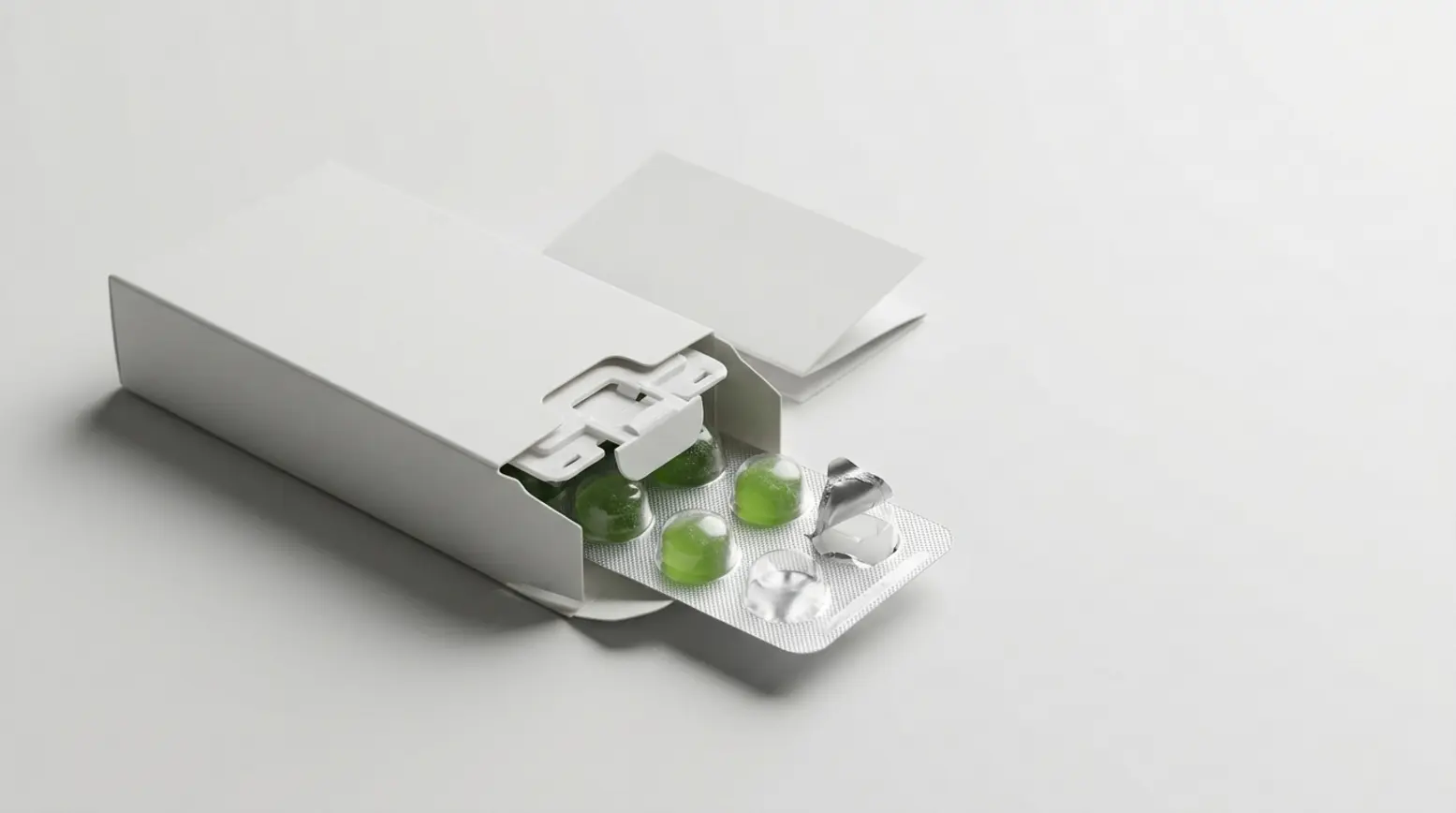
Once the underlying prevention logic is clear, certain blistered formats may benefit from a packaging route that adds a secondary access barrier. For blistered tablets, capsules, softgels, and gummies, brands can place a child-resistant carton around a blister. This ensures the blister stays secured within a separate barrier while the individual units remain safely sealed inside. While this setup strongly supports child safety for suitable edible formats, it cannot prevent every possible incident; proper storage, reclosing, and handling still matter immensely.
For suitable products, we provide certified child-resistant packaging that is rigorously tested to ISO/EN 8317 and F=1 US 16 CFR 1700.20 standards. The tested design is also senior-friendly, ensuring that intended adult users can usually open it with greater ease than many traditional formats. Because certification is entirely design-specific, any material or structural changes will likely require retesting. If a comprehensive packaging project needs support beyond the carton itself, Ecobliss Pharma and our wider group are ready to assist with broader packaging process questions.
Questions teams often ask
Is child-resistant packaging enough on its own?
No. While it certainly helps reduce access, correct reclosing and secure storage are still absolutely necessary. If a package is left open or kept within a child's reach, much of its protective value is quickly lost.
Why do edibles appear so often in pediatric cannabis exposure research?
Edibles often resemble normal food, making children much more likely to approach and consume them. Furthermore, a multi-piece package can expose several doses after a single opening, substantially increasing the risk.
Does a blister automatically make a product child-resistant?
No. A blister pack effectively separates individual units, but unit separation and true child resistance are completely different concepts. Ultimately, the final design, the specific opening mechanism, and the fully tested configuration are what determine child resistance.
Can a certified design be changed without retesting?
Brands should never assume this is possible. Certification formally applies only to the specific design that was tested. If the materials or the structural layout change in any way, retesting is typically required.
What should brands review first if they want to reduce accidental edible ingestion risk?
Brands should start by evaluating the full incident chain: access, opening, reclosing, storage, transfer to other containers, and overall package presentation. This comprehensive approach helps teams choose controls that perfectly fit the real-world use setting, rather than relying on a single safety feature.
If a blister-based route fits your product
If your team is reviewing blistered cannabis formats and needs a clear technical next step, we can help you assess a child-resistant blister route for the product and package you have in mind. We keep these discussions highly practical; the goal is to carefully check format compatibility, certification scope, production line realities, and structural design limits before any final decision is made.
Request a free sample now!


