



16 CFR 1700.20, explained in simple terms, means one thing: it is the US test method used to prove that packaging is difficult for children to open while remaining accessible for adults. It falls under the Poison Prevention Packaging Act (PPPA) and works alongside 16 CFR 1700.15, which defines the pass levels. This rule does not grant approval for your packaging. Instead, it details how to run a child-resistant test protocol, what results are required, and how to document those results before placing a product on the US market.
• It is a specific test method under PPPA guidelines, rather than a formal certification or approval.
• You must test the exact packaging design you intend to sell.
• Child tests evaluate whether young children can access a harmful amount of the product.
• Senior adult use effectiveness must achieve a minimum success rate of 90 percent.
• A valid child-resistant packaging test report serves as your definitive proof of compliance.
16 CFR 1700.20 explained: What it means in practice
When 16 CFR 1700.20 is explained, it must be viewed as part of the broader 16 CFR 1700 framework. These regulations define the US child-resistant packaging standard and are strictly enforced by the CPSC. Section 1700.15 establishes the effectiveness targets, while 16 CFR 1700.20 details how to conduct the CPSC packaging test. Due to this structure, the rule functions as a testing method rather than a generic label or blanket approval.
In practical applications, you must design a package and test that precise version. If the package passes, you retain the report as compliance evidence. Should any elements change later, you must evaluate whether the original test data still applies. If you need a broader overview before beginning, our guide to child-resistant packaging explains the fundamental concepts and helps you make the right design choices from the start.
16 CFR 1700.20 explained: How it defines the child test protocol
The child-resistant test protocol focuses on real-world interactions by young children. Specifically, it involves children aged 42 to 51 months, as this demographic can perform simple motor actions but remains highly vulnerable and in need of protection.
Testing begins with an initial panel of 50 children. If the results are inconclusive, more children are systematically added in sequential phases. This thorough approach ensures that the final outcome accurately reflects natural behavior and meets all child-resistant packaging testing requirements.
Each child participates in two distinct five-minute test periods. During the first period, the child attempts to open the packaging without any assistance. Afterward, the tester demonstrates how the mechanism works. In the second period, the child tries to open it again. This dual-phase method effectively evaluates both initial contact and short-term learning.
The pass criteria are intentionally strict. At least 85 percent of the children must be unable to open the package prior to the demonstration, and at least 80 percent must remain unsuccessful afterward. In this context, a failure means the child has successfully accessed a harmful amount of the contents. For unit-dose formats, this correlates directly to the quantity a child could potentially ingest. During child-resistant blister testing, this typically translates to the specific number of tablets that can be pushed through the foil.
16 CFR 1700.20 explained: How it measures senior adult use effectiveness
The same regulation also verifies whether adults can operate the packaging correctly. This metric is known as senior adult use effectiveness. The test incorporates participants between the ages of 50 and 70, as individuals in this demographic may experience reduced hand strength or limited dexterity.
To pass, a minimum of 90 percent of the participating adults must successfully open the packaging. For reclosable formats, they are also required to secure it properly afterward. Because adults only receive the written instructions provided with the product, unclear or ambiguous directions will significantly reduce success rates.
This usability phase is critical; if a package is excessively difficult to open, consumers will not use it as intended. Safe design relies equally on child protection and adult usability, meaning both tests must be passed to satisfy the US child-resistant packaging standard.
How to read results under 16 CFR 1700.20, explained
A comprehensive child-resistant packaging test report must describe the evaluated packaging in precise detail. This includes documenting the materials, exact dimensions, and the mechanical opening system. Furthermore, it defines the test setup, the instructions provided to the panel, and the parameters for what constitutes a failure. Ultimately, the report outlines the statistical results and delivers a definitive pass or fail conclusion.
You should always verify that the test report perfectly matches the exact product you plan to sell. Even minor dimensional or material changes can jeopardize compliance. This is why utilizing pre-certified designs often matters. You can review examples of certified child-resistant packaging to understand how specific structural configurations are intrinsically linked to successful test results.
While there is no fixed expiration date for a test report, its ongoing validity depends entirely on manufacturing consistency. If you alter the materials, package size, or opening steps, the original passing result may no longer apply. In such cases, you will require a professional reassessment or a completely new test.
Legal responsibility ultimately rests with the company placing the product onto the US market. Although the CPSC strictly enforces CFR 1700 regulations, the agency does not pre-approve individual packages. Consequently, many companies rely on accredited third-party test labs for PPPA testing, even though using an external lab is not legally mandatory.
16 CFR 1700.20 explained: Applying the rule to blister packaging projects
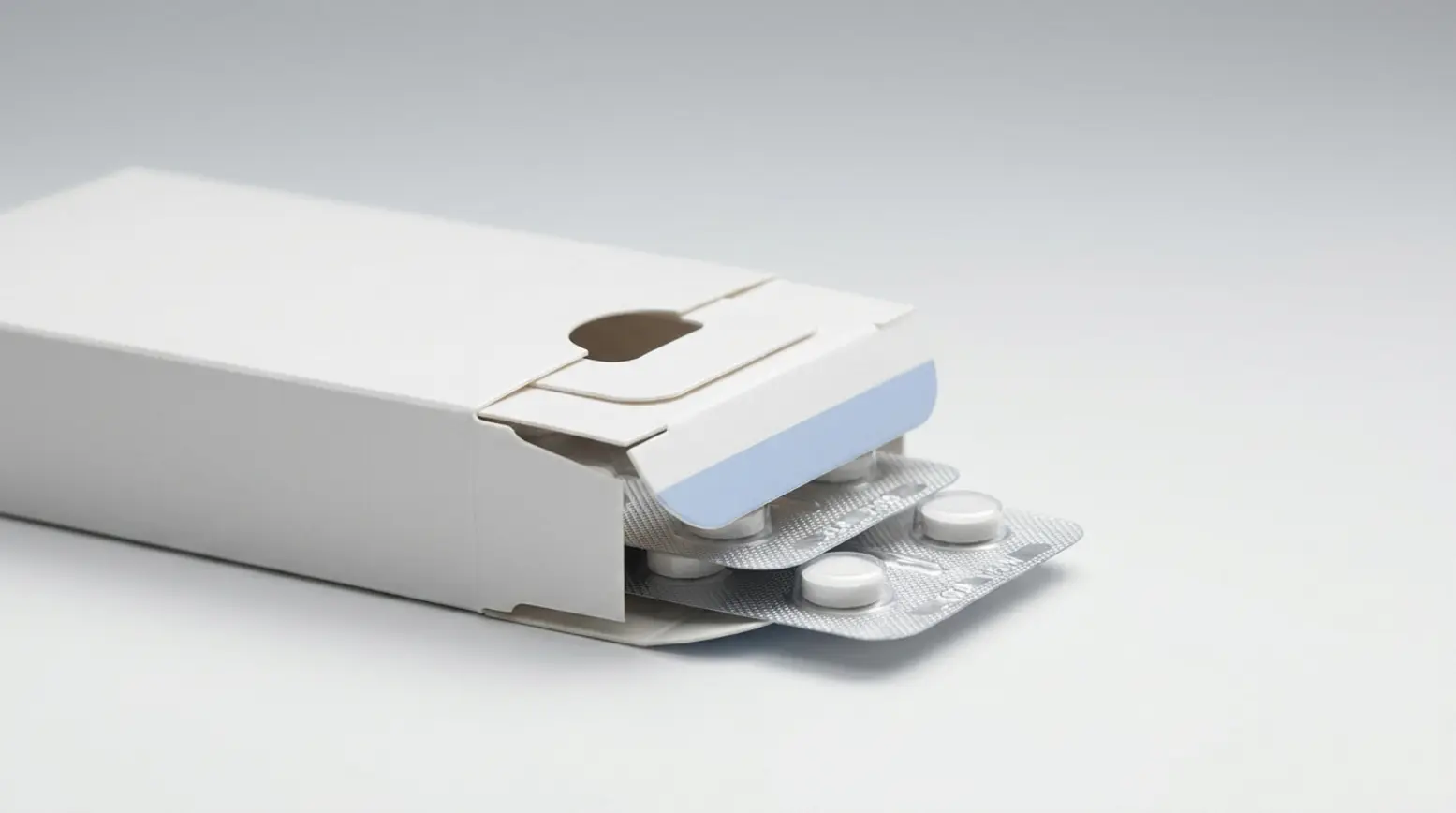
In many pharmaceutical projects, the primary blister format is fixed due to stringent product stability and production constraints. When this happens, child resistance can effectively be introduced at the secondary packaging level. A common and reliable solution is utilizing a child-resistant carton, which adds a secure opening mechanism around the standard blister card.
This strategic approach supports F=1 packaging requirements, where a single unified package provides the necessary level of protection. Moreover, it allows manufacturers to maintain their existing high-speed blister lines and simplifies the validation process, as the safety feature is clearly isolated within one specific component.
Because the testing standard applies to the fully assembled pack, you must evaluate the complete configuration exactly as it will be sold. This mandate means testing the outer carton, the internal blister, and the patient instructions as a single, cohesive unit.
From test protocol to packaging choice under 16 CFR 1700.20, explained
Test results are inherently tied to a singular, specific packaging design. They do not magically transfer between different formats or even minor structural variations. Therefore, your packaging design decisions must align closely with your regulatory test plan from the very beginning of the project.
If you modify a locking feature, swap out a material, or adjust the graphical layout, you risk impacting both child resistance and senior adult use effectiveness. To avoid costly delays, your design, regulatory, and production teams should align their objectives early in the development cycle.
When preparing for market entry, it is highly beneficial to work with pre-engineered solutions built specifically as child-resistant packaging for the US market. Taking this route ensures your chosen design aligns seamlessly with both the formal test protocol and real-world production conditions.
What to check before launching your product in the US
Before finalizing your launch, confirm that your mass-produced product matches the tested configuration exactly. Verify that you possess a complete, valid child-resistant packaging test report and that both the child and adult performance criteria were successfully met. If your packaging system includes multiple components, ensure the entire assembly was tested together as a single unit.
It is also wise to review production samples alongside the printed instructions, as minor usability issues can drastically skew real-world results. If you need professional support, you can contact us for a comprehensive review of your packaging and documentation, helping you identify and resolve compliance gaps early on.
Quick FAQ on 16 CFR 1700.20 explained
Does the CPSC approve individual packaging designs?
While the CPSC rigorously enforces the law, it does not issue approvals for individual packaging formats. Instead, you are legally required to hold your own independent test evidence.
When is retesting required?
You will need a new test or a formal expert review if the packaging design undergoes any changes. This requirement extends to alterations in materials, physical dimensions, or the mechanics of the opening system.
Can you reuse previous test results?
Yes, but only if the commercial packaging is completely identical to the historically tested version. The details within the compliance report must accurately reflect your current product.
Request a free sample now!


