


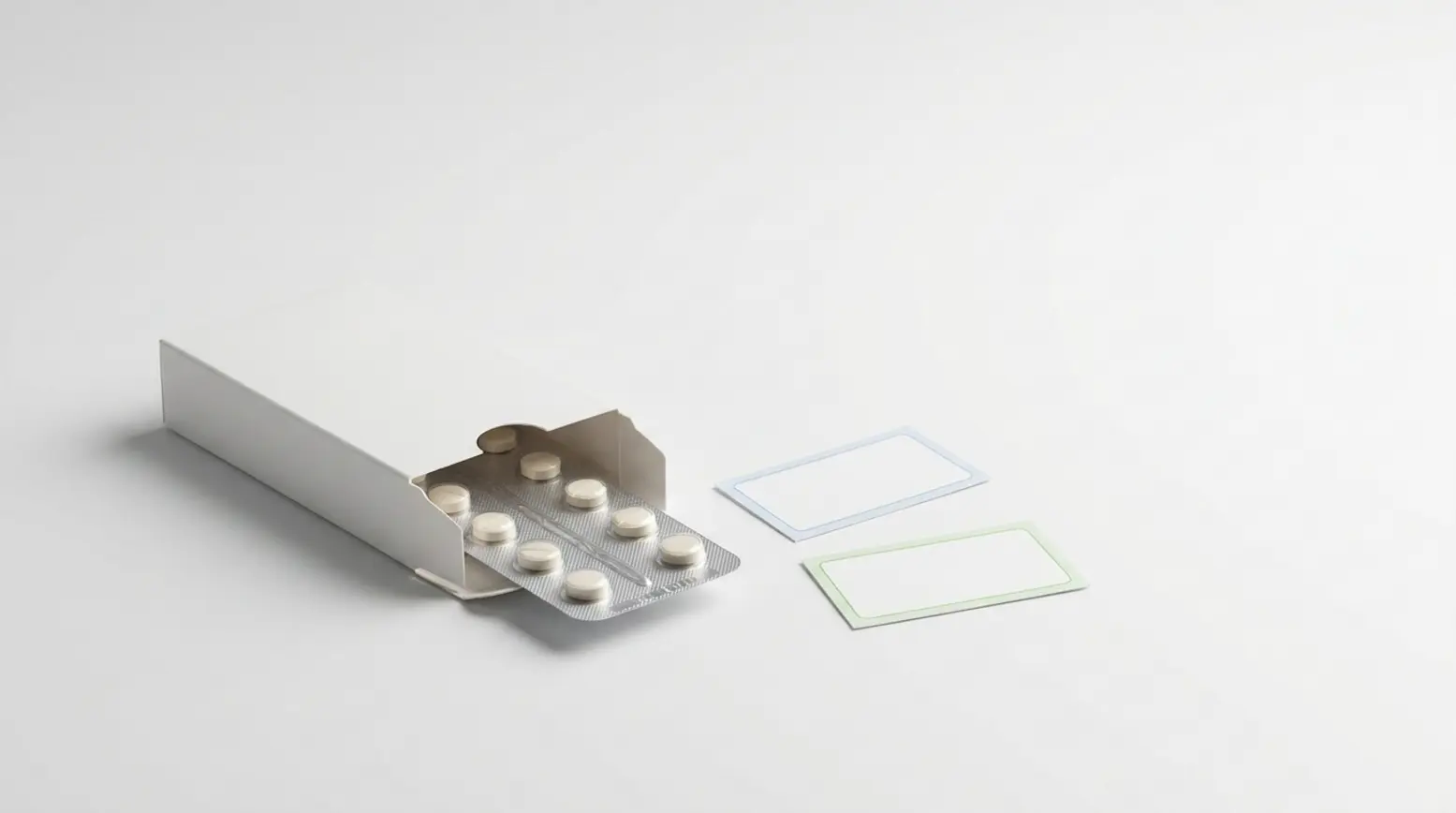

The short answer is clear: one child-resistant certificate does not cover both the United States and Europe. These are separate routes with distinct rules, test methods, and documents. A single physical blister pack design can still support both markets if that exact final design is tested for each route and remains within the approved scope. This is the main point behind US vs. EU child-resistant requirements, and it matters early because it affects timing, risk, and launch planning.
• One certificate does not automatically cover both the US and Europe.
• The US route is tied to PPPA packaging and 16 CFR 1700.20, while Europe uses its own standards-based route.
• One unchanged physical pack design can still be tested for both markets.
• Documentation, labeling, and regulatory review remain market-specific.
• Design changes after testing can trigger retesting and delay a launch.
US vs. EU child-resistant requirements: start with the main correction
Many teams assume a single child-resistant report can cover both regions. It cannot, because the US and EU child-resistant packaging systems are entirely separate. The United States uses a legal route linked to the Poison Prevention Packaging Act, while Europe uses standards-based routes that depend on the pack type. If you want a broader overview of child-resistant packaging certifications, we explain that in a separate article. The useful next step is practical: one physical pack can still be tested and documented for both markets, provided the final design remains unchanged and within scope. This is why US vs. EU child-resistant requirements are usually a planning issue as much as a compliance issue.
US vs. EU child-resistant requirements in the United States
What law and test route apply
In the United States, the route is linked to the Poison Prevention Packaging Act, often called PPPA. Teams typically review 16 CFR 1700.15 for the rule and 16 CFR 1700.20 for the test method. In simple terms, the law says that some products must use child-resistant packaging, and the regulation explains how that packaging is tested. When teams compare ISO 8317 vs. 16 CFR 1700.20, this is one of the first points to understand because the US route is legal and test-specific.
What the US child panel looks like
The US child panel involves children aged 42 to 51 months. The test consists of two five-minute rounds. This detail matters because child-resistant packaging standards by country are not built the same way, even when the package looks identical in both markets.
What pass criteria matter in the US
For the US route, the child resistance thresholds are 85 percent in the first round and 80 percent across both rounds. The test also checks adult use, and at least 90 percent of senior adults must be able to open and properly use the package. Adult accessibility cannot be sacrificed for child resistance, so both parts matter. For some unit-dose projects, F=1 packaging is also a key point because access to just one unit can count as a failure. As a result, blister pack design choices need to be reviewed carefully from the start.
What counts as documentation
The US route requires its own test evidence. A European ISO report is not accepted by the Consumer Product Safety Commission as equivalent to PPPA evidence for the US route. Therefore, if you are planning international child-resistant packaging projects, you should expect US-specific documents for US market entry.
US vs. EU child-resistant requirements in Europe
What standard applies for reclosable packs
In Europe, ISO 8317 child-resistant packaging is the main route for reclosable child-resistant packs. It is a European child-resistant standard used to evaluate performance for this pack type. This route remains separate from the US route, even if the pack design itself stays the same.
What the ISO test is designed to prove
ISO 8317 is a type approval performance test for reclosable packaging. It checks child resistance, but it also verifies whether adults can use the package properly. This matters in practice because a compliant pack must still work for real users, including older adults. When teams compare ISO 8317 vs. 16 CFR 1700.20, they should keep in mind that both routes assess child resistance and adult accessibility, but they do so within completely different systems.
Why package classification matters in Europe
Europe does not use one single rule for every format. Non-reclosable pharmaceutical packaging can follow a different standard, so the exact package classification must be checked early. This helps teams choose the correct route from the start and prevents wrong assumptions about child-resistant packaging standards by country.
What counts as documentation
ISO certification is its own route. A US report under 16 CFR 1700.20 does not create ISO certification. This is one of the most common issues regarding US vs. EU child-resistant requirements, so it is worth making very clear from the beginning.
US vs. EU child-resistant requirements side by side: the four points that matter
| Dimension | United States | Europe | Why it matters for a shared pack |
|---|---|---|---|
| Legal context | PPPA route, with 16 CFR 1700.15 and 16 CFR 1700.20 | ISO 8317 for reclosable child-resistant packaging | One certificate does not replace the other route |
| Test panel | Children aged 42 to 51 months, with two five-minute rounds, plus senior adults | Type approval performance testing for reclosable packaging, including adult accessibility | The same physical pack can be tested in both systems |
| Pass criteria | 85 percent, then 80 percent child resistance, and at least 90 percent senior adult use | Performance-based ISO route for child resistance and adult use | The limiting point depends on the pack type, product, and route |
| Documentation | US-specific test evidence for the PPPA route | ISO-specific certification documents | A shared design is possible, but documents stay market-specific |
Neither route should be treated as a shortcut for the other. If your team is still choosing child-resistant packaging, it helps to decide the pack type first and then match the correct route to that design. In this way, US and Europe packaging compliance becomes easier to manage because the project starts with the correct assumptions.
US vs. EU child-resistant requirements for one blister pack design
Here is the direct business answer. Yes, one physical blister pack design can support both markets, but the certificates remain separate. We provide ISO 8317 and F=1 certification for selected formats, which shows how the same design can be documented through both routes when it stays within the tested scope. This is often what teams mean when they ask about dual-certified packaging, although the certification documents themselves remain market-specific.
For international child-resistant blister packaging, our dual-market child-resistant carton is often the most practical route. The blister can remain unchanged, and the carton can run on standard cartoning equipment at normal production speeds. Therefore, a single-SKU strategy can remain simpler for global teams wanting a shared pack concept for both the US and Europe. This is where US vs. EU child-resistant requirements become operational, because the design choice affects testing, supply planning, and line fit at the same time.
This point also comes with one limitation. Certification applies to the exact tested version. If the final pack changes after testing, the earlier approval may no longer apply. Because of this, the tested version must exactly match the version you plan to launch.
What can trigger retesting
Certification belongs to a specific design. If dimensions change, if the opening feature changes, if materials change, or if the pack setup changes, retesting may be needed. The exact effect depends on the design and on what the approved scope covers. The important point is simple: a package that passed before is not always covered after a change, even if the change looks small.
This applies to dual-market projects as well. A design tested for both routes still needs careful control through artwork, tooling, sourcing, and packing setup. By doing so, teams reduce the risk of late surprises and repeated testing.
How to plan a dual-market project early
Freeze the design early
Freeze the intended final pack design before testing starts. This reduces rework later because the tested version will match the launch version. It also helps procurement, packers, and regulatory teams align around one approved concept.
Map both routes to the same design
Plan the US and European routes around the same final packaging concept. This keeps the project focused on one physical design while still respecting two separate compliance paths. As a result, teams can manage the timing and test scope more clearly.
Review labeling and documentation by market
Even if the physical package is shared, the labeling and supporting documents still require market-specific review. This should happen early because small document gaps can delay a launch even when the package itself is correct.
Ask for a sample before artwork and tooling are locked
If you want to check whether your current blister can support one shared concept, a sample review can help before artwork and tooling are locked. In this way, your team can review fit, opening behavior, and line setup early. If you want to discuss timing, pack fit, and route selection, you can discuss a dual-market packaging strategy with us. A free sample review can be part of that early check.
Common questions about international child-resistant packaging
Can one certificate cover both the US and Europe? No. The US and European routes are separate, so each market needs its own testing and documentation path. A European report does not replace the US route, and a US report does not create ISO certification.
Can one physical blister pack design support both markets? Yes. The same physical design can support both routes if the exact final version is tested and remains within the approved scope. This is often the most efficient path for shared SKU planning.
Is the US always stricter than Europe? No. The limiting requirement depends on the packaging type, product, and test route. It is better to compare the exact pack concept than to assume one region is always harder.
Does child resistance reduce senior usability? It should not. Both systems also require adult accessibility, so ease of use remains part of the design target.
What is the practical difference between ISO 8317 and 16 CFR 1700.20? The practical difference is that they belong to different systems. ISO 8317 is a European standards route for reclosable packaging, while 16 CFR 1700.20 is the US test method used within the PPPA route. Both matter for US vs. EU child-resistant requirements because global teams often need to plan for each at the same time.
For many teams, the best path is straightforward. Separate the US and EU routes early, keep one final pack design in view, and test that same design for both markets. By doing so, you can build a cleaner launch path, reduce the risk of retesting, and move forward with greater confidence.
Request a free sample now!


