



The senior-friendly packaging market matters now because more older adults in the United States and Europe use medicines, supplements, and regulated products at home. This shifts packaging needs in a highly practical way. Packs must remain child-resistant where required, but they also need to be entirely usable for adults over repeated use. Therefore, teams should treat adult usability as an early packaging requirement, long before tooling, testing, and line decisions become difficult to change.
• Demographic changes are increasing the demand for aging-population packaging in medicines, supplements, and regulated products.
• Repeated opening, reading, and dose handling can create daily friction, so accessible packaging must work reliably over time.
• In the United States and Europe, child resistance and adult use are inextricably linked through testing and safety standards.
• The best time to address the demand for age-friendly packaging is early in the packaging brief, as late changes are harder and more costly to implement.
Why the senior-friendly packaging market is becoming a long-term packaging issue
The senior-friendly packaging market is getting more attention because both Europe and the United States have aging populations. This is a structural shift, affecting packaging strategies over many years rather than just a single, short product cycle. Public demographic data changes over time, so teams should check the latest official sources before making final decisions. Even without citing specific forecast figures here, the overall direction is clear. Packaging demographics are shifting, and that directly affects how adults open, close, read, store, and organize health products at home.
For packaging teams, this means addressing a wider adult user group. Some individuals have lower grip strength, reduced finger dexterity, impaired vision, or joint pain, while others do not. The goal is not to assume that every older adult has the exact same needs; rather, it is to design for real variations in adult ability, because that variation becomes crucial during repeated home use. Our senior-friendly packaging guide explains the design logic behind this in greater detail.
What demographic change means for packaging teams
Demographic changes lead to practical packaging choices. If a pack is hard to hold, hard to press, or hard to read, daily use becomes frustrating. This matters significantly in pharmaceutical packaging planning for aging populations because the user may be the patient, a family member, or a professional caregiver. As a result, the person opening the package is not always the buyer, meaning the real-world use context can be much broader than the original product brief suggests.
Why this matters more for repeated-use products
Repeated use creates repeated stress. A pack that seems acceptable once can become frustrating after daily or weekly opening. This is why the demand for elderly-friendly packaging often shows up first in product categories intended for regular home use. Clear instructions, readable text, repeatable opening mechanisms, and safe dose handling become increasingly important over time. In this way, the accessible medicine packaging market is shaped by routine use, not just by shelf appeal or pack size.
How the senior-friendly packaging market affects medicines, supplements, and cannabis
The first categories to feel this shift are those that adults use often. Long-term medicines are a clear example because they remain in the home for weeks, months, or longer. Supplements also fit this category, as many people take them every day. Regulated cannabis products and other controlled substances add another layer of complexity, because child resistance remains critical while adult access must still work in real life. Therefore, the senior-friendly packaging market is closely tied to repeated interaction.
Long-term medicines and home use
Medicines used at home often pass through several hands. A patient may open the pack, but a partner, adult child, visiting nurse, or care worker might also handle it. Because of this, the packaging should support clear, intuitive use over time. It should help adults remove, identify, and organize doses safely. While packaging can support patient adherence by reducing friction, it cannot guarantee it, so the design goal should remain practical and realistic.
Daily supplement routines
The accessible packaging market also matters in the supplements sector because these products often become part of a morning or evening routine. If a closure is awkward or the information is hard to read, the problem repeats every single day. Over time, this can lead to complaints, workarounds, or a weakened overall product experience. Senior packaging trends in this category are therefore driven by routine use and repeat purchase behavior rather than by regulation alone.
Regulated cannabis and controlled substances
In the cannabis and controlled substances sectors, safety remains central. Child-resistant packs help keep products away from children, but adults still need a clear and manageable opening process. This is especially relevant in the US senior-friendly packaging market, where teams must often balance compliance, user experience, and existing pack formats simultaneously. A pack needs to work smoothly in daily life, meaning tested performance matters just as much as the initial design intent.
Why the senior-friendly packaging market is also a regulatory and usability topic
The senior-friendly packaging market is about much more than convenience. In regulated product groups, it is also about proven performance. This means child resistance and adult usability must be considered together. Some teams still treat accessibility as a late-stage detail, but in many cases, it should be part of the initial specification. Test pathways and format choices can narrow very quickly once a project moves forward.
United States: child resistance and adult-use effectiveness
In the United States, the Poison Prevention Packaging Act (often called the PPPA) provides the legal foundation for special packaging in covered products. The testing framework under 16 CFR 1700.20 combines child resistance with adult-use effectiveness. In simple terms, covered packs must be difficult for children to open, but adults must still be able to use them properly. Therefore, the senior-friendly packaging market connects directly to compliance and usability in the US.
Europe: ISO 8317 and adult accessibility
In Europe, ISO 8317 is a critical standard for reclosable child-resistant packaging, and it inherently includes adult accessibility within its testing concept. Thus, child resistance and adult use are firmly linked here as well. Although the regulatory systems in Europe and the United States differ, the practical message remains the same: adult usability is a core part of the packaging task and should never be treated as an optional extra.
Why broader accessibility rules are still fragmented
There is no single, comprehensive rulebook covering every packaging detail for every product and market. Because of this, teams should carefully review the product type, user group, opening steps, and specific test requirements for each pack. While this makes planning more complex, it also makes early decisions much more valuable. The senior-friendly packaging market is therefore shaped by a mix of regulation, real-world use, and robust specification work.
What the senior-friendly packaging market means for packaging design choices
The senior-friendly packaging market should influence how teams write packaging briefs from the very beginning. A format chosen today may remain in place for years, as tooling, validation, artwork, procurement, and line setups are not easy to change later. Therefore, adult usability should be factored in early. For teams evaluating future formats, this is where senior-friendly packaging evolves from a general idea into a practical design requirement.
Add adult usability early in the specification
If accessibility enters the conversation too late, options become severely limited. Tooling may already be fixed, line trials might be scheduled, and validation could already be moving ahead. This can increase costs and slow down the entire project. Early planning gives teams greater control, making it usually the safer route for addressing accessible medicine packaging market needs and making long-term platform decisions.
Focus on repeatable opening, readable information, and safe dose handling
Three simple questions can help during the briefing stage: Can adults open the pack in a repeatable way? Can they read key information clearly? Can they handle and organize doses safely at home? These questions may sound basic, but they often determine whether a pack actually succeeds after launch. They are also central to aging-population packaging because real-world use happens repeatedly, not just once.
A simple planning view for Europe and the United States
Teams often need a clear comparison before choosing a format. In the United States, child-resistant packs in covered categories must meet PPPA-related requirements along with adult-use effectiveness testing. In Europe, reclosable child-resistant packs typically follow ISO 8317, which also incorporates adult accessibility into the test concept. In both regions, the planning impact is similar: teams must review the likely opener, the number of opening steps, readability, line compatibility, and whether the format works with current blister and supply setups.
Support existing blister formats where possible
Line fit and supply continuity matter significantly. Because of this, it helps immensely when a compliant pack can support existing blister types instead of forcing a complete redesign. This minimizes disruption for procurement, operations, contract packers, and regulatory teams. It also supports a more stable transition toward age-friendly packaging demands, as accessibility can be improved without overhauling the entire packaging system.
A practical example from the senior-friendly packaging market
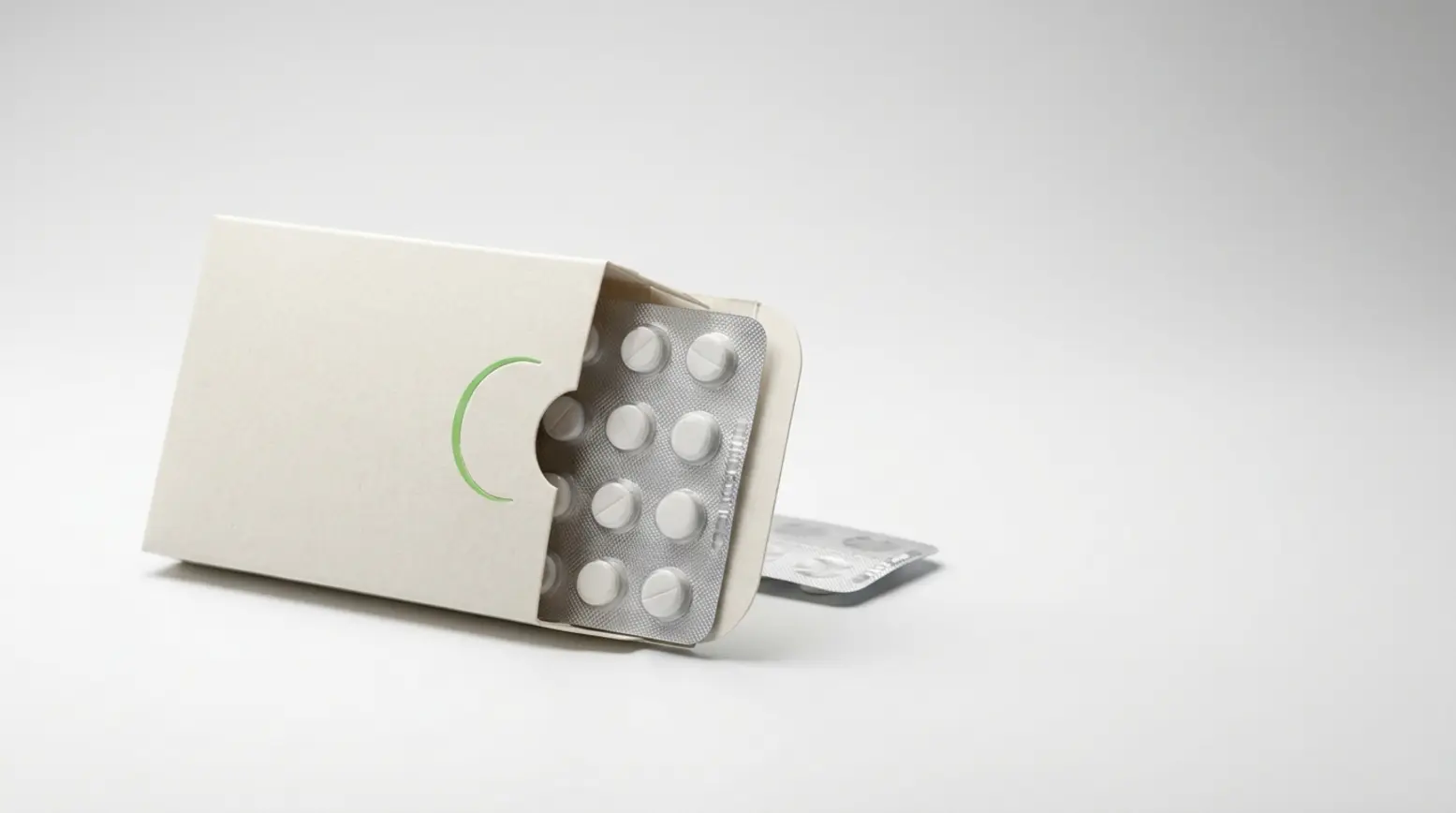
One practical example is our senior-friendly Wallet Box. It is an all-paper, child-resistant pack designed for blister strips. It holds up to three strips and fits roughly 95% of the blister formats currently on the market. It is certified to ISO/EN 8317 and to F=1 US 16 CFR 1700.20 standards. During testing, fewer than 1% of 300 children could open it, while 100% of seniors opened it successfully within five minutes.
What a senior-friendly child-resistant pack can look like
This example demonstrates that child resistance and senior access can be effectively measured within the same design. It also shows that packaging teams do not have to separate safety from adult usability during the planning phase. The better route is to build both aspects into the specification right from the start, ensuring that testing, supply chains, and user needs stay perfectly aligned.
Wider support behind the pack
We are part of the Ecobliss Packaging Group. Under Ecobliss Pharma, our group can support design, primary and secondary packing, contract packing (including serialization), component production, and the provision of packaging equipment for insourcing.
Questions teams should ask when planning for the senior-friendly packaging market
Is this only relevant for very old consumers? No. The issue extends far beyond age alone, as packaging should work seamlessly for a broad adult user group over time. This includes individuals with temporary, mild, or changing limitations, alongside older adults experiencing no major difficulties.
Does child-resistant packaging have to be hard for adults? No. In tested formats, the goal is to resist children while remaining completely usable for adults. Good design, intuitive opening logic, and the right testing pathway help bring these two needs together.
When should accessibility enter the project plan? Early. It is best to address it before tooling, validation, and line decisions become too difficult or expensive to change. Early inclusion creates more design freedom and drastically reduces the risk of late-stage rework.
What should teams review first? Start with five practical checks: who opens the pack, how often they open it, whether the format fits the current blister, whether it will run on the planned packaging line, and which adult-use requirements apply in the target market. These checks effectively turn broad market changes into actionable, practical steps.
Can packaging improve adherence? Yes, packaging can support better medication use by reducing friction, improving readability, and aiding in dose handling. However, it cannot guarantee adherence, as patient behavior naturally depends on many factors outside the packaging itself.
Next step for teams reviewing future blister packaging plans
If you are reviewing a future blister packaging program, now is an excellent time to assess how accessibility might affect your brief, testing pathways, and line choices. We can help you review these elements early on, while your options are still open, through a free strategy session focused specifically on your planned packaging route.
Request a free sample now!


