



Packaging for home care and assisted living must first suit the actual use setting. Because the pack may be opened by a resident, a family member, or a professional caregiver, a good design requires clear dose handling, a practical opening mechanism, and the appropriate level of child resistance for both legal requirements and real-life risks. This is why packaging for home care and assisted living should be selected based on who uses it, where it is stored, how often it is handled, and whether the medication is dispensed for home use or another care pathway.
• The ideal pack depends on the use setting because home care and assisted living do not conform to a single fixed user model.
• Repeated daily handling is crucial, especially for caregivers who may open numerous medicine packs during a single shift.
• Adult usability remains important since residents might use the pack independently at times while receiving assistance at others.
• Child resistance should be evaluated both as a legal requirement and as a risk-based design choice for residential environments.
• Blister organization supports clearer medication handling when teams need multiple strips consolidated into a single, tested outer pack.
Why Packaging for Home Care and Assisted Living Starts with the Use Setting
Medications used outside of a hospital environment can move through vastly different care settings, meaning packaging teams should always start by analyzing the actual use case. A single product might be used in a private home, in assisted housing, or within a more controlled residential care pathway. Each setting influences how the pack is opened, where it is stored, and how easily the dose can be checked. As a result, home care packaging should not be treated like standard retail packaging, and assisted living medication packaging should not be viewed as a single, uniform category.
The same medication may also be dispensed in various ways. In the United States, this can dictate whether child-resistant home medication packaging is required under applicable rules, or if an alternative route warrants a different approach. In Europe, teams typically refer to recognized performance standards for child-resistant packs, yet they still require a setting-specific legal review. Therefore, effective home care medication packaging begins with a fundamental question: who handles the medicine, and in what environment?
Who May Open the Medicine
The medication may be opened by the resident, a family member, or a professional caregiver. While this sounds simple, it drastically impacts numerous design choices. Residents may need clear instructions and a pack that fosters independence. Family members might require straightforward dose checking and easily readable labels. Meanwhile, professional caregivers need consistent opening mechanisms that remain comfortable after repeated use. This is why caregiver medication packaging often requires a stronger focus on speed, clarity, and minimizing hand strain.
Why One User Model Is Not Enough
People do not handle medications in the exact same way. Some individuals rely on labels and memory, whereas others follow a strict care routine. Storage locations can range from a kitchen drawer or a bedside table to a controlled medication room in a residential facility. Because of these variables, residential care medication packaging requires a broader perspective than standard consumer packaging. Teams must also remember that a patient's support level can change over time; thus, relying on a single, fixed user model may overlook critical risks or usability needs.
What Packaging for Home Care and Assisted Living Needs for Repeated Daily Handling
Repeated use fundamentally changes the definition of a good opening mechanism. A package that feels acceptable for a single use may become physically tiring when opened repeatedly throughout the day. This is a practical issue for senior care packaging and caregiver medication packaging, as minor handling difficulties can slow down workflows and increase stress. For this reason, design teams should assess repeated usability early in the process rather than focusing solely on the initial opening experience.
Clear identification helps users locate the correct medication quickly. Visible instructions placed near the opening point allow users to act with greater confidence. Consistent operational steps help reduce confusion, particularly when the same individual handles many different packages. In this way, well-designed caregiver medication packaging supports a smoother daily workflow. Long-term care blister packaging may also require dose information that remains permanently attached to the pack since users frequently need to check what has already been administered and what remains.
Questions to Ask During Pack Design
Good design starts with practical questions. Can users identify the correct package without relying solely on color coding? Are the opening instructions highly visible at the exact moment of use? Does opening the pack require a strong pinch, a twist, or another fine motor movement that could become fatiguing over time? Does the package remain intact and readable after multiple opening cycles? If the product utilizes blister strips, does the outer pack keep the dose information securely attached and easy to follow? Addressing these questions helps teams define stronger packaging briefs and reduces the need for late-stage design changes.
When Packaging for Home Care and Assisted Living Should Support Independence and Senior-Friendly Access
Residents do not always consume their medications in a single, predictable manner. A person might open the package independently in the morning but require assistance later in the day. In certain instances, a caregiver is only present at scheduled times. Therefore, adult usability remains crucial even when professional support is available. This variability is precisely why senior-friendly packaging must be part of the conversation for most home and residential care environments.
Excellent adult usability fosters confidence and more intuitive handling. It also minimizes frustration for family members and caregivers by ensuring the opening method remains simple to understand. At the same time, this ease of use must be carefully balanced with safety when a product requires child resistance. For tested designs, the best approach is to rely on official certification and usability data specific to that exact format. In our certified formats, fewer than 1 percent of 300 children tested were able to open the pack, while 100 percent of seniors successfully opened it within five minutes. These results apply strictly to the tested design and should always remain associated with that specific package.
Why Adult Usability Still Matters When Caregivers Are Involved
A patient's level of independence can fluctuate from day to day, or even hour to hour. A resident might manage one medication entirely alone yet need assistance with another. Some users read labels effortlessly, whereas others require a greatly simplified opening sequence. Because of this, senior care packaging should facilitate adult access wherever appropriate rather than assuming caregivers will perform every opening. This consideration is particularly important for home care medication packaging, where daily routines are inherently less controlled than in a hospital setting.
How Packaging for Home Care and Assisted Living Relates to Child Resistance in the U.S. and Europe
Child resistance should be evaluated from two distinct perspectives. First, it can be a strict legal requirement depending on the product type, geography, and dispensing route. Second, it can serve as a proactive design choice based on real-life residential risks. While these two considerations are related, they are not identical, meaning teams must evaluate both. This is especially important for packaging for home care and assisted living because many products transition into mixed-use environments.
In the United States, certain prescription medications dispensed for home use require child-resistant packaging when specific regulations apply. Conversely, some institutional scenarios are treated differently, meaning broad generalizations about all assisted living or long-term care settings can be highly misleading. In Europe, ISO 8317 serves as a critical reference point for the performance of reclosable child-resistant packaging. Where relevant, our formats are additionally tested to meet U.S. 16 CFR 1700.20 F=1 standards. For a more detailed explanation of pack-specific testing, we outline the regulatory scope regarding certified child-resistant packaging. While certification proves how a specific design performs, it never replaces a comprehensive legal review for the intended market and use setting.
Child Resistance as a Design Choice in Residential Settings
Even when regulations permit a non-certified route, child resistance often remains highly beneficial. Home and residential care settings frequently feature shared living spaces, standard household storage, and visits from family members, including grandchildren. A medication might be left in a spot that seems perfectly ordinary to an adult yet remains highly visible or easily accessible to a child. Therefore, child-resistant home medication packaging adds a tested layer of safety when the actual use environment presents this type of risk.
Packaging teams should maintain a balanced view during these discussions. The potential presence of a child does not automatically alter a package's legal classification. Storage practices, adult supervision, and daily routines still play major roles. Packaging alone cannot completely prevent every unauthorized access event. However, tested child-resistant features strongly support a more comprehensive safety approach within home care and assisted living environments.
Choosing Packaging for Home Care and Assisted Living for Dose Organization with Blister Strips
For blister-based products, clear dose organization greatly supports better day-to-day handling. In this context, the term compliance refers to organized medication usage and enhanced adherence support. It does not refer to statutory or legal compliance. For further background on this important distinction, you can review our comprehensive guide detailing compliance packaging for organized medication. This concept is highly relevant for unit-dose assisted living scenarios and long-term care blister packaging, where users desperately need a practical method for keeping individual doses visible and logically grouped.
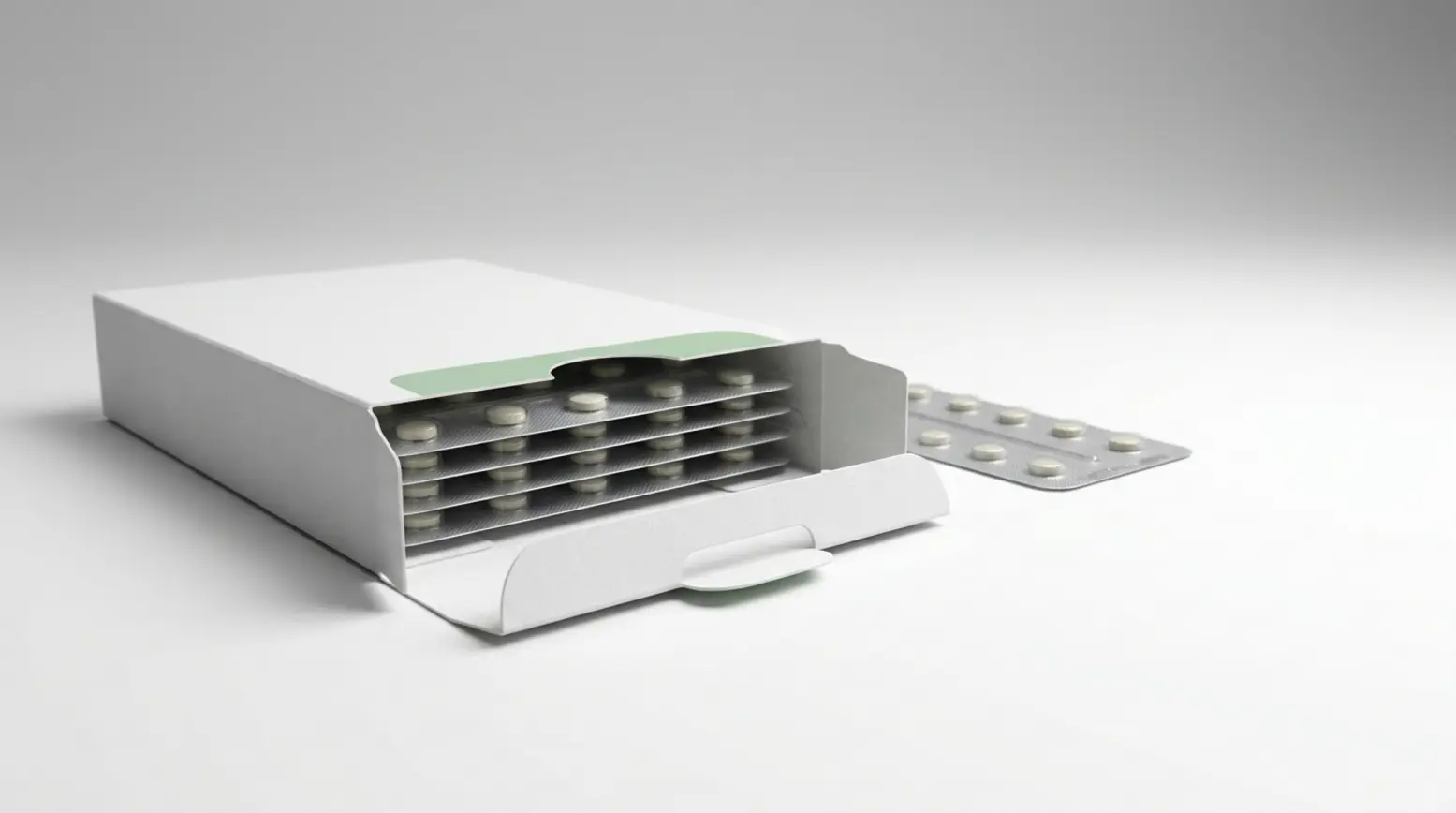
One highly practical option is our Wallet Box for blister strips. This solution holds up to three blister strips within a single, all-paper outer package. It accommodates approximately 95 percent of the blister formats currently on the market, and its tested design is fully certified to ISO/EN 8317 and U.S. 16 CFR 1700.20 F=1 standards. By combining robust child resistance with senior-friendly opening features in a certified format, it proves to be an exceptionally useful choice when teams need packaging for home care or assisted living medication settings characterized by mixed users and repeated handling.
Why This Format Fits Care Settings
This particular format keeps multiple blister strips securely together, ensuring that daily handling remains highly organized. The tested design effectively balances child resistance with senior-friendly accessibility. Furthermore, it integrates seamlessly with existing blister formats, an important factor for teams wishing to avoid designing a completely new primary package. Additionally, it runs efficiently on standard pharmaceutical cartoning lines at normal operating speeds. This operational efficiency is highly relevant for packaging engineers, procurement teams, contract packers, and product managers who require practical implementation alongside premium pack performance.
The Wallet Box's purpose should be described carefully. It does not replace standard pharmacy procedures, nor should it be presented as a comprehensive medication administration system. Instead, its role is far more specific. It provides a clear, reliable outer packaging option for blister strips when teams need certified child resistance, practical organization, and easy adult usability consolidated into a single tested format.
Practical Questions for Teams Defining the Packaging Brief
Before selecting a specific package, development teams should map out the real-world use case in a simple, highly structured way. This mapping process must include the likely end user, the physical place of use, general storage conditions, repeated opening requirements, dose organization needs, and the applicable legal pathway. Creating a clear design brief helps packaging engineers, regulatory experts, pharmacy personnel, product managers, and procurement buyers make better collective decisions by connecting the package directly to everyday caregiving workflows.
• Who opens the pack most often? The answer directly impacts necessary opening force, the visibility of instructions, and overall package recognition.
• Can the resident still use it independently? If so, adult usability must remain a core part of the design brief, as patient support levels can frequently change.
• Is the medication stored in a household or a more controlled setting? Everyday storage conditions affect practical risk levels and may influence the underlying value of adding child resistance.
• Does the legal route dictate child resistance? Teams should rigorously check the specific product type, target geography, and actual dispensing environment.
• Is child resistance still valuable due to residential risks? Shared living spaces, family visits, and normal home storage habits can all strongly influence this design decision.
• Should multiple blister strips stay together in one outer pack? If yes, a wallet-style format can significantly improve clear organization and support repeated daily use.
FAQ
Is child-resistant packaging always required in assisted living? No. The precise legal answer depends on the specific product, the geography, and exactly how the medication is dispensed and used. Certain U.S. home-use situations mandate child-resistant packaging when specific rules apply, whereas institutional settings are often treated differently. In Europe, pack performance is frequently evaluated using standards like ISO 8317, but a formal legal review must still align with the exact operational setting.
What makes a pack easier for caregivers to use every day? Clear package identification, visible instructions near the opening mechanism, consistent operational steps, and lower required hand strain all contribute to better usability. The package must also remain neatly organized after repeated opening and closing cycles. This is precisely why repeated-use testing and practical workflow reviews matter so much for caregiver medication packaging.
Can one package support both child resistance and senior-friendly opening? Yes, provided the design is specifically developed and rigorously tested to achieve both goals. Formal certification and adult usability testing are vital because they demonstrate exactly how the specific package performs in real-world scenarios. Teams should always link these test results to the exact tested design rather than assuming they apply universally to every packaging format.
If your team is still defining its design brief, it helps immensely to review the real-world use setting before finalizing a package selection. We can help discuss who opens the medication, where it is primarily used, how often it is handled, and which specific safety requirements apply. You can easily start that conversation by booking a free strategy session to guide your early packaging decisions.
Request a free sample now!


