


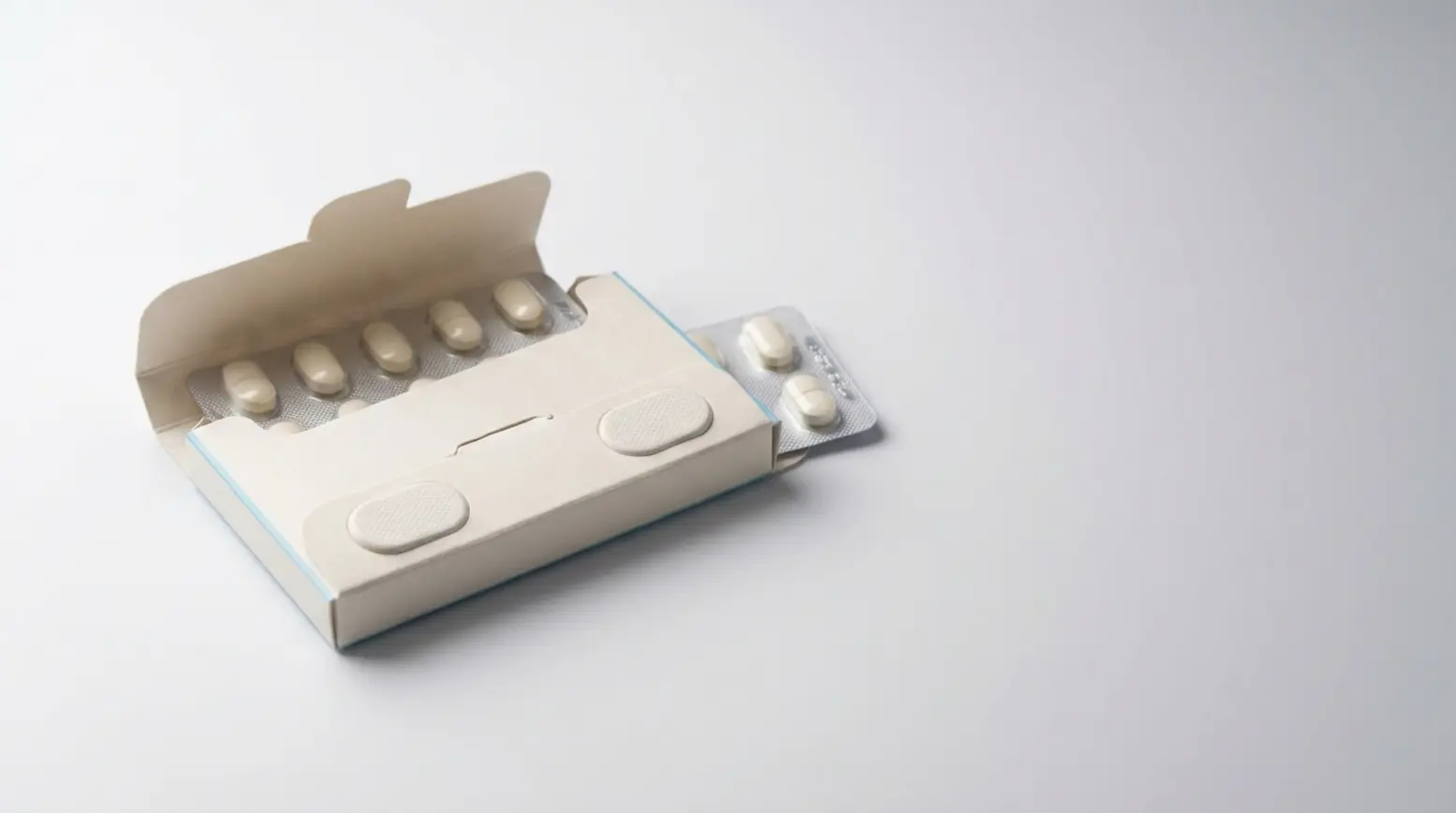

Packaging for arthritic hands should reduce small, high-force actions so adults can open, use, and close medicine packs safely over time. In practice, this means clear opening points, manageable hand movements, and proof that the exact design supports adult use while remaining child-resistant. For buyers, the main test is simple: can the intended adult use the original pack reliably every day without resorting to unsafe workarounds?
• Packaging should be judged on repeated daily use, as a single successful opening does not demonstrate true adult access.
• The most difficult actions typically involve pinching, gripping, twisting, pushing, sliding, and applying sustained force over time.
• Poor access can lead to torn packs, frequent requests for help, or medicine being moved out of its original container.
• Child resistance remains essential, meaning adult usability must be supported by evidence for the specific design.
• A practical review should cover usability, reclosure, certification, blister fit, and packaging line compatibility.
Why packaging for arthritic hands matters in daily medicine use
People searching for packaging for arthritic hands usually want a direct answer. They need medicine packaging that accommodates pain, stiffness, reduced grip, or limited finger mobility, as these physical limitations can affect simple tasks every day. This is why arthritis-friendly packaging, accessible medicine packaging, and elderly medication packaging must be judged in real-world scenarios rather than in theory. If a pack is difficult to open once, the problem often compounds during daily treatment. For a broader perspective on repeated adult access, our senior-friendly packaging guide explains why daily handling matters so much.
Reduced hand function can complicate small but critical actions. A person might clearly see the opening point yet struggle to grip it firmly. Another individual may open the pack once but face difficulties later, as the required force and repetition cause fatigue. Therefore, packaging for weak grip should be evaluated across the entire use cycle: finding the opening point, opening the pack, accessing the dose, and reliably closing the container again.
What reduced hand function can change
Diminished hand function can affect pinch control, steady grip, finger reach, and coordinated movement. Because of this, a small peel tab, a stiff press area, or a twisting action can become a significant barrier. This issue frequently occurs with hard-to-open medication packaging, especially when the design assumes a strong grip and fine finger dexterity.
Why one successful attempt is not enough
Medicine packs are accessed repeatedly, meaning a single forceful success does not prove safe adult access. A more relevant question is whether the intended adult can repeat the necessary action easily and safely every time. Viewed from this perspective, easy-open medicine packaging represents a usability issue just as much as a safety requirement.
How packaging for arthritic hands should reduce difficult hand actions
The best way to assess packaging for arthritic hands is to break the mechanism down into actual hand actions. Most medicine packs require the user to pinch, grip, twist, push, slide, or repeat the same force multiple times. Analyzing these steps helps teams compare formats practically and demonstrates why dexterity-friendly packaging must focus on the required motions, rather than just the visual design.
Small tabs and fine finger control
Small peel tabs can be particularly challenging because they demand precise finger placement and sufficient grip strength to lift the edge. If the tab is thin or hard to separate, the user might struggle before the pack even begins to open. This is precisely why packaging for arthritic hands often benefits from larger contact points and clearer opening mechanisms.
Twist and push closures
Twist-and-push closures combine several actions at once. The user must simultaneously hold, press, and rotate the cap. For adults with stiff fingers or reduced grip strength, this coordinated movement can be overly demanding. As a result, low-grip packaging typically performs better when the required action is simpler and easier to control.
Repeated force and fatigue
Certain packs might be manageable for a single opening, yet they still demand excessive force. Over time, this exertion can lead to fatigue and frustration. This issue is particularly critical when the medication must be taken daily or multiple times a day, as repeated effort can quickly turn a seemingly workable pack into an unsuitable option.
Broad press areas and sliding actions
Broad press areas are beneficial because they are easier to locate and activate. Sliding or pressing mechanisms can also minimize the need for delicate, precise finger movements. While this does not guarantee that every user will find them effortless, these features generally support easy-opening pharmaceutical packaging much better than tiny tabs or high-torque closures do.
What packaging for arthritic hands means for child-resistant design
Packaging for arthritic hands still has an essential obligation to protect children. This requirement is especially critical for prescription medicines, cannabis products, nutraceuticals, and controlled substances. A package that successfully blocks a child but frustrates the intended adult has not fulfilled its complete purpose, as safe access relies equally on child resistance and adult usability. For additional context on formal validation, our certified child-resistant packaging page explains exactly how regulatory certification applies to specific designs.
Buyers should actively request evidence whenever a supplier claims a pack is senior-friendly or easy to use. Adult access claims must be tied to the exact format, the specific opening method, and the officially tested version of the package. Furthermore, reviewing the broader senior-friendly packaging context helps teams evaluate whether the mechanism truly supports intended users under realistic handling conditions.
Child-resistant is only part of the job
Child-resistant performance is essential, yet it represents only one facet of the design brief. The opening point must be easy to locate, the required action should be manageable, and the container needs to reclose securely. Therefore, accessible medicine packaging must be evaluated on both its protective qualities and its ability to accommodate repeated adult use.
Why adult access needs formal proof
Usability evidence must be both current and specific. Buyers should inquire about which version was tested, what specific opening action was assessed, and whether adult usability was formally reviewed alongside child resistance. Certification belongs to a strictly defined package design; consequently, it should never be treated as a blanket guarantee for every size or format within a product line.
Why packaging for arthritic hands can prevent unsafe workarounds
When packaging for arthritic hands is poorly designed, adults may look for alternative ways to access their medication. This naturally compromises safety, as the original package is specifically engineered to keep the product protected, clearly labeled, properly organized, and child-resistant. If a pack feels too painful, excessively slow, or generally difficult to operate, users might ask others for help, forcibly tear parts open, or transfer the medicine to a completely different container.
When hard access leads to help from others
Some adults may ask a pharmacist, family member, or caregiver to open the packaging for them. While this might seem like a minor inconvenience, it clearly demonstrates that the packaging is failing its intended user. Repeated requests for assistance are a strong indicator that adult usability requires significantly more attention during the design phase.
Torn packs and moved doses
Some users will tear the carton, cut around the blister, or transfer doses into a separate container simply because the original format feels painful or overly slow to use. This commonly occurs with hard-to-open medication packaging that fails to support everyday handling. Unfortunately, such actions also destroy the structured dose layout that helps keep a patient's treatment accurately organized.
Why moving medicine changes safety
When medicine is removed from its original packaging, critical safety features are immediately lost. The child-resistant function is voided, the vital labeling is separated from the medication, and the chronological dose sequence disappears. For these reasons, difficult access fundamentally undermines the entire purpose of child-resistant packaging, even if the original container perfectly met the required regulatory standards.
A buyer checklist for packaging for arthritic hands
If you are evaluating different suppliers, a straightforward checklist will keep your discussions grounded and practical. This approach helps packaging engineers, product managers, regulatory experts, procurement teams, and contract packers focus on tangible design features rather than vague marketing claims.
• Opening actions: What specific motions does the package require, and which steps depend heavily on pinching, gripping, rotating, pushing, sliding, or applying steady force?
• Opening point: Is the designated opening area appropriately sized, visually clear, and easy to locate during routine daily use?
• Repeat use: Can the intended adult user open and reclose the pack reliably on multiple occasions without experiencing excessive fatigue?
• Evidence: Is there formal, documented proof covering both child resistance and adult usability for this exact package configuration?
• Blister fit and operations: Does the design seamlessly accommodate the blister strips already in use, and will it process on standard cartoning equipment at normal operational speeds?
A practical example for packaging for arthritic hands
For this specific topic, a highly relevant example is the senior-friendly Wallet Box. It utilizes designated press points, ensuring that the adult opening sequence does not rely on a tiny peel tab or a difficult twist cap. Designed specifically for blister strips, this format holds up to three individual strips and accommodates approximately 95 percent of the blister designs currently on the market. Consequently, it is an ideal solution for teams seeking packaging for arthritic hands without having to transition to an entirely new primary blister concept.
The Wallet Box is an entirely paper-based format. It holds full certification to ISO/EN 8317 and F=1 US 16 CFR 1700.20 standards, and it processes smoothly on conventional cartoning lines at normal speeds. During formal testing, fewer than 1 percent of 300 children managed to open the package, whereas 100 percent of the senior participants successfully opened it within five minutes. In this way, the format perfectly balances stringent child resistance with dependable adult access for the intended user group.
Why the Wallet Box fits this design discussion
The primary value lies in its opening logic. Defined press points are considerably easier to locate and operate than exceptionally small grip areas, as the user does not need the fine pinch control required by a peel tab. Furthermore, this format avoids high-force twisting and pushing motions, aligning perfectly with the functional requirements commonly associated with dexterity-friendly packaging and low-grip solutions.
What buyers may also want to know
If a project requires broader operational support, the Ecobliss Packaging Group can assist through its specialized division, Ecobliss Pharma. Their comprehensive services span structural pack design, contract packaging equipped with coding and serialization, component production, and even the provision of packaging machinery for teams planning to bring their operations in-house.
Questions teams should settle before pack selection
Is senior-friendly the same as easy to open? No. While one package might feel easier to open than an alternative, the more important question is whether the intended adult can use it safely and reliably over a sustained period. This is why easy-open medicine packaging must always be verified through realistic, repeated use.
Can a child-resistant pack still work for adults with reduced hand function? Yes, and that is precisely the goal. The design must successfully deter children while simultaneously supporting the intended adult user through clear opening indicators and highly manageable mechanical actions.
What proof should a buyer request? Always ask for documented evidence verifying the exact design in question. Confirm the test results for both child resistance and adult usability, ensuring the data corresponds to the specific version and the precise opening action being considered.
Why does original pack use matter so much? The original package inherently links physical protection, accurate labeling, and correct dose organization. If a patient transfers their medicine into a secondary container, these critical safety features become entirely disconnected from the product.
If you would like to assess the opening mechanism firsthand, please request a free sample.
Request a free sample now!


