


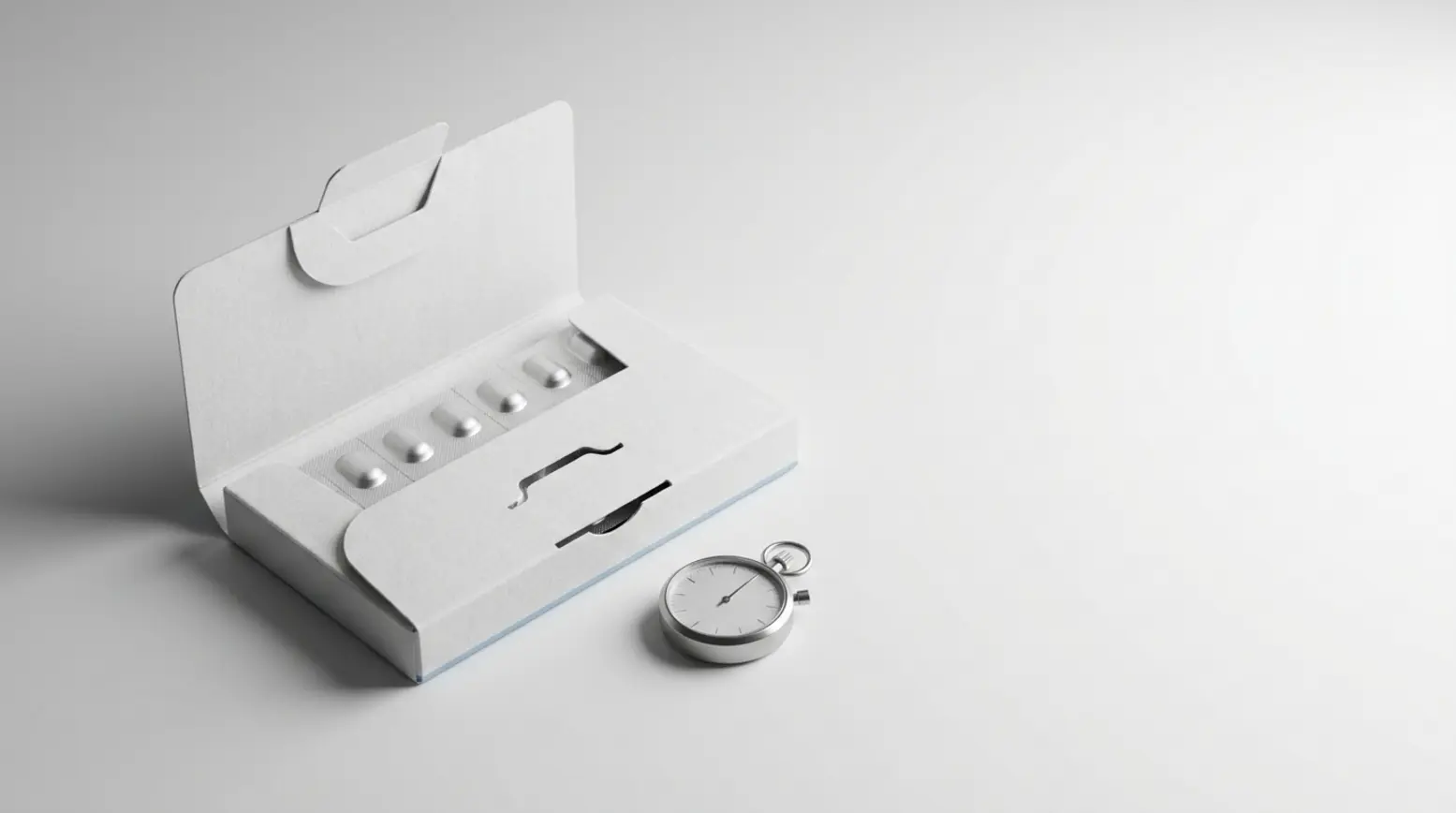

Senior-friendly performance is measured through real user testing. The key question is simple: can older adults open the package correctly within the parameters of a set test method, while the same package still effectively resists children? Any such claim should be based on observed results, as design buzzwords like ergonomic or easy-open do not independently prove adult-use effectiveness. This article explains formal test logic, the role of pre-tests, the specific evidence buyers should request, and how child resistance and adult access must be evaluated together.
• A senior-friendly claim should be supported by actual user test evidence, rather than just design intent.
• Formal protocol testing provides pass or fail evidence for one specific package design and test route.
• Informal packaging usability testing helps improve a design, but it does not replace official certification.
• Buyers should always ask which design was tested, which method was utilized, and whether the currently offered package still matches the tested version.
• Good performance means that both adult access and child resistance are clearly demonstrated.
How to judge how senior-friendly performance is measured in packaging
When people ask how senior-friendly performance is measured, the best answer is observed user performance. In the packaging industry, a senior-friendly claim should stem from a senior panel test, a packaging openability testing program, or another highly controlled packaging-use study. It should never rely solely on broad design language. This distinction matters because older adults may face limitations in strength, grip, vision, or hand movement; therefore, the true measure of success comes directly from what they can accomplish with the package in a testing environment.
A rigorous review also evaluates child resistance simultaneously, as both outcomes are crucial in practice. If adults struggle too much, the package can create critical access problems. Conversely, if children can open it, the package fundamentally fails its safety requirements. For a broader background, our senior-friendly packaging guide explains this necessary balance in simple terms.
Understanding how senior-friendly performance is measured in formal protocol testing
Because formal testing follows a strictly defined method, it provides definitive pass or fail evidence for one specific tested package design under one certification route. This is the level of proof you should expect behind any claim for certified child-resistant packaging. Furthermore, it is vital to verify whether the design offered today remains functionally identical to the version that was initially tested, as certification applies exclusively to that specific tested configuration.
In the United States, 16 CFR 1700.20 outlines the senior adult test protocol. Meanwhile, ISO 8317 is the current international standard for reclosable child-resistant packaging, and it likewise incorporates adult usability into its testing framework. Because these regulatory routes are completely separate, stakeholders should always confirm which specific method was used rather than assuming the rules are identical.
What the U.S. senior adult panel looks like
The U.S. method utilizes adults aged 50 through 70. Current CPSC guidelines describe a panel of 100 adults with strict age-band and gender controls. This structured approach supports repeatability, allowing the same type of panel to compare one design against another in a consistently fair manner.
The U.S. test sequence in simple words
The method begins with a screening step utilizing conventional packaging. Afterward, participants receive the child-resistant package and are given five minutes to open it and, when relevant, properly reclose it. The protocol then introduces a second task with an identical package, giving the participant one additional minute to open and close it. This sequence is important because it establishes a standardized boundary for senior-use effectiveness testing and easy-open evaluation under controlled conditions.
What counts as a passing result
Under the U.S. method, the senior adult success rate must reach at least 90 percent. This specific threshold is a core component of the formal adult-use effectiveness rule. The time limit is also an integral part of the methodology, functioning as a standardized usability boundary. This does not imply that people typically need several minutes to open medication. Rather, it ensures the package is evaluated within a common testing framework, which helps teams compare results equitably. If you would like more context regarding this broader balance, our page on senior-friendly child-resistant packaging provides a simple overview.
Exploring how senior-friendly performance is measured before formal testing
Informal testing is incredibly useful before booking a formal panel. It helps teams compare various concepts, identify friction points, improve instructions, and lower overall risk before official senior-friendly package testing begins. However, this testing does not replace ISO 8317 or the U.S. testing routes. It should strictly be treated as development work, not as final certification evidence.
How to run a fair pre-test
Always use individuals who accurately reflect the intended user group. Do not rely solely on colleagues from the packaging team, as they already know the opening mechanisms and will naturally perform better than real-world users. Maintain consistent environments, instructions, and starting conditions for every participant and every single design. By doing so, packaging results from elderly usability testing become significantly more reliable because the variables remain completely controlled.
What to record in each packaging use test
Be sure to record the time to open, any failed attempts, whether spoken help was required, whether written instructions were utilized, whether the package was correctly reclosed, and the very first action the person attempted. Tracking these data points makes a packaging usability test much more valuable by highlighting exactly where the difficulty lies. Documenting the first action is especially critical in senior-friendly packaging test work, as it reveals whether the opening mechanism is intuitively clear from the start or if users instinctively guess the wrong move.
How to ask questions without changing the result
Any questions asked should be completely neutral and strictly reserved for after the task is completed. Ask what the individual thought they should do first, what elements felt unclear, and whether the provided instructions were actually helpful. Do not coach participants during the task, as coaching fundamentally alters the outcome and weakens the overall validity of the test.
How to compare two designs fairly
Alternate or randomize the order in which designs are presented. If every person sees Design A before Design B, the second design might seem easier simply because the participant has already learned from the previous attempt. Strict order control matters immensely for packaging openability testing and any early easy-open testing work, as learning effects can easily distort the final results.
How understanding how senior-friendly performance is measured helps buyers check supplier claims
For buyers, procurement teams, and compliance managers, the question of how senior-friendly performance is measured is a highly practical matter of evidence. While a supplier may claim that a package is senior-friendly, the most useful next step is to ask for their exact proof. This immediately helps separate real senior-use effectiveness testing from broad marketing language that sounds positive but ultimately fails to show actual tested results.
Formal testing versus informal pre-test work
| Topic | Formal testing | Informal pre-test work |
| Purpose | Show definitive pass or fail evidence for a single package design | Improve and thoroughly compare designs prior to formal testing |
| Participants | Strictly determined by the official test method | Carefully chosen to reflect the targeted user demographic |
| Method | Fixed rules and rigid sequencing | Flexible, yet must remain highly controlled and fair |
| Output | Official certification evidence or a formal testing result | Actionable design insights and lowered risk before official testing |
| Limits | Applies exclusively to the tested design | Cannot replace official certification |
Supplier evidence checklist
• Exact tested design: Ask which specific package version was tested, as the official result belongs solely to that precise design.
• Test method used: Clarify whether the route utilized was 16 CFR 1700.20, ISO 8317, or another recognized protocol.
• User group included: Verify exactly which adult or senior demographics participated in the test.
• Pass result: Request the fully measured outcome, rather than just a brief summary line.
• Test conditions: Confirm all testing conditions, as they heavily influence what the final result actually means.
• Design match: Ask whether the currently offered package remains materially identical to the tested version.
This checklist is critical because even minor changes in material, shape, blister fit, labeling, or opening mechanisms can dramatically alter performance. Therefore, an old result may not adequately validate a modified package. In some cases, comprehensive retesting may be required.
Why how senior-friendly performance is measured should balance adult use and child resistance
Adult access and child resistance must be judged in tandem. A package that is exceptionally difficult for children but equally hard for older adults creates a severe practical problem. Conversely, a package that feels effortless for adults but opens too easily for children creates an unacceptable safety risk. Therefore, a robust evidence set should clearly demonstrate both sides of the equation and remain strictly linked to one tested design.
Design-specific proof: Wallet Box test outcomes
A prime example of design-specific evidence can be seen in our Wallet Box senior test result. These definitive outcomes apply exclusively to that tested design, as the specific mechanism, materials, and layout all heavily influence the final result.
• 100 percent of seniors opened the package within five minutes.
• Zero children managed to open it within the first five minutes.
These impressive figures should never be used as automatic proof for an altered customer package. If a design changes in any significant way, the old evidence may no longer accurately reflect the new version's performance.
Questions readers often ask
Does informal testing count as certification?
No. Informal testing simply helps a team improve a design before formal testing begins. It can quickly highlight where users struggle, reveal the first action they attempt, and indicate whether additional instructions are needed. However, it absolutely does not replace ISO 8317 or the U.S. senior adult test protocol.
Can a supplier use one old certificate for a changed package?
Certification applies uniquely to one specific, tested package design. If the design is altered in any material way, complete retesting may be required. Buyers should always ask whether the offered design still matches the officially tested design in all relevant components.
Does senior-friendly mean easy for every adult?
No. No testing protocol can ever guarantee the exact same experience for every single person. What truly matters is the measured result achieved under a strictly defined method for the formally tested package configuration. Ultimately, that remains the fairest way to consistently judge adult-use effectiveness.
What is the difference between a senior panel test and a normal usability study?
A senior panel test follows a rigidly defined, formal methodology designed to support clear pass or fail evidence. In contrast, a normal usability study is much more flexible and is primarily used to learn where a design functions well or causes user friction. Both approaches are highly useful, but they ultimately answer entirely different questions.
Why does the first action matter in a package opening test?
The first action clearly demonstrates whether an opening method is genuinely intuitive. If a large number of users try the wrong maneuver first, the design may desperately need changes, even if some people eventually manage to succeed. This is exactly why tracking the initial action is such a uniquely useful measure in packaging usability testing.
When to ask for help with a test requirement
If you have a complex protocol, detailed specification, or specific supplier evidence question, it greatly helps to review the details against the exact test route and package design before making a purchasing decision or booking a formal panel. In certain projects, expert support can also extend through the wider group behind Locked4Kids for related packaging needs, such as design for manufacturability, contract packing, serialization, or even machine supply. If you would like to discuss a packaging test requirement, our team is perfectly equipped to review your specifications and any related evidence questions with you.
Request a free sample now!


