



The real answer is simple: the CR packaging implementation timeline depends on scope, pack fit, approvals, tooling, machine readiness, trials, and release work. A project may move faster when it can keep the current blister and use an applicable, certified child-resistant pack design, as this can remove major redesign work and a new mechanism development cycle. Even then, teams still need artwork, line checks, qualification, and final approval before the first pallet can ship.
This guide explains the real order of work, outlining what can happen simultaneously and what must wait for an earlier step. In this way, packaging project managers, engineers, regulatory teams, quality teams, and product owners can build a packaging project plan that reflects real dependencies rather than relying on a simple list of dates.
• The first decision is often the most important: can the project keep the current blister and use an applicable, certified design?
• Some tasks can overlap, but final tooling, final artwork approval, line trials, and production release need the right inputs first.
• A certified design can remove a major uncertainty, but it does not eliminate customer regulatory, quality, artwork, or release work.
• Delays often start with open structural decisions, late text changes, slow internal sign-offs, or machine requirements discovered too late.
• A dependency-based packaging implementation timeline is more useful than a generic packaging launch timeline.
Why the packaging route sets the CR packaging implementation timeline
The initial route decision shapes the entire carton implementation process. Teams need to ask one practical question early on: can the current blister stay in place, and can an applicable, certified child-resistant design run on the intended cartoning route? If the answer is yes, the project may avoid a massive redesign step. This matters because a new child-resistant mechanism usually adds more technical risk, additional testing, and extra time.
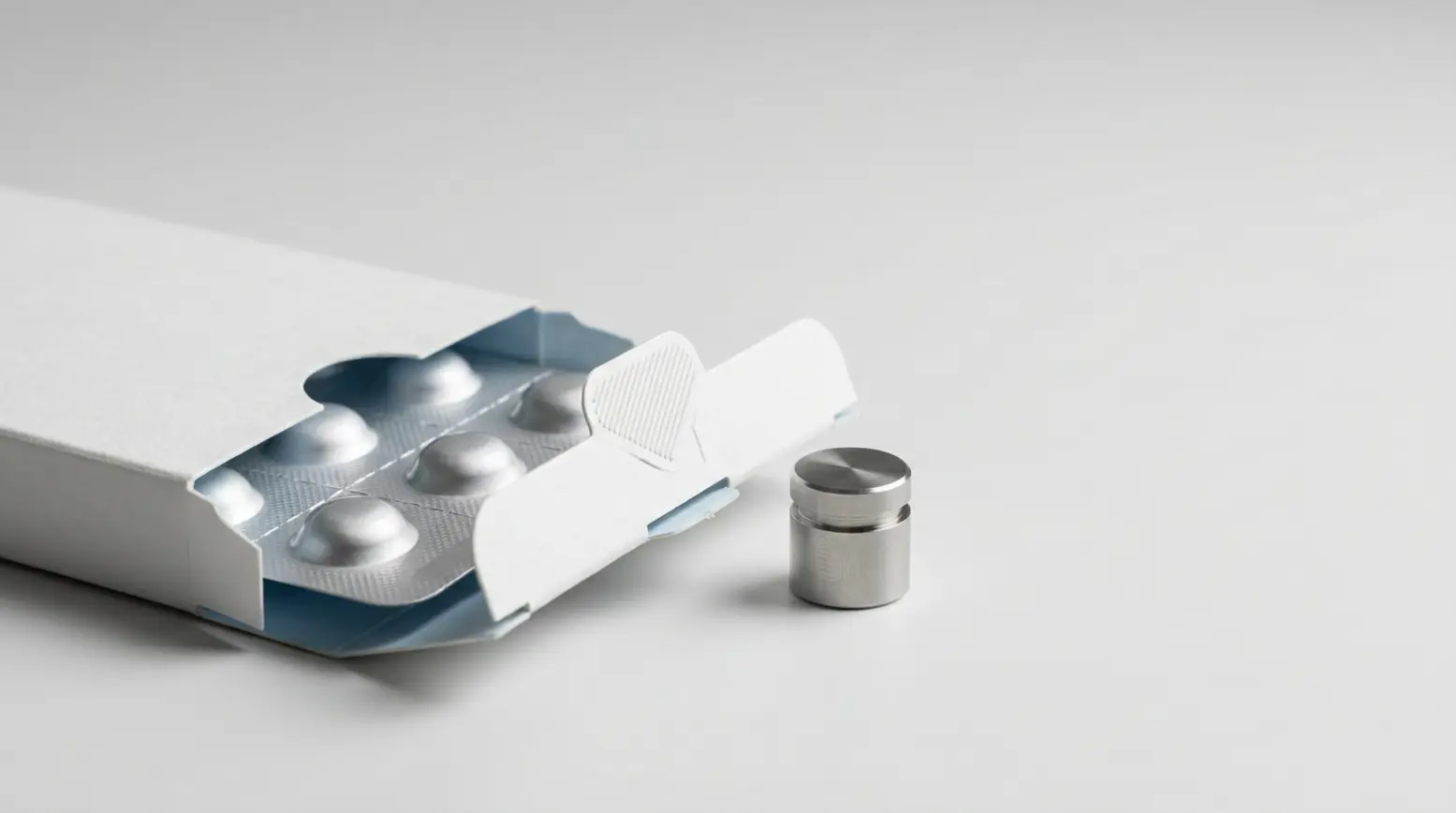
We see this choice affect project risk very early. For instance, our carton features a tray that opens only when two diagonal push points are pressed simultaneously. Meanwhile, our all-paper Wallet Box holds up to three blister strips and fits about 95% of blisters already on the market. Both are certified to ISO/EN 8317 and F=1 under 16 CFR 1700.20. Furthermore, both are designed to run on standard cartoning and pharmaceutical packaging lines at normal production speeds, provided the line setup is compatible.
If you are still looking for child-resistant packaging, it helps to choose your route first. The team can then compare an existing certified option against a new development route by using actual product and line inputs.
When the blister and line remain the same, less structural redesign is typically needed, meaning the risk of new primary pack validation work may be significantly lower. The chances of staying on the current machine route may also improve. However, artwork approval, tooling preparation, machine reviews, qualification, and release still remain. While a simpler route certainly helps, it does not remove those critical steps from the packaging project phases.
Scope first: what to confirm early in the CR packaging implementation timeline
Early scope work is where many timing gains or losses begin. During the first stage, the team should confirm target markets, child-resistant requirements, blister dimensions, blister counts, leaflet needs, coding needs, and the actual packing route. It also helps to designate owners in regulatory, engineering, artwork, quality, procurement, and operations, as the packaging implementation timeline depends on people and decisions just as much as it does on materials.
This is also the ideal time to check whether an existing format can work before a custom redesign begins. For projects aiming to keep the current blister, our child-resistant carton is often a practical fit-check route because it is built around existing blister configurations. While this does not guarantee a fixed time-to-market packaging promise, it helps teams test the simplest realistic path first.
The early plan should also define release gates. In many projects, these gates include structure approval, artwork release, tooling release, trial acceptance, and production release. If these gates are unclear, a CR packaging implementation project can move in the wrong order and create avoidable rework.
Below is a simple week-one decision set that helps teams build a stronger packaging project plan.
• Confirm target markets and applicable child-resistant requirements.
• Confirm blister sizes, counts, leaflet needs, and final pack configurations.
• Identify the actual line route, whether internal or contract packing.
• Name owners for regulatory, engineering, artwork, quality, procurement, and operations.
• Decide whether an existing certified format should be checked before starting a custom redesign.
• Set release gates for structure, artwork, tooling, trials, and production.
Which tasks can overlap in the CR packaging implementation timeline
A realistic packaging launch timeline separates tasks that can run in parallel from those that require a formal predecessor. This is important because teams can reduce calendar time without skipping compliance or quality controls, but only when each task begins with the right inputs.
Some workstreams overlap incredibly well. Regulatory reviews can begin while blister fit is being checked, as market requirements and physical pack fit are distinctly different tasks. Artwork preparation can start once the dieline, which is the flat layout of the pack, is stable and the main content areas are known. Tooling discussions and machine format reviews can also run in parallel after the structure is adequately defined. Internal change controls can begin before the line trial, allowing quality teams to prepare documents while engineering and operations prepare the machine route.
Other tasks require a clear preceding step. Final tooling needs a controlled structural design. Final artwork approval demands a stable dieline alongside approved regulatory content. A useful line trial requires representative materials and the correct setup. Finally, production release depends on all mandatory qualification and quality work being entirely complete. This exact dependency logic is what makes a packaging project plan realistic.
Common long poles in the CR packaging implementation timeline
The longest item in a project is not always the same. In some cases, a new child-resistant mechanism is the primary risk because design work and type testing create an entirely separate development path. In other instances, the physical pack is ready, but artwork approvals, internal sign-offs, or release documents become the actual bottleneck in the pharmaceutical packaging launch.
Blister redesigns can also extend the timeline since they often trigger new validation activities for the primary pack. Late discovery of machine limits can create intense pressure too, especially when format parts or setup changes are only identified after tooling release. This is exactly why line assessments should happen early in the packaging project phases.
Fortunately, several delays are preventable. Artwork should not start too early if structural decisions are still open, as later changes frequently force rework. Late regulatory text or coding requirements can easily send artwork back for extensive review. Slow internal signatures can delay a launch even when all supplier work is perfectly finished. Another common issue is the late discovery of line requirements. Our packaging is designed for standard cartoning and pharmaceutical lines at normal speeds where compatible, but the actual machine still needs a format check and a proper trial. If that check comes too late, the project plan may look much faster on paper than it is in practice.
What a certified design changes in the CR packaging implementation timeline
A certified design can change the project path, but it does not solve everything. If a project can use an existing certified design and keep the controlled, child-resistant geometry unchanged, the team does not have to start by inventing and testing a new mechanism from scratch. This can remove a major uncertainty from the critical path, shifting the focus entirely to fit, artwork, tooling, machine preparation, qualification, and release.
We provide certified child-resistant packaging featuring designs certified to ISO/EN 8317 and F=1 under 16 CFR 1700.20. The pack qualifies as primary packaging because all parts remain permanently connected after each opening, fulfilling US regulatory rules. In testing, fewer than 1 percent of 300 children could open the pack, while 100 percent of seniors successfully opened it within five minutes.
This advantage is precise yet limited. Certification applies solely to the specific design itself. Customer regulatory reviews still remain necessary. Customer quality documentation is still required. Market content, coding checks, line trials, and release approvals also remain strictly in place. Therefore, a certified route can shorten overall risk, but it is not a blanket fast track for every packaging qualification plan.
Practical phases from sample check to first pallet
The clearest way to manage how long child-resistant packaging project work may take is to follow the actual sequence of inputs and outputs. These packaging project phases help teams progress in a controlled order without making universal timeline promises.
Phase 1: Blister and format fit. Start with the physical basics. Check blister dimensions, cavity orientation, counts, leaflet needs, and target pack sizes. This is where the team determines if the current blister can stay and whether a known format can support the product without a structural redesign.
Phase 2: Sample evaluation and structural confirmation. Review samples with the appropriate internal teams. Engineering checks fit and handling. Regulatory reviews the required market information. Quality assesses what is needed for change controls and release. Once the structure is confirmed, the dieline can be safely frozen with much lower risk.
Phase 3: Artwork and regulatory content approval. Artwork can progress once the dieline is stable and content areas are locked. This phase often looks simple, but it can quickly become a major delay if text, codes, or language versions arrive late. It greatly helps to separate draft artwork reviews from final approval.
Phase 4: Tooling and machine preparation. After structural confirmation, tooling can be released and machine preparation can move forward. The line team should review format parts, feeding mechanisms, pack orientation, coding positions, and expected machine behaviors. If wider support is needed, Ecobliss Pharma and the broader group can assist with extended packaging activities, including secondary packaging, contract packing with serialization, design, and packaging machines.
Phase 5: Trial production. A trial should use representative materials and the intended machine route. This is where the team tests pack running behavior, coding accuracy, and output stability. A trial conducted too early provides weak data, meaning the setup must be highly realistic.
Phase 6: Qualification, change control, and release. After a successful trial, quality processes still need to close. This may include finalizing line documents, securing internal approvals, and completing formal release steps. The exact packaging qualification plan depends entirely on the product, market, site, and customer quality system.
Phase 7: First production pallet. The first pallet is ready only after all release conditions are met, as material arrival alone is simply not enough. This is exactly why a dependency-based plan is vastly superior to a simple date list.
How to build a packaging project plan that reflects real dependencies
A robust packaging project plan should outline each activity by its owner, inputs, parallel tasks, and release conditions. By doing so, teams can instantly see what is technically ready, what is fully approved, and what is still blocking shipment. This method provides a clearer view of the complete packaging implementation timeline and supports a highly controlled pharmaceutical packaging launch.
• Activity: Scope and market review. Owner: Regulatory and product owner. Input: Target markets, product details, claims, and codes. Can run in parallel with: Blister fit review. Release condition: Market requirements confirmed.
• Activity: Blister and format fit. Owner: Packaging engineering. Input: Blister dimensions, counts, leaflets, and route. Can run in parallel with: Regulatory review. Release condition: Structure judged feasible.
• Activity: Artwork preparation. Owner: Artwork and regulatory. Input: Stable dieline and designated content areas. Can run in parallel with: Tooling discussions. Release condition: Final content approved.
• Activity: Tooling and machine preparation. Owner: Engineering and operations. Input: Controlled structural design. Can run in parallel with: Change control preparation. Release condition: Trial setup ready.
• Activity: Trial, qualification, and release. Owner: Operations and quality. Input: Representative materials and a proper machine setup. Can run in parallel with: Final document checks, where allowed. Release condition: Production officially approved.
FAQ
How long does child-resistant packaging project work usually take? There is no single answer. The timing depends on approvals, product setup, suppliers, tooling, machine readiness, and internal release work. A project may move faster when it can use an applicable, certified design and keep the current blister, but the full schedule still heavily depends on customer decisions and release gates.
Can artwork start before all engineering work is done? Yes, but only after the structural dieline and content areas are completely stable. If artwork starts while key structural decisions remain open, future rework is highly likely.
Does certified child-resistant packaging remove all regulatory work? No. It may bypass a new child-resistant mechanism development cycle if the certified design remains applicable. However, market reviews, quality work, qualification, and release duties still firmly remain with the customer.
Can the same line usually run the new pack? Our packaging is designed to run on standard cartoning and pharmaceutical packaging lines at normal speeds where compatible. Nevertheless, the actual cartoner still requires a thorough assessment and a line trial before production release.
Ready to test the fastest feasible route
If you are planning a CR packaging implementation and want true clarity before locking in the detailed schedule, an early feasibility review is often the best next step. You can use a free strategy session to check blister fit, line routes, and certified design compatibility before the comprehensive plan is finalized.
Want Ecobliss to pack your product into Locked4Kids cartons, including serialization? Ecobliss Pharma handles quotes and contract packing: request a quote from Ecobliss Pharma.
Request a free sample now!


