


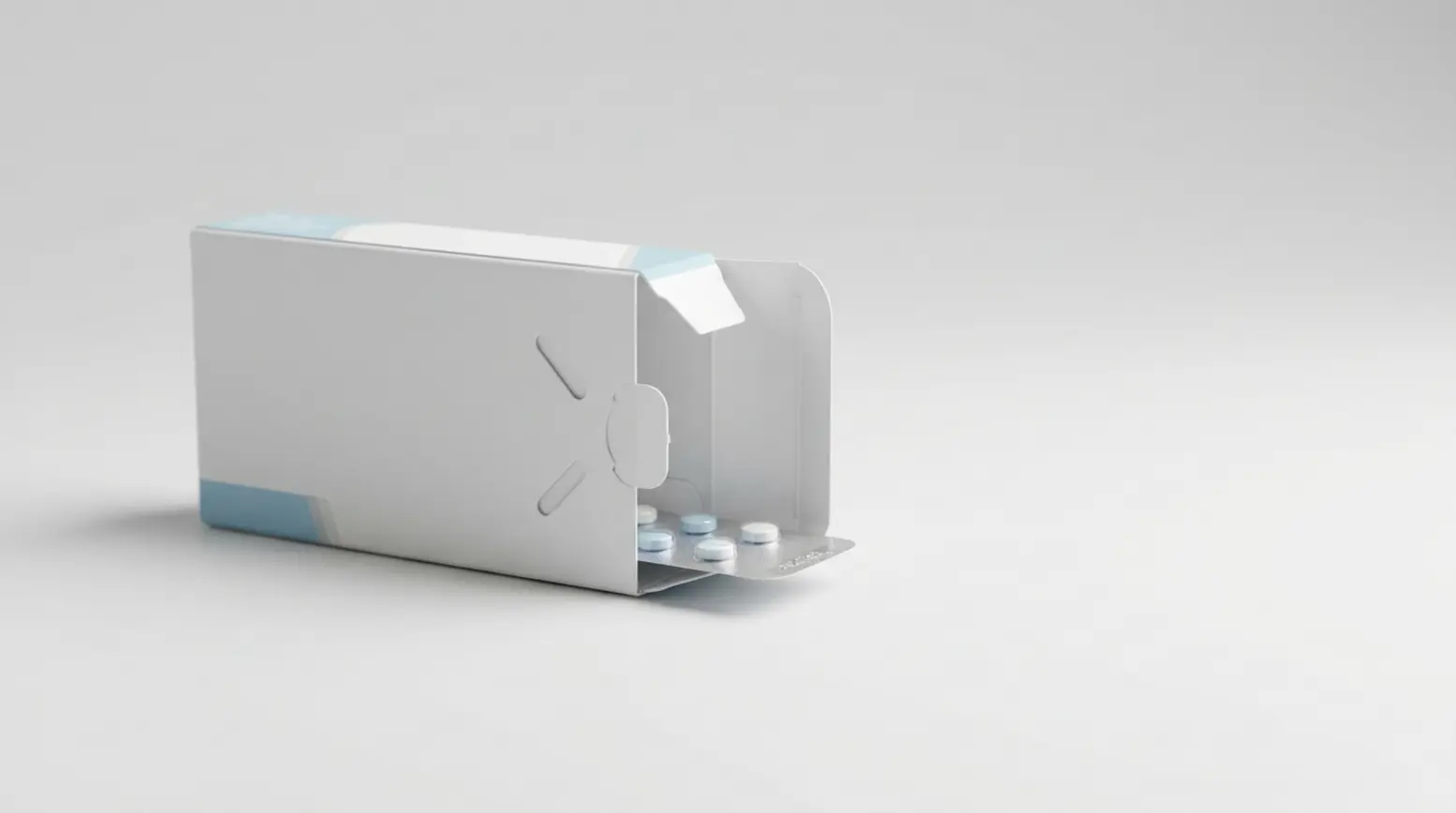

In the US, carton labeling for a child-resistant pack must match the tested package. The main rule for child-resistant packaging labeling in the US is simple: the carton structure, opening instructions, and product label should stay aligned with the version used in testing. If one part changes later, the final pack may no longer reflect the tested user experience. Therefore, release teams need to review the artwork and structure together before launch.
• Keep the child-resistant mechanism, the opening directions, and the product labeling as three separate decisions, but approve them together.
• Adult testing under 16 CFR 1700.20 uses the printed instructions that accompany the marketed package, meaning wording and placement truly matter.
• Opening directions are entirely different from a child-resistant package statement, as one explains use while the other serves as a compliance claim.
• Because carton space is limited, US pharmaceutical carton labeling and child-resistant packaging instructions should be planned early.
• Changes to print, coatings, paperboard, scores, die cuts, or instruction placement can affect functionality. Consequently, packaging artwork compliance also requires engineering review.
Child-resistant packaging labeling in the US starts with three separate decisions
Teams often mix three elements into a single approval step: the child-resistant mechanism, the packaging opening instructions, and the regulatory product label. This overlap can create delays because each item addresses a different question. The mechanism demonstrates how the carton resists children, while the directions show how an adult opens it. Finally, the label covers product and market regulations. When these roles remain clear, child-resistant packaging labeling is easier to control, and late changes become far less likely.
Why these three items get mixed up
Because a carton is a single printed package, teams often treat all copy, graphics, and structure as one unified file. This approach seems efficient at first, but it creates significant risks later. A designer might move instructions to free up space for branding, while engineering still expects the same tested opening action. As a result, the final pack can easily drift away from the tested version, even when the lock itself appears unchanged.
Why this separation matters for carton release
The release process is much safer when each team knows exactly what it owns. Regulatory can approve the label content. Packaging engineering can protect the tested opening action. Quality can then control the approved configuration. In this way, child-resistant packaging labeling in the US becomes a practical release topic rather than a last-minute artwork fix.
How child-resistant packaging labeling in the US connects to adult testing in the US
Adult testing under 16 CFR 1700.20 matters because adults receive the exact printed instructions that appear on or with the real package. For child-resistant packaging labeling in the US, this means the instructions are a vital part of the tested user experience when the mechanism depends on them. The recommended test report format also records those instructions, so teams should never treat them as optional decoration once testing is complete.
What the adult panel receives during testing
Test subjects do not receive a private explanation from the design team. Instead, they get the exact same child-resistant packaging instructions that go to market. This is crucial because a package that seems simple during a meeting can be much harder to use in real life if the wording is too short, too vague, or hard to locate. Senior-friendly opening instructions matter for the exact same reason, since older adults are an important part of real-world use.
Why instruction wording must match the tested configuration
If the tested package tells the user to press two marked points and then open it in a certain way, the released package should depict that exact same action. Even small wording changes can matter if they alter the order, timing, or clarity of the steps. A physical structure can stay exactly the same and still become harder to use if the printed directions move to the wrong panel or if the visual contrast is reduced.
Why there is no single mandatory sentence for every pack
There is no universal sentence that perfectly fits the opening directions for every child-resistant package in the US. The wording should always match the tested design and remain clear for the intended adult user. If your team is reviewing readability for older adults, our senior-friendly packaging guide provides more context regarding visibility, wording, and overall ease of use.
Child-resistant packaging labeling in the US and the difference between directions and claims
Opening directions and a child-resistant package statement are not the same thing. Directions simply help the user operate the package. Conversely, a statement tells the market that the package meets the relevant safety standard, provided this has been proven through the proper testing process. This difference is highly important because CRP labeling in the US can become confusing when use instructions and compliance claims are improperly mixed together.
Opening directions help the user operate the pack
These directions are highly practical. They tell the user exactly where to press, how to hold the carton, and what movement will open it. On a blister carton, the text should sit close to the action point so the user naturally sees it at the right moment. This approach helps the carton artwork support child-resistant performance, as the message reinforces the opening action instead of competing with it.
A child-resistant package statement is a separate labeling choice
FDA guidance allows firms to identify a compliant drug package as child-resistant when it has successfully been shown to meet the applicable CPSC standards. However, that formal statement is entirely different from the opening text. The statement is strictly about compliance status, whereas the directions are about actual use. Teams should only apply a child-resistant package statement when the package has definitively been shown to meet the relevant safety standard.
Where prescription and nonprescription statements may appear
For prescription drugs, the FDA recommends placing such statements on a carton or container side panel near the storage information, assuming companies choose to include them at all. For nonprescription drugs, a statement may appear under the "Other Information" section in the Drug Facts panel or in another suitable place on the carton. These examples help guide layout planning, but they do not serve as a comprehensive labeling checklist for every single category or product pathway.
Why this is not a full labeling checklist
This article primarily focuses on carton execution, opening directions, and artwork control. It does not replace a full regulatory review for drugs, supplements, or other strictly regulated categories. Dietary supplements, for example, require their own unique label elements, such as product identity, net quantity, nutrition labeling, ingredient details, and responsible company information. Therefore, product teams still need a dedicated, category-specific review.
Child-resistant packaging labeling in the US must fit around real carton space
Available carton space is often the biggest challenge. Branding, storage text, mandatory product details, and child-resistant packaging instructions may all compete for room on the very same surface. Because of this, pharmaceutical carton artwork should be planned alongside the structural drawing right from the start. When child-resistant packaging labeling in the US is left until late in the artwork review process, the opening text often ends up being too small or positioned too far away from the lock area.
The space conflict on pharmaceutical carton artwork
On many pharmaceutical cartons, very little free space remains once all the required information is added. The lock area also requires visual priority because users must clearly see where to interact with the package. This is exactly why US pharmaceutical carton labeling and opening instructions should be developed together. If the vital instructions are hidden by heavy branding or placed on a low-visibility panel, adults may easily miss them and struggle to open the carton.
A simple contrast for nutraceutical packs
Nutraceutical and supplement packages can face a very similar problem, even though the exact labeling rules differ. Product identity, net quantity, supplement facts, ingredient details, and company information all fiercely compete for space. For this reason, the opening directions should remain simple and highly visible, ensuring the carton still works intuitively for adults after all the required copy is added.
Why small decorative copy can hurt usability
When instructions are too small, too light, or visually crowded, users will frequently ignore them. Consequently, a simple mechanism can quickly feel difficult to use. This matters even more for older adults, as reduced visual contrast and poor text placement can significantly slow down the opening process. Our child-resistant carton format gives teams a printable paperboard surface for branding, required text, and opening guidance, all while the carton itself performs the necessary child-resistant function.
Child-resistant packaging labeling in the US can fail when artwork and structure are reviewed separately
Packaging artwork compliance is undeniably an engineering issue as well. Artwork and physical structure constantly affect each other because both shape how the user sees, holds, and successfully opens the lock. When handling child-resistant packaging labeling in the US, even small artwork changes can matter significantly if they alter visual clarity, surface friction, board stiffness, or finger guidance. Therefore, teams must review the structural drawing and final artwork together prior to release.
Changes that can matter
Several subtle changes can affect function or daily use, including adjustments to print and ink build, coatings, varnishes, board behavior, die cuts, scores, and instruction placement. For instance, a new coating can change the surface feel, while a paperboard change can affect overall stiffness. Modifying a score or die cut can alter how the carton moves during opening. Furthermore, heavy print coverage near the push areas can reduce clarity if the primary visual cue becomes too weak.
Why structural drawings and artwork should be approved together
A joint review helps regulatory, engineering, and quality teams verify the exact same final version. This collaborative step makes it much easier to spot blocked push areas, low contrast near the opening point, or instructions mistakenly placed on the wrong panel. It additionally supports packaging artwork compliance because the review comprehensively covers both copy accuracy and physical user interaction.
When a material change may require reviewing existing test evidence
Any material change to a certified design should immediately trigger an assessment to determine whether the current test evidence still applies. While this does not mean every minor change requires new testing, it certainly means teams should never blindly assume ongoing coverage. A certified child-resistant packaging design fundamentally depends on the tested configuration; therefore, strict release control must protect that specific version.
The carton format that supports compliant opening and labeling
Our carton format is specifically designed to combine the child-resistant feature and the printable outer surface into one cohesive paperboard package. This integration can help teams keep structure and artwork linked from the very beginning, especially for blister formats where the internal blister should remain identical for line planning and purchasing purposes. Because the lock mechanism and the product label live on the same carton, early alignment can drastically reduce the need for later redesigns.
How the two-point opening works
The carton effectively opens by pressing two diagonal push points and then releasing the pack in the intended manner. This specific action helps resist young children while remaining highly usable for adults. Conveniently, the format runs on standard cartoning equipment at regular speeds, so teams do not require a special cartoning process for their everyday production planning.
Why the printable carton surface matters
The outside panel carries the brand artwork, storage details, use instructions, and other vital product text, making it central to all packaging artwork decisions. Because the physical structure and the printed message sit on the very same substrate, they should always be treated as a single, unified user experience. In this way, the carton flawlessly supports both regulatory compliance and real-world use.
Why senior-friendly opening instructions still matter
Even when the underlying mechanism is incredibly straightforward, the exact wording still matters. A short, clear instruction placed near the push points can save time and significantly reduce user frustration. This clarity is helpful for all adults, but it is especially critical for older users who may require stronger visual guidance.
A practical sign-off for release control
A strong sign-off process is both simple and highly collaborative. The regulatory team approves content specific to the product category and target market. Packaging engineering protects the tested mechanism while verifying that the artwork still fully supports the opening action. Quality assurance then controls the approved configuration so that production stays perfectly aligned with the released package. Ultimately, this structured approach helps teams reduce avoidable changes right before launch.
What each team should approve before release
Regulatory personnel should confirm that the carton text is factually correct and complete for the intended market. Engineering must confirm that the push points, scores, folds, paperboard choice, and instruction placement still perfectly match the tested opening action. Quality should then verify that the formally approved files, materials, and production settings match the final released version. Conducting a simple physical sample review before the final file freeze can help teams catch subtle issues that are otherwise hard to spot on a digital screen.
When to request a sample and final review
It always helps to physically handle the package that will actually go to market before the graphic and structural files are permanently frozen. Teams can then comprehensively check the opening clarity, blister fit, and panel space during one unified review. If you would like us to review your carton specification, we can gladly help check the opening instructions, blister format, and release details before your artwork is completely locked.
Wider project support when the package goes beyond the carton
Some complex projects require support well beyond the carton itself. In those unique cases, Ecobliss Pharma and the wider Ecobliss Packaging Group can fully support your design and production planning, helping to move a packaging project forward whenever needed. We mention this as added context, though the primary focus here remains firmly on keeping the carton mechanism, opening instructions, and compliance labeling perfectly aligned.
FAQ
Do all US child-resistant cartons need the same opening sentence?
No. There is no single required sentence for every package. The opening text must always match the tested pack and remain clear for the intended adult user.
Are opening directions the same as a child-resistant package statement?
No. Opening directions simply explain how to correctly use the pack. Meanwhile, a child-resistant package statement is a completely separate claim regarding the product's compliance status.
Can artwork changes affect child-resistant performance?
Yes. Any changes to coatings, varnishes, paperboard, scores, die cuts, print build, or instruction placement can directly affect how the package mechanically works or how users ultimately interact with it.
Why should seniors be considered in the artwork review?
Adult usability is a major part of real-world package use. If the instructions are hard to visually see or difficult to understand, older adults may severely struggle to open the carton, even when the lock mechanism itself functions perfectly.
When should our team review a physical sample?
You should review it just before the final artwork release and file freeze. This essential step helps confirm that the structure, printed instructions, and product labeling all work together seamlessly on the actual carton.
Request a free sample now!


